How to Choose Reclaimed Wood Samples for Commercial Work
A reclaimed-wood sample can settle a design direction, but it cannot represent every board that may arrive on a commercial project. The useful question is not whether one piece looks right. It is whether the sample documents the species or mix, provenance, patina, milling, surface condition, and acceptable variation your team can approve.
Request a project quote when the intended application, profile, and material range are ready for review.
To understand how to choose reclaimed wood samples, compare pieces against the project specification rather than against one ideal board. Record what must remain consistent, such as profile and processing, then define the permitted range for color, grain, checking, wane, sapwood, and other character before approval.
That process begins by deciding what the sample is meant to prove, and where its visual evidence stops short of performance, code, or structural decisions.
What Should a Reclaimed Wood Sample Represent?
A commercial reclaimed wood sample should represent the material range a project team is prepared to approve, not a single ideal board. Review it against the intended application, then document the visible and dimensional variation that can remain acceptable across the order. The goal is a clear reference for design, fabrication, and installation decisions.
Start by identifying where the material will be used. A sample for interior wall paneling may need to show surface character, color movement, board width, and edge treatment. A sample for exterior siding should also make the profile, exposure, and weathered condition understandable. Record the species or species mix, approximate thickness and width, surface texture, milling, and any visible features such as checking, wane, sapwood, nail holes, or other marks that affect the finished appearance.
Provenance is part of what the sample represents. Wood Crafting sources reclaimed wood from old barns, horse corrals, and livestock fencing structures in the Northeast and Midwest. That history can help explain differences in weathering, patina, grain, and surface wear. Ask the project team which aspects of that character are essential to the design and which can vary. If confirming origin and age matters to the specification, include those documentation needs in the review rather than assuming appearance alone proves provenance.
Key takeaway: approve a defined range, not an exact board-by-board match. Wood Crafting guidance treats a sample as evidence of a material range, not a guarantee that every board will match it. Before approval, define acceptable variation in color, surface marks, species mix, width, thickness, and other visible characteristics. This protects the design intent while acknowledging that reclaimed material is variable.
For the authenticity side of the review, use this guide to identify authentic reclaimed barn wood. Keep appearance approval separate from structural, code, or performance decisions, which require evaluation by the appropriate project professionals.
How Do You Compare Species, Patina, and Provenance?
For a commercial specification, compare reclaimed samples as a combination of material identity and visible character. Species affects grain, pore structure, color, and how a surface may read across a larger installation. Patina records exposure and prior use, while provenance gives the project team context for why boards vary. These details should be documented separately rather than reduced to a single color name.
Wood Crafting documents six barn-board varieties, including Red Barn Board, Reclaimed Gray Barn, Mixed Brown Board, Faded Red, White Reclaimed, and Wire Brushed. The names describe a material direction, not necessarily one uniform species. Reclaimed Gray Barn may include Silver Pine, Hemlock, and White Oak. Mixed Brown Board is an assortment of species and colors. Ask the project team whether that variation is part of the design intent or should be limited in prominent elevations.
Evaluate the surface, not only the color
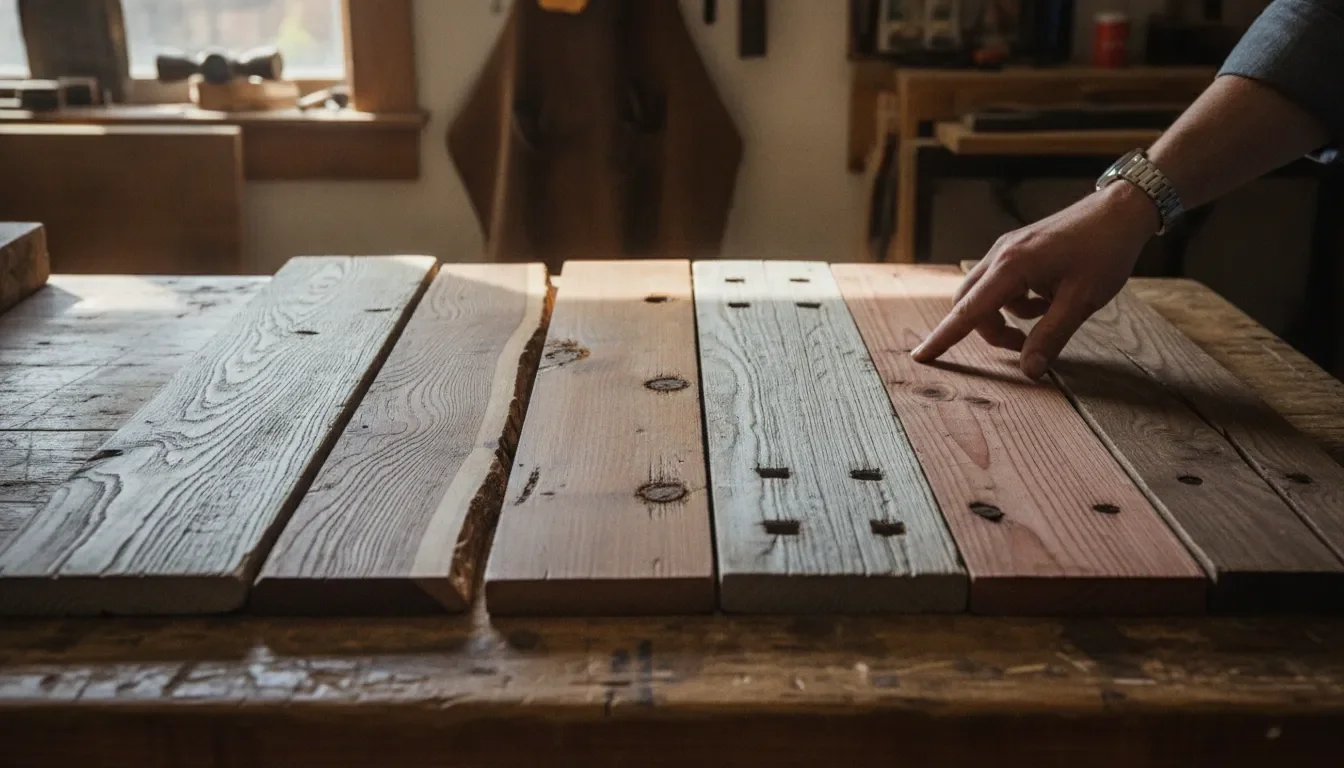
Compare the sample under the lighting expected in the finished space. Note weathering depth, grain direction, checking, wane, sapwood, nail marks, saw marks, and other surface evidence. A gray surface can result from exposure, while a brown or red board may reflect species, former use, or retained finish. Record the acceptable range for each characteristic before approval, especially where boards will be viewed together.
Species: Record a confirmed species, a likely species, or a mixed-species description. Do not imply certainty that the sample cannot support.
Patina: Describe the color range, weathering, surface marks, and degree of visual uniformity.
Provenance: Note the prior setting when available, such as an old barn, horse corral, or livestock fencing structure.
Approval range: Define which variation is acceptable and which conditions require review before installation.
Species identification has limits. Oregon State University notes that experienced woodworkers can identify some woods by inspection, but many species cannot be distinguished without microscopy. Its guide identifies a 10x hand lens as a useful tool and cautions against relying on an identification key alone. If misidentification could create a safety or health hazard, use a professional identification service. For broader specification context, review the reclaimed barn board specifications.
Which Dimensions and Milling Details Belong in the Sample Review?
A useful sample review records more than a board's visible color. It should show the dimensional range, the finished profile, and the processing assumptions that will affect installation. Treat each sample as evidence of a material range, then document which differences are acceptable for the project.
Fields to record when comparing reclaimed wood samples:
Thickness: Compare Actual finished thickness and its expected range. Document Nominal dimension, measured sample, and tolerance.
Width: Compare Typical board width, narrow or wide pieces, and usable face. Document Width range, measurement method, and layout impact.
Profile: Compare Plain, rabbeted bevel, tongue and groove, micro bevel, board and batten, or channel/lap. Document Profile name, orientation, and installation detail.
Edge: Compare Straight, irregular, wane-bearing, beveled, or otherwise milled. Document Visible edge condition and acceptable variation.
Application: Compare Required coverage, joint pattern, reveal, and finish exposure. Document Area of use, elevation or room, and coordination notes.
Wood Crafting's documented examples show 3/4-inch Red Barn Board, 3/4- to 1-inch Reclaimed Gray Barn, and 1-inch Mixed Brown Board. Those examples help a team frame questions, but they are not a promise that every reclaimed board will meet one exact dimension. Confirm the actual milling and usable range for the proposed material.
For research context, a USDA reclaimed-lumber study tested 2-by-6, 2-by-8, and 2-by-10 sizes. The report also cites ASTM D 1990 guidance suggesting three sizes with no more than a 4-inch nominal depth difference. That study context should not be treated as a Wood Crafting product guarantee or as a substitute for project-specific engineering requirements.
Record whether the sample is plain or profiled, and whether its edge treatment supports the intended reveal. For a deeper reference when preparing a siding or paneling schedule, review these reclaimed barn board specifications.
How Should Finish, Processing, and Surface Variation Be Evaluated?
Processing changes what a sample communicates, so record it before comparing appearance. Wood Crafting identifies three processing options: as-is, de-nailed, and power washed. An as-is sample shows more of the material's existing character. De-nailed material may present a cleaner working surface while retaining weathering. Power washing can alter how dirt and loose surface material read. Do not treat one processing state as interchangeable with another when approving a finish.
Evaluate the surface under the lighting and viewing distance relevant to the project. Compare the overall color range rather than selecting one board as the expected result. Look for the relationship between faded areas, darker patina, grain, and weathering. Checking, wane, sapwood, fastener marks, nail holes, and other surface marks may be part of the reclaimed character. But the project team should state which features are acceptable, limited, or excluded.
Use a finish and variation checklist
Processing: Record whether the sample is as-is, de-nailed, or power washed, and approve that state for the project.
Color: Document the acceptable light-to-dark range, including how much variation may occur between boards.
Surface: Review checking, wane, sapwood, fastener marks, nail holes, texture, and loose material.
Coatings: State whether painted or coated material is acceptable. The USDA reclaimed-lumber study did not include painted lumber, so its findings should not be extended to painted boards without separate verification.
Finish intent: Note whether the final surface should remain weathered, be cleaned, or receive another specified treatment.
For a broader comparison of available profiles, surface character, and reclaimed material categories, review Wood Crafting's reclaimed siding and paneling. Approve a range and a processing method, not an identical board-by-board result.
How Do You Assess Moisture, Condition, and Intended Use?
Moisture and condition review should happen before a team approves a reclaimed wood sample. Record how the sample was stored, measure moisture under the same conditions expected on the project, and look for changes across pieces rather than relying on one reading. A USDA reclaimed-lumber study measured moisture periodically and reported a 14 percent result in its field context. That figure is research context, not a Wood Crafting guarantee or a universal installation target. Read the USDA study for its testing conditions.
Inspect condition beyond appearance
Review faces, edges, ends, and fastener locations for evidence of insect activity, galleries, rot, softening, splits, excessive checking, wane, or concealed damage. Old nails, staples, screws, and embedded fragments can affect de-nailing, cutting, machining, installation safety, and the usable yield. Note what is visible in the sample, what requires additional inspection, and what condition range the project team will accept. A clean-looking surface is not, by itself, proof of suitability for every application.
Species identification can also affect the review. Oregon State University notes that some species cannot be distinguished without microscopy, while an experienced woodworker may identify others by inspection. A 10x hand lens and sharp knife can support examination, but relying on an identification key alone can lead to misidentification. Where an error could create a safety or health hazard, use a professional identification service. See the Oregon State wood identification guide for that caution.
Separate finish decisions from structural decisions
Intended use determines which observations matter most. A wall finish or decorative panel may prioritize patina, surface marks, color range, and acceptable defects. A floor, stair component, beam, or other performance-sensitive use requires a separate review of dimensions, condition, loads, connections, code requirements, and installation environment. Reclaimed lumber is not formally recognized in existing grading or engineering design standards, according to USDA Forest Products Laboratory research. Wood Crafting material descriptions are therefore not structural guarantees. Qualified architects, engineers, contractors, and code professionals must make structural and compliance decisions.
Document the intended use, moisture observations, condition findings, fastener concerns, inspection limits, and approval authority in the sample record. That keeps finish selection grounded in the actual application without turning a visual sample into an engineering certification.
What Should a Commercial Sample Approval Record Include?
A commercial approval record should make the visual decision reproducible for everyone who will specify, purchase, install, and review the material. Treat the record as a controlled description of the approved range, not as a promise that every reclaimed board will be identical.
Define the design intent. Record the application, visible surfaces, project areas, approximate quantities, and the desired character. Note whether the goal is a consistent field, a broad weathered range, or a deliberately mixed appearance. Separate appearance approval from structural, code, fire, and other performance decisions that belong to qualified project professionals.
Identify the material and provenance. Name the species or species mix when known, source type, patina, weathering, and prior-use indicators. If the sample represents mixed material, state that plainly. Reclaimed wood can carry meaningful variation in grain, color, wane, sapwood, checking, fastener marks, and surface wear.
Document the physical specification. Measure representative pieces and record thickness, usable width, length range, edge condition, profile, and milling. Include whether the material is plain, tongue and groove, rabbeted bevel, micro-bevel, board and batten, or channel/lap when applicable. Note the processing state, such as as-is, de-nailed, or power washed.
Compare more than one sample. Photograph the face, edge, back, and any notable defects under consistent light. Review a small sample range rather than approving one unusually attractive board. As a research example, a USDA reclaimed-lumber study graded several thousand salvaged pieces before testing 1,078, and selected two grades for comparison. Its report also cites ASTM guidance on testing grades separated by no more than one grade: review the cited USDA methodology.
Set condition and tolerance notes. State what is acceptable and what requires rejection or review. Address insect or rot evidence, loose material, excessive warp, moisture condition, finish residue, color limits, width variation, and surface marks. Keep the materials protected from unnecessary moisture while the approval is pending.
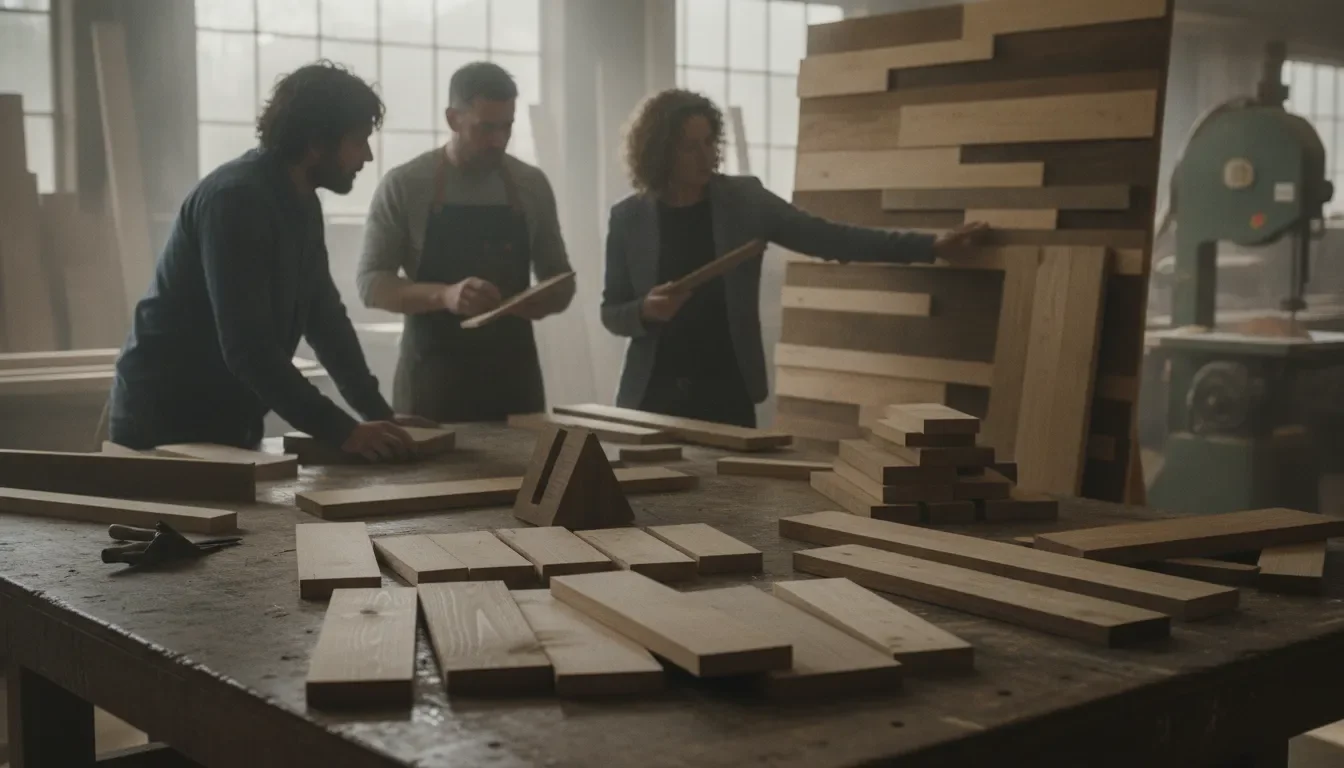
Secure project-team signoff. Circulate the record to the architect, designer, builder, owner representative, and other responsible reviewers. Include the approved photos, written tolerances, revision date, and names of approvers. This prevents a finish preference from being mistaken for an engineering approval.
Once the range, processing, quantities, and tolerances are documented, request a project quote using the approval record as the shared reference.
How to Choose Reclaimed Wood Samples for a Commercial Project
Use the sample review as a specification checkpoint, not a color-selection exercise. Start by identifying where the material will be used, then compare representative pieces against the project's visual, dimensional, and processing requirements. The goal is a documented range that the architect, builder, and supplier can evaluate together.
For each application, record the intended surface, exposure, orientation, profile, thickness, width range, edge condition, and finish. A siding or paneling sample should be reviewed differently from a ceiling feature or reclaimed wood beam options. Keep appearance approval separate from structural, code, and load-bearing decisions, which require the appropriate qualified project professionals.
Build an approval matrix
Material character: Note species or species mix, provenance, patina, weathering, grain, sapwood, checking, wane, knots, fastener marks, and other visible features. Reclaimed Gray Barn may include Silver Pine, Hemlock, and White Oak, while Mixed Brown Board is an assortment of species and colors.
Processing: Identify whether the approved sample is as-is, de-nailed, or power washed. Do not assume that one processing state represents another.
Variation: Define the acceptable color range, surface marks, dimensional tolerances, defect limits, and the proportion of boards that may fall outside the preferred appearance.
Coordination: Have the architect or designer approve the visual range, and have the builder confirm installation, sequencing, and field-handling requirements. Record revisions rather than relying on verbal approval.
A sample represents a material range, not a promise that every board will match one piece. Define acceptable variation before approval, then send the completed matrix with project quantities, application details, required profile, and processing preferences when you request a project quote.
Key takeaway: The strongest commercial sample approval connects a representative material range to measurable tolerances, a named application, and written sign-off from the project team.
Frequently Asked Questions
What should a reclaimed wood sample show?
It should show the expected material range, not promise that every board will match one piece. Review species or species mix, provenance, patina, grain, surface marks, wane, sapwood, milling, profile, and processing. Before approval, document which variations are acceptable for the project and which would require review.
How can I compare species in reclaimed wood?
Start with the supplier's documented species information, then compare grain, pores, color, density, and weathering under consistent light. Some species can be identified by inspection, but Oregon State University notes that many woods cannot be distinguished reliably without microscopy. If misidentification could create a safety or health hazard, use a professional identification service (Oregon State University wood identification guide).
What is the difference between reclaimed and recycled wood?
Reclaimed wood is recovered from a previous structure or use and prepared for a new application. Recycled wood is a broader term that can include wood processed into a new material, such as fiberboard or composite feedstock. For a commercial specification, ask for the material's prior use, source history, species information, and processing state rather than relying on the label alone.
What are the main challenges when specifying reclaimed wood?
Variation is the central challenge. Boards may differ in species, color, dimensions, surface character, fastener evidence, checking, wane, or prior treatment. Samples also do not establish structural capacity, code acceptance, or installation performance by themselves. Separate appearance approval from moisture, condition, code, and structural reviews, and have qualified project professionals make decisions outside the finish specification.
How should a commercial team approve reclaimed wood samples?
Define the application first, compare representative samples, record dimensions and profile, describe acceptable color and surface variation, and confirm the intended processing state. Have the architect, builder, and relevant consultants review the record together. Then use the approved range and project requirements when requesting a quote, rather than treating one sample as a board-by-board guarantee.
Get Started With a Commercial Reclaimed-Wood Quote
A documented sample review gives your project team a clearer basis for confirming appearance, dimensions, processing, and acceptable variation. Once those requirements are defined, you can move from material evaluation to a quote aligned with the specification. To discuss your commercial reclaimed-wood needs, request a project quote from Wood Crafting.