
Reclaimed Wood Sourcing Northeast Agricultural Guide
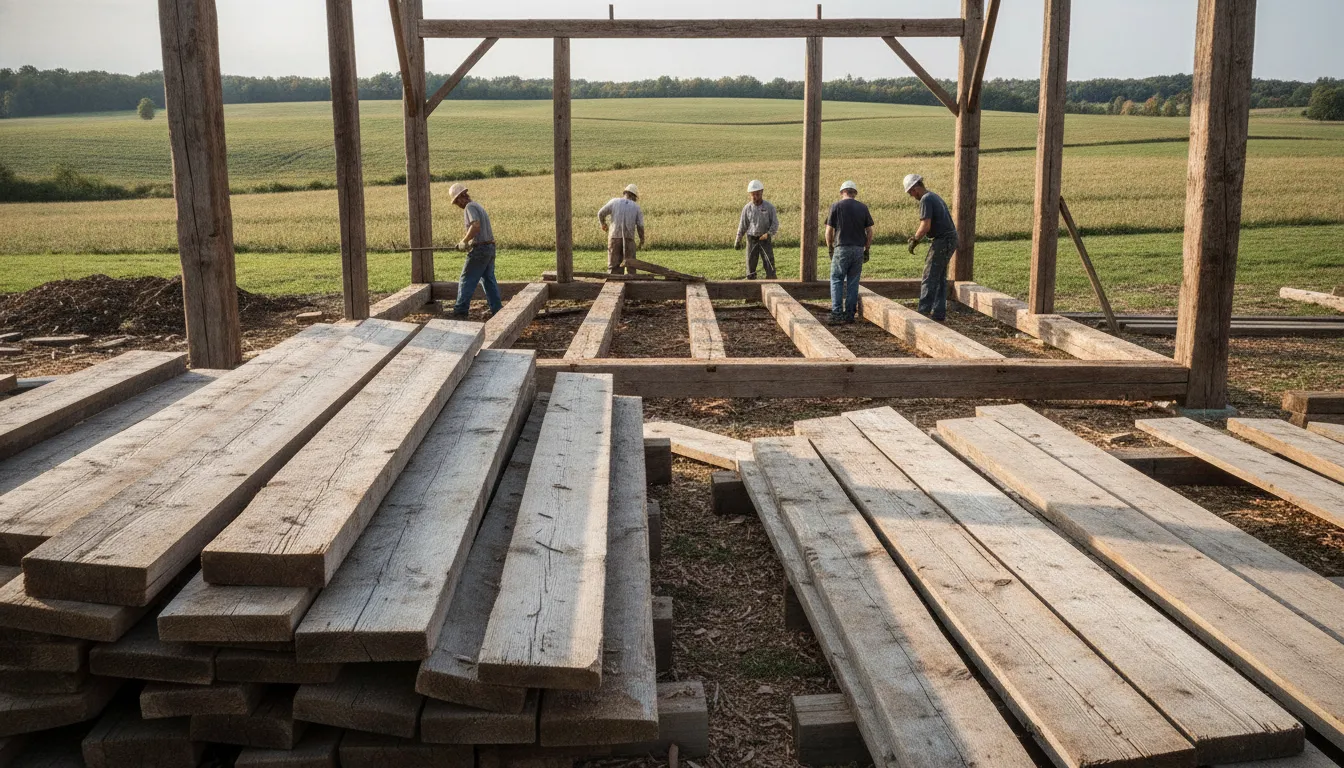
Reclaimed lumber does not come from a uniform warehouse supply. In the Northeast, agricultural buildings are evaluated one structure at a time. Usable material can vary with age, exposure, construction, and condition.
For architects, builders, and developers, reclaimed wood sourcing northeast agricultural projects begins with a practical question: what structure did the wood come from, and how was it salvaged?
Reclaimed wood sourcing northeast agricultural supply commonly includes old barns, horse corrals, livestock fencing, water tanks, and other historic structures across the Northeast and Midwest.
Each structure can yield different boards, beams, and surface character. Confirm availability, processing, and provenance before specifying material.
Discuss your project's sourcing requirements or request project information.
That variability is part of the material's value. It also makes sourcing more deliberate than selecting new lumber from a standard grade. The first step is knowing where these structures come from and what their condition can tell you about the reclaimed wood they may provide.
Where Does Reclaimed Wood Sourcing Northeast Agricultural Supply Begin?
Northeast reclaimed wood is not harvested from a single region or drawn from a fixed warehouse map. It is recovered from existing agricultural and historic structures, then evaluated for usable material, character, and project fit. Wood Crafting is headquartered in Millerton, New York, and documents sourcing across the Northeast and Midwest, with some Eastern Canadian material noted for specific products.
Documented Northeast examples include New York, Vermont, New Hampshire, and Massachusetts. Midwest examples include Ohio, Pennsylvania, and Indiana. These locations describe sourcing territory, not a promise that a particular board, beam, or siding profile is currently available in each state. Inventory changes as structures are identified, dismantled, processed, and allocated to projects.
Agricultural structures are the starting point
Much of this material comes from old barns, horse corrals, livestock fencing, agricultural buildings, water tanks, and other historic structures. Their original uses leave different marks on the lumber. Barn boards may show weathering, nail holes, saw marks, checking, wane, and color variation.
Fencing and corral material can carry notching, bolt holes, strapping marks, moss, lichen, or deeply worn surfaces. These characteristics vary by board and structure. Reclaimed wood should therefore be specified as a material with natural variation rather than as a uniform manufactured finish.
Some structures are dismantled because of age or neglect. That does not mean every component is suitable for every application. The usable yield depends on the structure's condition, the dimensions available, and the processing required. A supplier may offer material as-is, de-nailed, or power-washed depending on the product and project needs.
Sourcing region is not delivery coverage
A material can originate in the Northeast or Midwest without establishing a guaranteed delivery radius, lead time, or current inventory position. Architects, builders, and developers should confirm the available quantity, dimensions, surface condition, processing status, and logistics for the specific order. Regional origin can help inform a project's material story, but it should not replace a review of actual inventory.
Takeaway: Northeast reclaimed wood sourcing is a documented regional practice built around individual salvaged structures, not an unlimited or guaranteed supply map. For more background, read how Wood Crafting sources and salvages reclaimed wood.
Which Agricultural Structures Yield Usable Reclaimed Lumber?
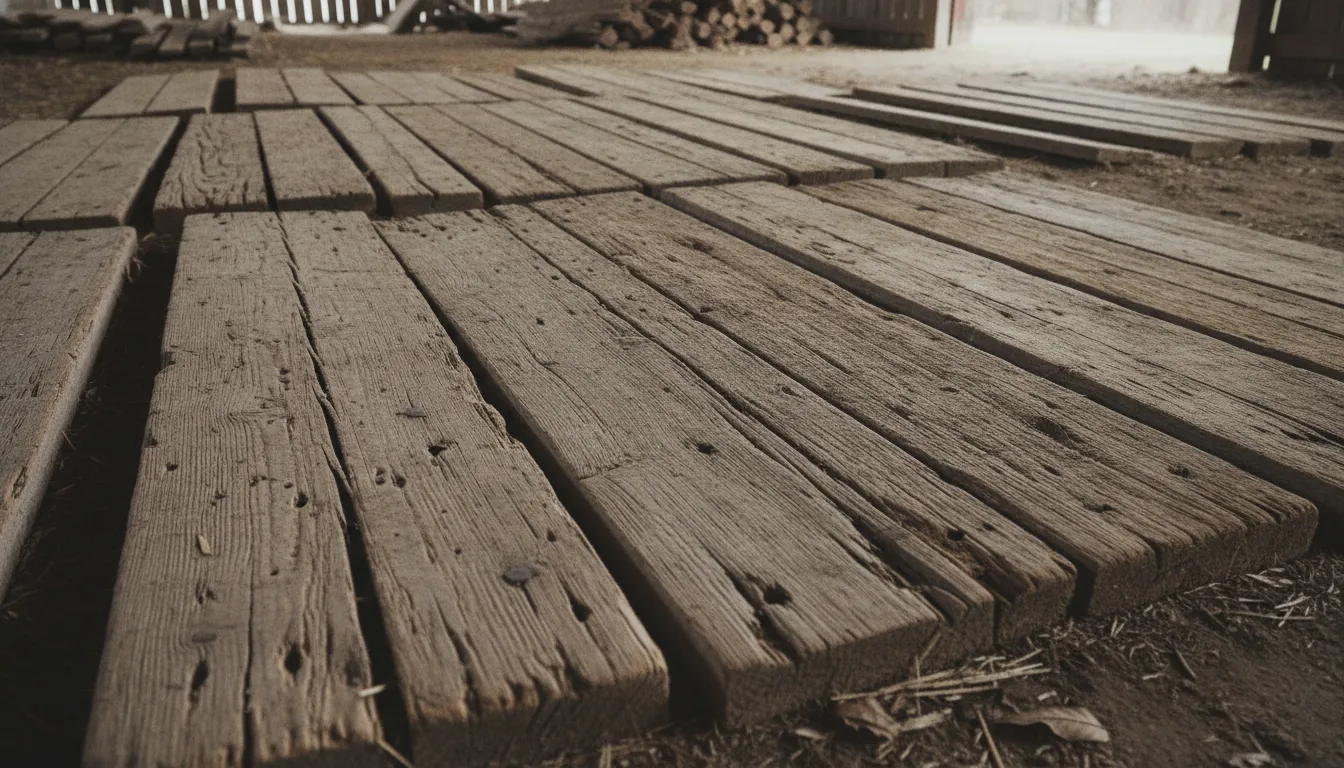
Agricultural structures can supply boards, fencing, and other reclaimed material, but no two salvage projects yield the same result. Age, exposure, repairs, dismantling conditions, insect damage, and the original construction all affect what can be recovered and how it can be used. A supplier evaluating material for a design or construction project must look beyond the structure type and inspect the lumber itself.
- Old barns: Barn boards and framing may show weathering, nail holes, saw marks, checking, wane, and color variation. Some boards may be suitable for siding or paneling, while others require sorting or trimming.
- Horse corrals and livestock fencing: These materials often develop pronounced surface wear, bolt holes, strapping marks, and other evidence of repeated agricultural use. Explore reclaimed corral fencing for a product-specific application.
- Agricultural buildings: Sheds, outbuildings, and other farm structures can contain mixed species, dimensions, and grades. Their usable yield depends on the building's condition and the portions that can be safely dismantled.
- Water tanks and historic structures: These sources may contribute distinctive boards, including mixed brown board, but the available quantity and surface character can vary substantially from one structure to another.
Recovered wood may retain notching, bolt holes, sapwood, knots, moss, or lichen. Those features can add authenticity and visual depth, yet they also matter when specifying thickness, clear lengths, finish, and intended use. Material described as reclaimed does not automatically mean every board is appropriate for structural work or for a particular exposure condition.
Wood Crafting sources from agricultural and historic structures across documented areas of the Northeast and Midwest, with some Eastern Canadian material associated with specific products. That regional scope describes sourcing, not a promise that a particular structure, species, quantity, or appearance will be available when a project begins. Buyers should confirm current inventory and discuss acceptable variation early. This matters when a project requires a consistent profile or a defined volume of reclaimed barn boards and siding.
Takeaway: Structure type helps explain a material's possible character, but usable yield must be determined through project-specific inspection, sorting, and processing.
How Does a Supplier Vet an Agricultural Structure Before Dismantling?
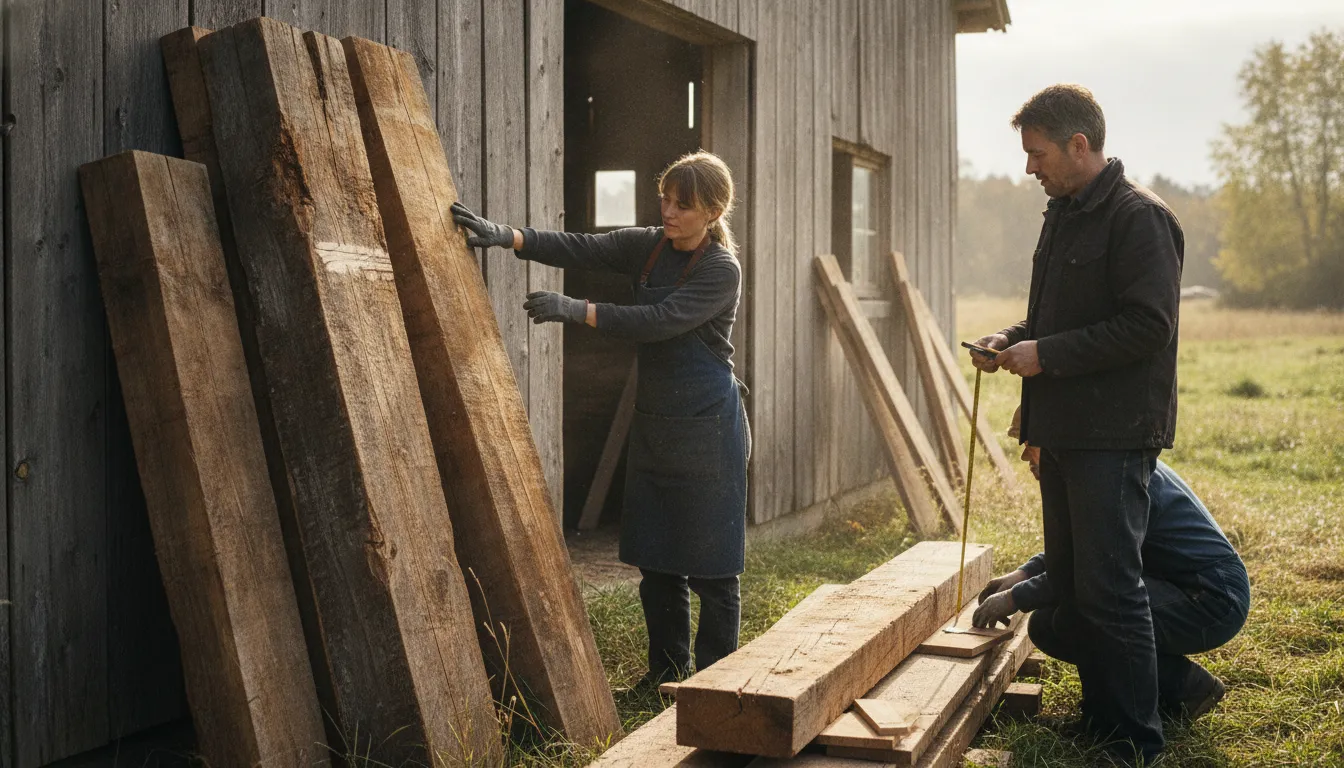
A responsible salvage decision begins before a board is removed. A supplier needs enough information to understand who controls the structure. Whether materials can be recovered safely and practically, and what kind of usable inventory the building may yield. That assessment is not a promise that every old barn or agricultural building will produce a particular grade, quantity, or appearance. Each structure has its own history, exposure, repairs, and condition.
- Confirm the property relationship and salvage rights. The supplier first establishes a working relationship with the property owner or responsible party. The parties should be clear about which structure is under discussion, what salvage is authorized, and whether the planned work is renovation, dismantling, or material recovery. Wood Crafting maintains relationships with property owners regarding structures in need of salvage or renovation. Its story of sourcing and salvaging reclaimed wood provides additional context for that approach. Buyers should not assume that an attractive old building is available simply because it appears vacant or deteriorated.
- Review the structure's overall condition. The assessment considers age-related deterioration, neglect, moisture exposure, fire or insect damage, and previous alterations. Condition varies across the same building, so a supplier looks beyond the exterior and considers which areas may yield recoverable boards, timbers, or fencing. This is a practical salvage review, not a structural engineering certification. If a project requires load-bearing performance, the architect or engineer must determine suitability through the appropriate project-specific process.
- Examine material characteristics and intended use. Reclaimed boards can show weathering, nail holes, notching, checking, color variation, strapping marks, bolt holes, wane, sapwood, saw textures, moss, lichen, or knots. These details help describe the material, but none should be treated as guaranteed across every board. The supplier also considers whether the recovered wood is better suited to siding, paneling, furniture. Trim, or another application rather than assuming that all lumber can serve the same purpose.
- Estimate recoverable quantities conservatively. A structure may contain a mixture of sizes, species, conditions, and usable lengths. An idle barn, water tank, or other historic structure can contribute to mixed reclaimed board inventory. But the final yield depends on what can actually be removed without excessive loss. Regional sourcing examples include New York, Vermont, New Hampshire, and Massachusetts, along with other Northeast and Midwest locations. Those examples describe sourcing territory, not a guaranteed inventory map.
- Define processing requirements. After salvage, material may be offered as-is, de-nailed, or power-washed depending on the product and project needs. De-nailing and cleaning can affect labor, appearance, and preparation, so buyers should discuss the desired finish before specifying quantities. A request for a clean, consistent wall treatment may require a different selection and processing conversation than a project seeking visible marks of use.
- Confirm the processed inventory before specification. The final step is to compare the buyer's requirements with material that has been salvaged, processed, and recorded in inventory. Confirm available dimensions, lengths, character, processing status, and quantity at the time of specification. Because reclaimed supply is variable, a supplier should verify current stock rather than infer availability from a photograph, an earlier project, or the general sourcing region.
This workflow gives buyers a clearer basis for evaluating reclaimed wood sourcing in the Northeast and beyond. It also keeps the distinction between a structure's potential yield and the inventory actually ready for a project.
What Does Provenance Mean in Reclaimed Wood Sourcing?
For an architect or builder, provenance is the documented sourcing context behind reclaimed material. It is more useful than a polished story built from assumptions. A responsible supplier should be able to explain the type of structure involved. How the material entered salvage, what processing it received, and whether comparable inventory is currently available. That information helps you specify with confidence without treating every weathered board as a fully documented historic artifact.
Takeaway: provenance should clarify what is known about the material and what still needs confirmation before it is specified.
What should be documented?
Start with the source structure. Agricultural salvage may include old barns, horse corrals, livestock fencing, water tanks, and other historic structures. Wood Crafting documents sourcing across examples in New York, Vermont, New Hampshire, Massachusetts, Ohio, Pennsylvania, and Indiana, with some Eastern Canadian material noted for specific products. Those locations describe sourcing examples, not a promise that a particular state or structure will have available inventory when your project begins.
Ask whether the material is genuinely reclaimed, rather than newly milled wood made to look old. Wood Crafting describes its supplied materials as 100% reclaimed. You can also ask how the supplier obtained salvage rights, whether the structure was dismantled because of age or neglect, and what happened between recovery and inventory. These questions establish a practical chain of context without requiring an invented construction date, former owner, or exact building history.
How does visible character support the story?
Physical evidence can help you assess whether the material fits the intended design. Depending on the board or beam, reclaimed wood may show nail holes, notching, checking, color variation, strapping marks, bolt holes, wane, sapwood, saw textures, moss, lichen, or knots. None of these traits is guaranteed on every piece, and no single mark proves a particular origin. Instead, the pattern of wear, weathering, and previous use should be considered alongside the supplier's sourcing information and the project's material requirements.
If authenticity is central to the design brief, use the related guide on how to verify reclaimed barn wood provenance. For projects involving substantial members, review the available reclaimed beams for your project and ask for the dimensions, condition, processing, and intended-use limitations that apply to the current material.
What should buyers confirm before specifying?
Confirm the source category, reclaimed status, visible character, processing level, and current inventory as separate items. A supplier may offer material as-is, de-nailed, or power-washed depending on product and project needs. Also distinguish sourcing geography from delivery coverage. Wood Crafting is headquartered in Millerton, New York, and sources across the Northeast and Midwest, but availability, quantities, and logistics still need to be confirmed for each order. That conversation gives your drawings and finish schedule a realistic material basis.
How Are Reclaimed Boards and Beams Processed for a Project?
Processing is the bridge between recovered material and a usable project specification. It does not erase the history of a board or beam, and it should not be treated as a universal finish package. The appropriate level depends on the product, the intended application, the desired surface, and the condition of the current inventory.
| Processing approach | What it may involve | When to discuss it |
|---|---|---|
| As-is | Retains more of the existing weathering, saw texture, nail holes, checking, and surface variation. | When visible patina and evidence of previous use are central to the design. |
| De-nailed | Removes accessible nails and metal remnants as part of material preparation. | When installation, handling, or downstream fabrication requires a cleaner starting point. |
| Power-washed | Cleans the surface while preserving some underlying character, subject to the material's condition. | When the project needs a different surface presentation or a defined preparation level. |
Wood Crafting documents as-is, de-nailed, and power-washed options depending on product and project needs. The exact result should be confirmed for the boards or beams being considered. A power-washed surface is not identical to newly milled lumber, and de-nailing does not make every piece dimensionally uniform. Wane, sapwood, knots, bolt holes, strapping marks, moss, lichen, and color variation may remain part of the material's character.
For siding and paneling, confirm the desired profile, thickness, face appearance, usable lengths, sorting expectations, and preparation level. Review the available reclaimed siding and paneling options before finalizing a finish schedule. For substantial members, discuss dimensions, condition, and intended use through the reclaimed beams for your project resource. Reclaimed does not by itself establish structural capacity, so load-bearing applications require the appropriate project-specific review.
Key takeaway: Processing should be specified as part of the material decision, not assumed from the phrase reclaimed wood.
Why Does Regional Reclaimed Wood Sourcing Matter to Project Planning?
Regional sourcing matters because it connects a material's visible character to the structures and working landscapes from which it was recovered. For a project team, however, regional origin is only one part of procurement. The practical questions remain quantity, dimensions, processing, current inventory, acceptable variation, and delivery logistics.
Wood Crafting is headquartered in Millerton, New York, in the Hudson Valley, and documents sourcing across the Northeast and Midwest. Some Eastern Canadian material is also noted for specific products. That footprint can support a credible material story for projects seeking weathered boards, livestock-fence character, or reclaimed beams. It does not guarantee that a particular species, profile, structure history, or quantity will be available on a chosen date.
Plan around material confirmation, not a regional label
- Share the project type, approximate quantities, dimensions, and intended application early.
- Identify which surface features are essential, acceptable, or unsuitable.
- Confirm whether the material is as-is, de-nailed, power-washed, or otherwise prepared.
- Allow time for sorting, review, fabrication, and logistics after current inventory is identified.
Architects and builders can also use the reclaimed wood beam sourcing guide when the project depends on larger members. For a broader product review, compare the available reclaimed beams for your project and document the material decisions in the schedule.
Request project information and discuss your reclaimed wood sourcing requirements.
The strongest sourcing conversation begins with a defined project brief and ends with a clear understanding of what the current material can and cannot provide. That is how regional agricultural salvage becomes a workable specification rather than an assumed inventory promise.
Frequently Asked Questions About Reclaimed Wood Sourcing
Where does reclaimed wood from the Northeast come from?
It can come from old barns, horse corrals, livestock fencing, agricultural buildings, water tanks, and other historic structures. Wood Crafting documents sourcing across the Northeast and Midwest, with some Eastern Canadian material noted for specific products.
Is reclaimed wood from one agricultural structure uniform?
No. Exposure, repairs, original construction, age, dismantling conditions, and prior use can create variation in species, dimensions, surface character, and usable yield. Boards from the same structure may still require sorting.
How can a buyer evaluate reclaimed wood provenance?
Ask what type of structure supplied the material, how salvage rights were obtained, what processing occurred, and what is currently in inventory. Treat visible features such as nail holes, checking, saw marks, and wane as supporting character, not as proof of a specific date or owner.
What processing options should a project team discuss?
Depending on the product and project, options may include as-is, de-nailed, or power-washed material. Confirm the actual preparation level, dimensions, usable lengths, surface expectations, and intended-use limitations for the inventory being considered.
Does Northeast sourcing guarantee delivery or availability?
No. Sourcing territory is not the same as a guaranteed delivery radius, lead time, or current inventory position. Share project requirements early and confirm quantity, processing, and logistics for the specific order.
Plan Your Reclaimed Wood Sourcing Conversation
Agricultural structures can supply reclaimed boards, fencing, paneling, and beams with visible evidence of prior use. The right material depends on the structure, the recoverable yield, the processing level, and the requirements of your project. Share those requirements before specifying a profile or finish.