
How to Source Reclaimed Wood Beams for Custom Homes
For a custom home, a reclaimed beam is both a material specification and a visible record of place. Before selecting a profile, define whether the beam will carry load, frame an opening, or serve as an exposed architectural focal point. That distinction determines which dimensions, condition details, processing options, and project documentation belong in the quote. Request a Quote early so the supplier can assess availability against the project's actual requirements.
Request a Quote for your reclaimed beam project so the supplier can confirm dimensions, processing, and availability against the real product before you proceed.
To understand how to source reclaimed wood beams, start with the intended use, required dimensions, species or visual character, and acceptable surface conditions. Then work with a regional supplier that can explain provenance, assess each beam's condition, and quote processing and delivery for the specific project.
Genuine salvaged timber may show checking, wane, nail holes, hand-hewn marks, and weathering rather than uniform factory distressing. These details can be central to the design, but structural applications require careful technical evaluation. The following specifications and applications of reclaimed wood beams provide useful context before you compare structural and decorative sourcing criteria.
How to Source Reclaimed Wood Beams for Structural and Decorative Use
The first sourcing decision is functional: will the beam carry a verified load, or will it create a visible architectural feature? Reclaimed timber can serve either purpose, but the selection process differs. Structural applications require project-specific engineering assessment, while decorative beams are chosen primarily for scale, surface character, and visual continuity with the surrounding materials.
For structural work, provide the supplier and project team with the intended span, load requirements, connection details, and dimensional constraints before selecting a piece. Reclaimed beams are custom by nature, and salvaged timber does not conform to the predictable stock sizes of new lumber. Residual strength and stiffness must be evaluated for the actual beam under consideration. A material review should account for checking, ringshake, nail holes, wane, prior exposure, and any material removed during de-nailing or trimming. Research on reclaimed dimensional lumber also emphasizes that recovered material requires technical evaluation before modern structural use: review the USDA research on reclaimed wood engineering properties.
Decorative use offers more flexibility, but it still benefits from deliberate specification. Exposed ceiling beams, mantels, headers, and large architectural accents are often selected for their patina, hand-hewn marks, weathering, and visible nail holes. Tight old-growth rings can signal the slow growth and maturity associated with historic timber, while irregular surfaces provide texture that machine-planed new lumber cannot reproduce. Those marks should be authentic evidence of service and age, not manufactured distressing. The right piece balances character with the dimensions, finish, and sightlines required by the design.
Structural and decorative reclaimed beam sourcing considerations
- Engineering assessment: Required for the intended load, span, connections, condition, and residual strength. Focuses on stability, condition, fastening, and safe integration into the finished design.
- Species preference: Prioritize a suitable species, soundness, grain, and section for the engineer's requirements. Prioritize grain character, patina, hand-hewn marks, checking, and the desired visual tone.
- Dimensions: Specify the required section, span, bearing, and connection tolerances before sourcing. Specify visible length, depth, projection, and the amount of natural irregularity the design can accept.
- Provenance: Document prior use and condition where relevant to assessment and material selection. Use age, weathering, nail holes, and regional history to reinforce the project's material story.
When the beam is meant to be seen, communicate which features should remain as-is and which processing steps are acceptable. If the goal is a structural focal point with genuine history, explore reclaimed beams for your custom home project and request a project-specific review rather than relying on a generic size or appearance description.
Species and Grade Considerations for Reclaimed Beam Projects
Reclaimed beams carry both material history and material variability. Timber recovered from barns and other agricultural structures across the Northeast and Midwest may show dense grain, weathered surfaces, and evidence of the work performed by earlier builders. For an architectural team, the right selection balances the desired visual character with the beam's actual condition and intended role. Key specification: treat every salvaged beam as an individual material, not as an interchangeable piece of standardized new lumber.
What species appear in salvaged structures
The species available in a reclaimed beam batch depend on the original structure, its region, and the way the timber was used. Rather than assuming a species from color alone, request confirmation of the available material and review end grain, growth pattern, dimensions, and surface history with the supplier. Older timber can display tightly spaced annual rings associated with slow growth and long maturity. Regional provenance helps explain why two beams with similar dimensions may have very different grain and patina.
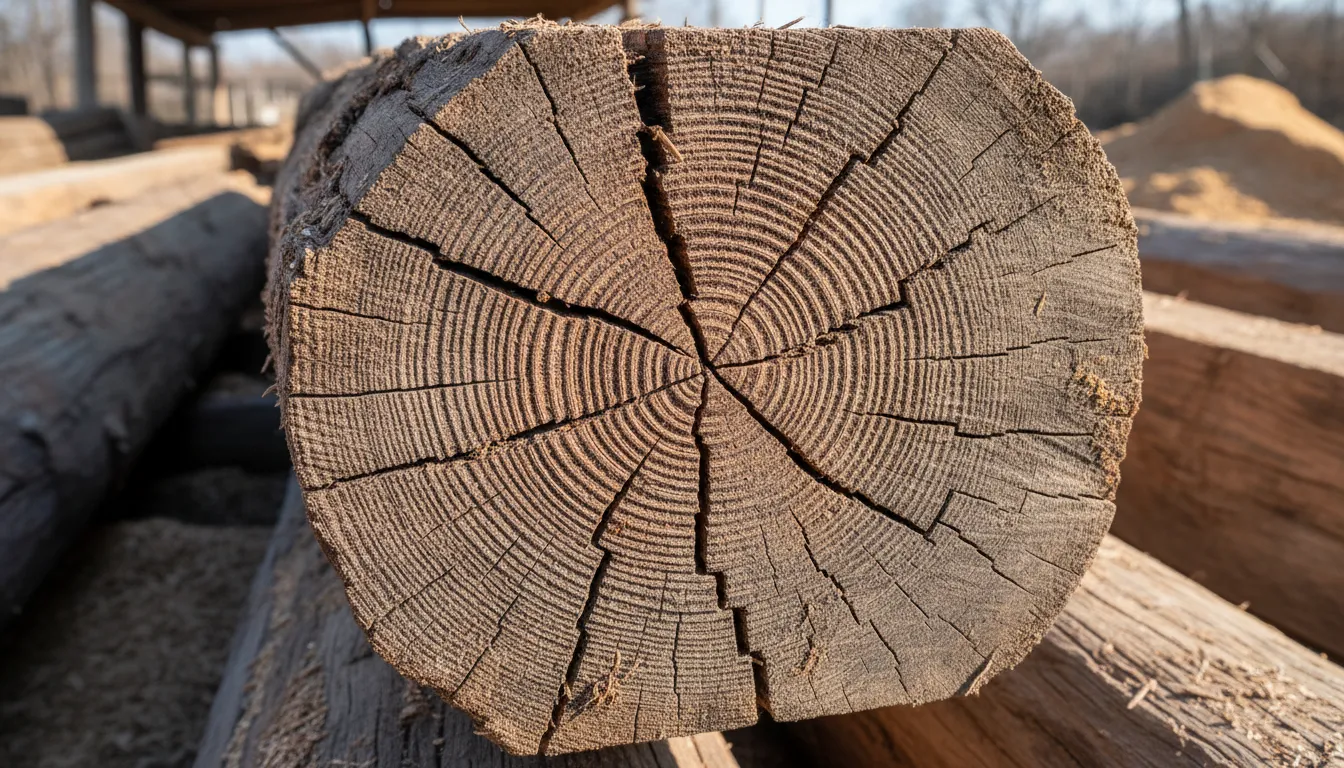
Surface evidence can be just as important to the design. Hand-hewn tool marks, irregular faces, nail holes, and accumulated patina preserve the beam's working history. Some reclaimed material is more restrained, while other pieces have pronounced weathering or texture. The same sourcing logic applies across related reclaimed materials: gray corral board salvaged from animal fencing and red barn siding each carry distinct textural and structural traits. But neither should be treated as a universal proxy for beam species or grade.
How to read grade and condition
Grade decisions begin with use. A beam intended as an exposed ceiling element may be selected primarily for scale, grain, and visible character. A beam proposed for a load-bearing application requires a more rigorous project-specific evaluation by the appropriate design and engineering professionals. Salvaged lumber should not be assigned a structural capacity based only on appearance or age.
Expect natural variation. Checking, or drying-related separation along the grain, is common in large-format salvaged timber and is not automatically a defect. Ringshake, face-nail holes, wane, prior fastener locations, and other marks may also appear. USDA Forest Service research found that remilled reclaimed lumber products were generally high quality after processing. The same study noted that checks, ringshake, and face-nail holes occurred in some pieces: review the research on processing reclaimed lumber. Those observations support inspection, not blanket approval.
Ask for condition notes, photographs, actual dimensions, and the processing level, such as as-is, de-nailed, or power washed. Key specification: document defects and soundness piece by piece, then match the selected beam to the design intent and technical requirements.
What Dimensions to Bring to a Beam Quote Request
A useful beam quote starts with the dimensions your project can accept, not with a standard stock number. Reclaimed beams are custom by nature, so stock sizes do not apply in the same way they do for new dimensional lumber. The available material, the intended use, and the processing level all need to be matched to the project through a project-specific quote.
Prepare the core measurements
Give the supplier the clearest dimensional target available from the drawings or field conditions. If the dimensions are flexible, identify the acceptable range rather than presenting one number as mandatory. Prepare:
- Cross-section: the desired width and depth, measured separately.
- Length: the required length for each beam, including any minimum length and whether longer pieces could be trimmed.
- Quantity: the number of beams required, along with a schedule if different locations call for different sizes.
- Application: whether the beams are intended for an exposed design element, a ceiling treatment, or a load-bearing use requiring review by the project team.
For hand-hewn material, allow for the irregularity that gives the beam its character. As a customer term, hand-hewn tolerance is approximately 1 inch, and supplied lengths are treated as minimums. Confirm how those tolerances affect your layout before finalizing the order.
Specify the processing level
State how you want the material delivered. An as-is beam preserves more of its existing surface, including tool marks, checking, wane, nail holes, and weathering. A de-nailed beam has had metal removed, while power washed material has received surface cleaning. These choices affect the appearance and the preparation required on site.
Planing and trimming may be appropriate when a more controlled surface or edge is needed, but those options depend on the product and availability. Tongue-and-groove and shiplap are not universal beam treatments. Note the finish or fit requirements in the quote request so the supplier can confirm what the specific batch can support.
Bring project context with the dimensions
Include drawings, photos, a beam schedule, or a simple sketch when available. Clear information helps the supplier assess usable lengths and make better processing decisions. Research on reclaimed lumber also indicates that careful on-site trimming can improve value-added yield, which makes an accurate cut plan worth sharing early (USDA Forest Service research).
Because every batch varies, the final quote depends on the dimensional needs, processing level, delivery logistics, and project requirements. Request a quote with the measurements and acceptable alternatives together, rather than assuming a fixed price or uniform inventory.
Lead Time and Custom Processing for Reclaimed Beams
Reclaimed beams do not move through a standard-stock ordering process. Each batch reflects the structure it came from, the dimensions recovered, and the condition of the material after deconstruction. Some items may be in stock, while others require additional sourcing. Treat availability and processing as project variables from the beginning, particularly when the beams are part of a coordinated architectural schedule.
What drives beam availability and scheduling
Start by sharing the intended use, required lengths and cross-sections, quantity, finish expectations, and delivery location with the supplier. Reclaimed beams are custom by nature, so a project-specific conversation is more useful than assuming a catalog size or universal lead time. For a structural application, the design and engineering team should also define the performance information needed for evaluation before material selection is finalized.
Recovery method matters. Deconstruction, rather than demolition, is designed to dismantle a building in a way that can recover usable dimensional lumber and beams. A USDA Forest Service study notes that reclaimed lumber from building deconstruction is a substantial resource. But that residual engineering properties such as strength and stiffness require technical evaluation for modern structural use. Read the USDA research on residual engineering properties of deconstructed lumber when your team needs additional technical context.
Processing should be specified with equal care. Depending on the product and batch, options may include de-nailing, cleaning, planing, trimming, tongue-and-groove, or shiplap. These services are not universally available for every beam, and removing more material can affect the usable dimensions and character of a salvaged piece. The USDA research also found that careful on-site trimming can improve the yield of value-added products, which reinforces the importance of reviewing cut plans before processing begins.
Key specification: distinguish between an as-is beam, a de-nailed or power-washed beam, and a beam requiring further dimensional preparation. That distinction helps the supplier identify suitable material and helps the project team coordinate downstream framing, detailing, and finish work. For design guidance after selection, see how to finish reclaimed wood beams.
Because shipping lead times depend on the selected batch, processing level, dimensions, and delivery logistics, call 845-373-8020 or request a quote for a project-specific schedule. Early coordination gives the supplier and project team room to evaluate availability before the beam package becomes a critical-path decision.
How to Work With a Northeast Reclaimed Wood Supplier on a Beam Order
A beam order should begin with provenance, project intent, and a conversation about the material you actually need. A Northeast supplier may source beams and other reclaimed materials from old barns, horse corrals, livestock fencing, and related agricultural structures across the Northeast and Midwest. That regional history matters. It gives the material a traceable connection to working landscapes while preserving the marks of its former use.
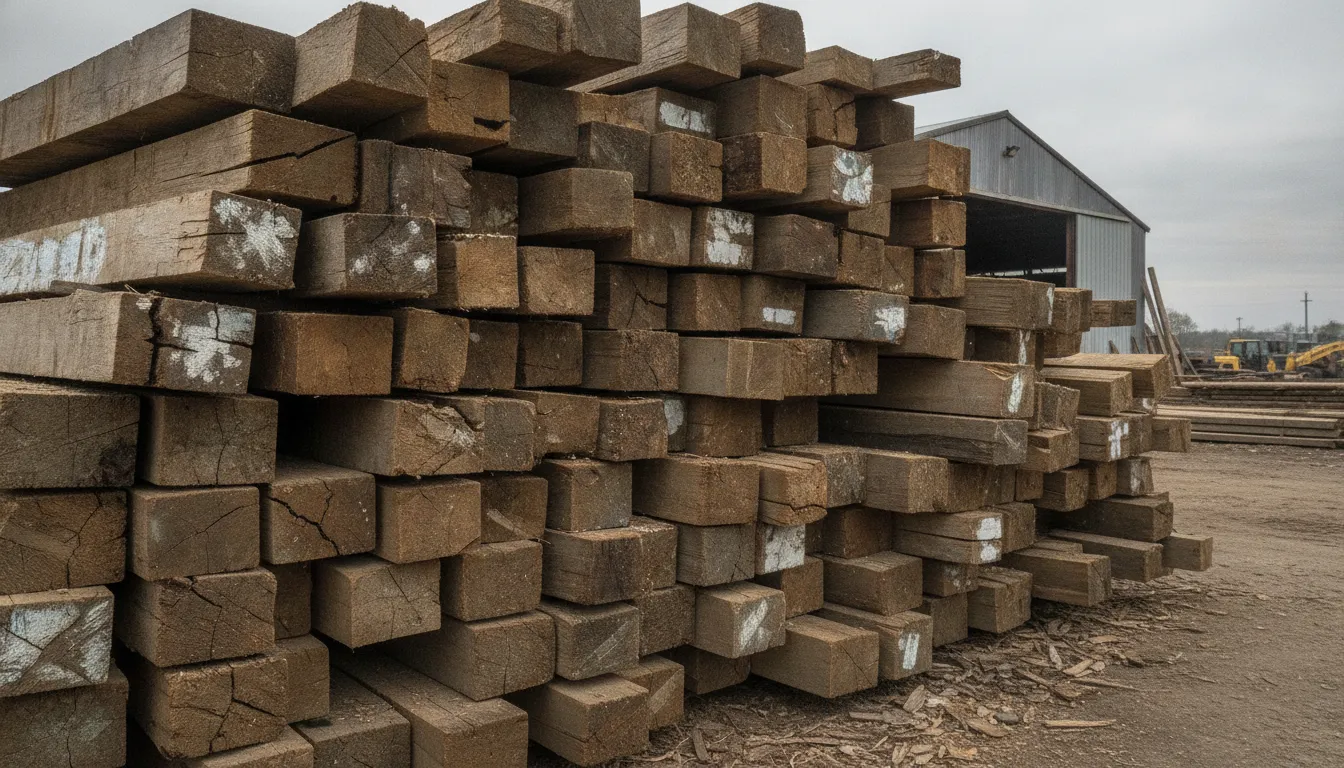
Vet the source, not just the surface
Ask where the material came from and how it was recovered. Responsible deconstruction and careful salvage help protect usable timber and distinguish genuine reclaimed wood from newly milled lumber made to look old. Look for clear answers about the structure's regional origin, the recovery process, and the condition in which the beams were found. Weathering, checking, wane, nail holes, saw marks, and other irregularities can be part of the material's history, but each beam still deserves an individual assessment.
Key specification: Regional provenance should be documented as part of the material conversation, not treated as a vague design claim. If the project calls for a particular degree of patina, hand-hewn character, or visible age marks, describe that preference before the supplier assembles options.
Make the quote collaborative
Reclaimed beams are custom by nature. Unlike new dimensional lumber, they do not reliably conform to a single set of stock dimensions, species, surface conditions, or availability. Share the project type, intended quantity, approximate dimensions, desired appearance, delivery requirements, and whether the beams are intended as exposed architectural elements or part of a structural design. The supplier can then discuss suitable inventory and the processing level that fits the brief.
This is a quote-based process rather than a self-service purchase. Availability varies by batch, and a quote may need to account for the specific material, dimensions, processing, and delivery logistics. Wood Crafting quotes are valid for 30 days, giving the project team a defined window for review and coordination. For a large residential or commercial order, early communication is especially valuable because the goal is to align a meaningful quantity of material with the design schedule, not to select an arbitrary small retail bundle.
Large reclaimed beams often become architectural focal points in great rooms, entries, hospitality spaces, and other high-visibility settings. Their scale makes character and provenance as important to the design decision as practical suitability. Review sample photographs or available material with the supplier, then compare the beam's grain, patina, marks, and irregularities against the surrounding palette. For projects seeking beam materials from regional structures, a direct discussion can keep the order grounded in both the story of the wood and the requirements of the project.
Frequently Asked Questions
How is reclaimed wood sourced?
Reclaimed beams are typically recovered from old barns, horse corrals, livestock fencing, mills, and other agricultural or historic structures. Responsible deconstruction allows usable material to be recovered more carefully than demolition. Wood Crafting focuses on regional sourcing in the Northeast and Midwest, so the beam's provenance, weathering, patina, and prior use can inform the design.
How much do hand-hewn beams cost?
There is no reliable fixed price. Reclaimed beams are custom by nature, and the quote depends on species, dimensions, length, condition, quantity, processing level, delivery logistics, and the project's requirements. Hand-hewn tool marks, checking, nail holes, and other character details also affect selection. Request a project-specific quote rather than comparing reclaimed beams with standardized new lumber.
What should I look for when sourcing barn wood beams?
Ask about the beam's source, species, dimensions, condition, and processing history. Authentic salvaged timber may show age marks, weathering, nail holes, hand-hewn tool marks, wane, or checking. Those features can be desirable, but each piece still needs individual assessment for rot, ringshake, insect damage, and other defects. For load-bearing use, have the design team and an appropriately qualified professional evaluate suitability; reclaimed lumber's residual engineering properties require technical assessment. USDA Forest Service research documents this evaluation need.
How do I specify reclaimed wood beams for a custom home?
Start by identifying whether each beam is structural, decorative, or an exposed ceiling feature. Provide required dimensions, span or placement, species preference, desired surface character, acceptable defects, quantity, and delivery location. Also state whether you need beams as-is, de-nailed, power washed, trimmed, or otherwise processed. Standard stock sizes may not apply, so coordinate with the supplier early and confirm availability before finalizing the design.
Ready to Specify Your Reclaimed Beams?
A clear quote request helps align beam dimensions, surface character, processing preferences, and project requirements before material is selected. For a custom home project, share the intended application and the specifications you have available. Request a quote for your reclaimed beam project, or call 845-373-8020 to discuss the next step with the Wood Crafting team.