
Source Reclaimed Wood Kitchen Island Barn Board for Your Build
Request a quote for reclaimed barn board for your kitchen island project. A custom kitchen island begins with more than a finish color. The barn board needs to suit the island's proportions, use, and design intent while retaining the physical evidence that makes reclaimed material distinctive. Look for a supplier who can explain where each batch came from, how it was processed, and what variation to expect before you specify it.
Request a Quote for reclaimed barn board for your kitchen island project.
For a reclaimed wood kitchen island barn board project, source genuine salvaged boards with traceable regional provenance. Then match the batch, texture, dimensions, and processing level to the island design. Confirm whether the material is best suited to cladding or a top, and request a project-specific quote before finalizing your build.
Wood Crafting supplies reclaimed barn board sourced from old agricultural structures in the Northeast and Midwest, including boards with authentic patina, nail holes, checking, wane, and saw marks. Review this specification guide for barn board, then consider how the material's character and practical requirements should shape the island surface.
Using Reclaimed Barn Board as Kitchen Island Cladding vs. a Solid Wood Top
For a custom reclaimed wood kitchen island, barn board can serve two distinct design purposes: decorative cladding over a stable island frame or a substantial solid wood work surface. The right choice depends on the island's proportions, expected use, and the character you want the material to show.
Barn board cladding for a dimensional island design
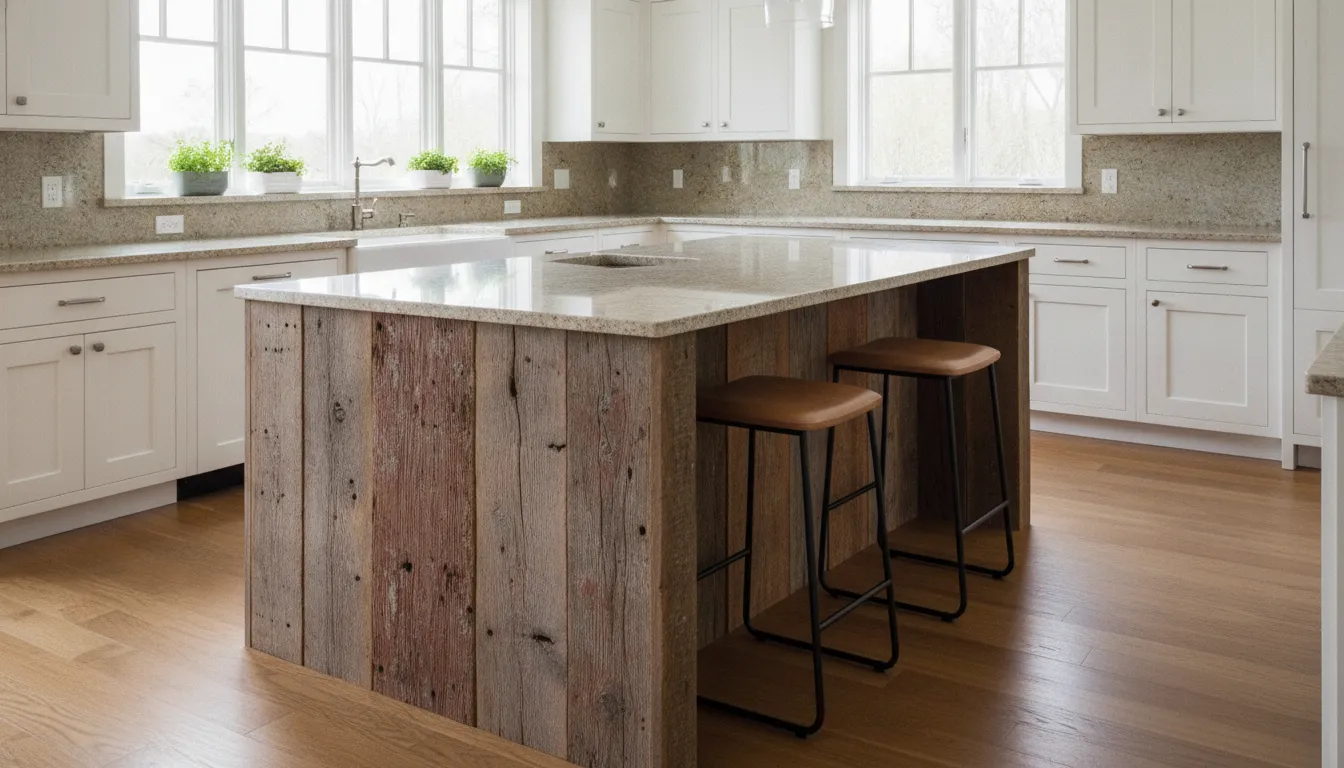
Vertical cladding is often the most direct way to use reclaimed barn board on an island. Boards can wrap the exposed faces of a framed cabinet or base, bringing weathered color and historic texture to the room without requiring every piece to function as a thick structural top. Red Barn Board, Reclaimed Gray Barn Board, Mixed Brown Board, Faded Red, White Reclaimed, and Wire Brushed varieties each create a different visual field. Cladding also allows a designer to arrange boards by tone, width, and patina across the island faces.
Natural irregularities are part of the material's appeal. Nail holes, bolt holes, checking, wane, and sapwood can preserve the evidence of the board's earlier life. They should be reviewed as part of the design rather than treated as defects. For a closer look at grading, dimensions, and available processing, see the specification guide for barn board.
When a solid reclaimed wood top makes sense
A solid reclaimed wood top creates a heavier furniture-like presence and puts the grain, milling marks, and patina at eye level. It may require thicker stock, careful selection, and project-specific fabrication by the builder or millworker. Reclaimed beams are custom by nature and require a project-specific quote, so they should not be assumed to share uniform dimensions or availability with barn board.
Planing, tongue-and-groove, and shiplap processing depend on the specific product. Discuss the intended use, dimensions, edge details, and finish requirements when requesting a quote so the supplied material matches the island design.
Which Barn Board Variety Works Best for a Reclaimed Wood Kitchen Island?
The right barn board depends on the island's visual role, surrounding finishes, and the amount of variation you want to preserve. Wood Crafting's reclaimed boards come from old barns and related agricultural structures across the Northeast and Midwest. So color and surface character reflect genuine regional history rather than a manufactured finish. For a project-specific recommendation, compare the available varieties with your designer or builder before requesting a quote.
| Variety | Color | Texture and character | Best use |
|---|---|---|---|
| Red Barn Board | Traditional red with paint remnants | Weathered surface with visible history | A strong focal face on a farmhouse or traditional island |
| Reclaimed Gray Barn Board | Silvery gray | Soft, weathered patina | Calm contrast with white, stone, or contemporary cabinetry |
| Mixed Brown Board | Varied earth tones | Natural color variation between boards | Projects that benefit from warmth and an organic, layered look |
| Faded Red | Worn, muted red | Subtle painted patina | A restrained rustic accent without highly saturated color |
| White Reclaimed | Whitewashed or painted white | Light surface with aged variation | Bright kitchens where the island needs texture without visual weight |
| Wire Brushed | Color varies by board | Smoother, tactile grain emphasis | Designs seeking a more refined surface with reclaimed character |
| Gray Corral Board | Distinct silvery gray | Patina shaped by livestock fencing | A bolder rustic statement with a clear agricultural provenance |
For a cohesive island, specify whether you want consistent tones or intentional variation, and identify how the material will be used. Reclaimed boards can retain nail holes, checking, wane, and other marks that make each batch distinctive. Availability and processing options vary, so dimensions, surface preparation, and any planing or profile work should be confirmed as part of the quote.
Sealing and Finishing Reclaimed Wood for Food-Adjacent Kitchen Surfaces
Start with inspection and de-nailing
Before reclaimed barn board is considered for a kitchen island surround or other food-adjacent surface, inspect each board for nail holes, bolt holes, checking, wane, sapwood, and loose material. De-nailing removes embedded fasteners and helps the fabricator identify areas that need trimming or exclusion. Reclaimed boards are not uniform, so the intended use and the required finished dimensions should guide selection.
Clean and stabilize the material
Power washing can remove accumulated dirt and surface residue from salvaged boards. Kiln-drying is another important processing step because it eliminates bugs and fungus before the material enters a finished interior environment. The appropriate processing sequence depends on the product and its condition, rather than following one universal specification for every batch.
Choose the texture and surface preparation
Planing can create a more consistent surface, but its availability depends on the board and the desired character. Wire brushing can refine the surface while retaining visible weathering. You can also specify the historical milling texture: circle-sawn boards show curved saw marks, while band-sawn boards carry the straighter marks associated with that milling process. These details affect both appearance and how a finish presents.
Coordinate the finish with the application
For a food-adjacent setting, coordinate the selected sealer or finish with the builder, fabricator, and project requirements. A kitchen island may need different performance considerations depending on whether reclaimed wood is used as cladding, a decorative panel, or a work surface. Wood Crafting supplies reclaimed materials, not installation or finish-system certification.
Balance preservation with sustainability
Keeping existing lumber in service supports a circular approach to materials. The USDA Forest Products Laboratory notes that wood products can sequester carbon and have low embodied energy compared with other construction materials. Benefits that can support sustainability goals when reclaimed wood is specified: USDA Forest Products Laboratory research. For additional processing and specification context, see the specification guide for barn board.
Working with a Custom Builder to Incorporate Reclaimed Barn Board Material
A custom builder can translate the character of reclaimed barn board into a kitchen island that fits the room, the joinery, and the demands of the project. Wood Crafting supplies the reclaimed material only. Your builder, cabinetmaker, or millwork team is responsible for design development, fabrication, substrate preparation, finishing, and installation.
Bring the builder into the material-selection process early. Share the island dimensions, cladding layout, edge details, expected wear, and whether the board will be used on the face, end panels, or another visible element. This lets the builder evaluate available board widths, thicknesses, nail holes, checking, wane, and sapwood before fabrication begins. It also helps the team decide where to preserve irregularities and where a clean, consistent run is more appropriate.
Reclaimed wood is commonly handled through a made-to-order model. A project may require sorting boards by tone, texture, width, or weathering rather than selecting a uniform manufactured product from a fixed specification. Processing options such as planing, trimming, tongue-and-groove, or shiplap depend on the particular material and should be confirmed before the builder finalizes the shop drawings.
For a high-value residential, hospitality, or commercial installation, plan around the full material quantity rather than sourcing a small retail batch. Wood Crafting works with architects, designers, custom builders, developers, and other teams planning larger reclaimed-material packages. Regional provenance matters here: boards salvaged from Northeast agricultural structures carry genuine history and patina that a builder can intentionally feature instead of sanding away.
When the island is part of a broader architectural scheme, consider pairing its barn board with structural or decorative members. See our guide to sourcing reclaimed wood for custom projects when beams and island materials need to work together.
How to Order and Specify Barn Board for a Reclaimed Wood Kitchen Island Project
A successful kitchen island specification begins with a clear material brief. Share the island's approximate dimensions, the area to be clad, desired board width and thickness, preferred surface character, and whether the design calls for an as-is, de-nailed, power-washed, or further processed finish. Include photographs, elevations, or drawings when available so the material can be evaluated against the design intent.
Define the appearance and processing requirements
Describe the character you want to preserve, such as weathered patina, circle-sawn texture, nail holes, checking, wane, or sapwood. Also identify practical requirements, including planing, trimming, tongue-and-groove, or shiplap. These options depend on the product and are not available for every batch. If the island includes a substantial wood element or supporting feature, reclaimed beams are custom by nature and require their own project-specific review.
Request a quote around the complete project
Pricing is project-specific because reclaimed materials vary by batch, dimensions, processing level, delivery logistics, and the requirements of the installation plan. Availability also changes: some barn board is in stock, while other material may need to be sourced or treated as a custom order. A quote is valid for 30 days, giving a builder, designer, or homeowner a defined window for coordination and approval.
For a large residential, hospitality, or commercial project, call 845-373-8020 or submit a Request a Quote with the anticipated quantity and delivery location. Wood Crafting supplies the reclaimed material, allowing your project team to align the selected batch with the island's design and construction requirements.
Frequently Asked Questions
How do you source authentic barn board for a kitchen island?
Work with a reputable reclaimed wood supplier that can explain whether the material came from old barns, livestock fencing, or other historic agricultural structures. Ask about regional provenance, available quantities, and the board's condition. A clear sourcing history helps you select material with genuine weathering and patina rather than new lumber made to look old.
What is the difference between barn board and corral board for furniture?
Barn board typically offers greater variation in color, weathering, and surface texture because it may come from different parts of agricultural buildings. Corral board is salvaged from animal fencing and often has a more consistent silvery-gray, deeply weathered appearance. The right choice depends on whether the island design calls for visual variation or a more uniform gray palette.
Is reclaimed barn board safe for kitchen island use?
It can be appropriate when the material is carefully evaluated and properly processed for the intended application. Ask whether boards have been de-nailed and power washed, and discuss rot, contaminants, structural condition, and the finish with your builder or fabricator. Processing options vary by product, so do not assume every reclaimed board is prepared the same way.
What textures of barn board are available for a kitchen project?
Depending on the material and its original milling, options may include circle-sawn, band-sawn, naturally weathered, or wire-brushed surfaces. Nail holes, bolt holes, checking, wane, and sapwood can contribute authentic character. Wire-brushed board may suit designs seeking a more refined surface, while saw marks and weathering preserve a stronger historic expression.
How should a reclaimed barn board island be maintained?
Maintenance depends on the finish and whether the board is used as cladding, a decorative surface, or another island component. Follow the builder's finish recommendations, clean gently, and avoid harsh chemicals that could damage the surface or alter its patina. Confirm the care requirements before fabrication so the selected material and finish support the kitchen's daily use.
Ready to Source Barn Board for Your Kitchen Island?
A project-specific quote can help you evaluate reclaimed barn board by available character, dimensions, processing needs, and the scale of your island build. Share your material requirements and project details with Wood Crafting to begin the conversation. Request a quote for reclaimed barn board for your kitchen island project.