
Is Reclaimed Wood More Sustainable Than New Lumber?
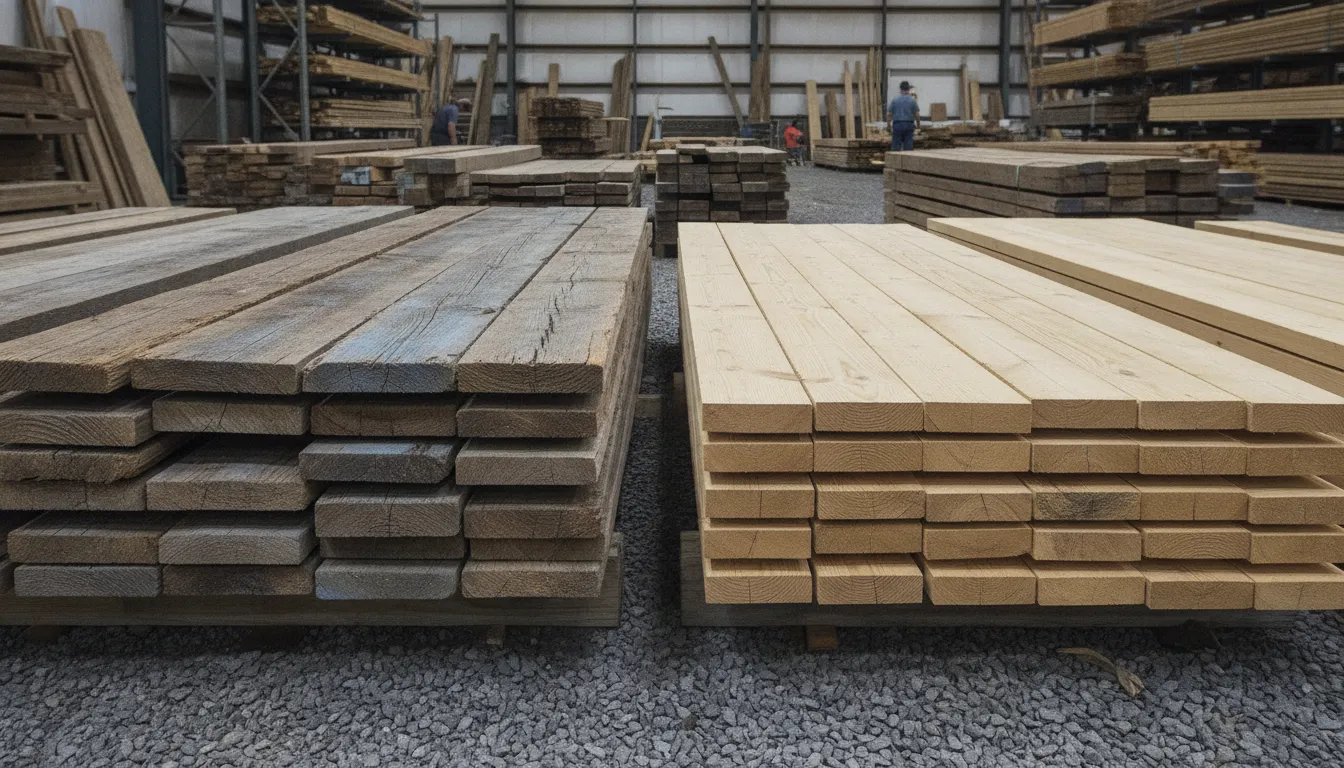
When a project team asks whether reclaimed wood is more sustainable than new lumber, the answer depends on the full material story. That is why the question, is reclaimed wood more sustainable than new lumber, requires a review of prior service life, salvage, processing, transportation, performance, and end-of-life planning.
Wood Crafting's sustainable reclaimed wood sourcing offers a practical starting point for architects, builders, developers, and designers. The company sources salvaged lumber from old barns, horse corrals, and livestock fencing in the Northeast and Midwest. For broader context, review the reclaimed wood sustainable-building resource.
Why Is Reclaimed Wood More Sustainable Than New Lumber?
Embodied carbon is the greenhouse gas emissions associated with a material across its life cycle, including salvage or harvest, manufacturing, processing, transport, installation, maintenance, and end of life. Reclaimed wood changes the starting point because an existing product is recovered for another use. The comparison still needs project-specific evidence, not a blanket environmental claim.
For architects and builders, this distinction matters because a material can reduce operational energy demand while still carrying a substantial manufacturing footprint. A responsible comparison therefore considers the full life cycle rather than treating a product label such as "natural" or "reclaimed" as proof of a lower impact. The relevant question is not simply whether wood is renewable. It is how the specific material was sourced, prepared, transported, installed, maintained, and expected to perform at the end of the project.
Key takeaway: Embodied carbon is a project-specific life-cycle question. Reclaimed wood can offer meaningful environmental advantages, but those advantages should be evaluated alongside processing, transportation, specification, and end-of-life requirements.
Why prior service life changes the comparison
New lumber begins with harvesting, log transport, milling, drying, grading, and distribution. Reclaimed lumber begins with an existing wood product that has already served in a structure, fence, or other application. Salvaging it can extend the useful life of that material and reduce the need to manufacture a replacement from newly harvested feedstock. That is the basic sustainability case behind reclaimed wood, although the actual outcome depends on the project details.
The USDA Forest Products Laboratory explains that lumber salvaged from building removal retains environmental qualities associated with new wood, including its renewable nature and carbon storage. It also adds environmental attributes by recovering material that might otherwise be discarded and putting it back into productive use. The USDA discussion of reclaimed lumber provides useful background for teams establishing a defensible material rationale.
What a specification should account for
A sound material review should document provenance, expected yield, sorting and grading, cleaning, metal removal, machining, treatment, delivery distance, and installation method. Reclaimed boards may require more inspection or preparation than standard new stock. Those steps consume labor and energy, and transportation can influence the result when material travels long distances.
Design teams should also separate environmental value from structural qualification. The USDA notes that reclaimed lumber acceptance has been hampered by limited formal recognition in grading and engineering design standards. Where structural performance is involved, verify the applicable grading, testing, and engineering requirements rather than assuming that age or appearance establishes suitability. This combination of life-cycle thinking and documented performance produces a stronger specification than a sustainability claim alone.
Is Reclaimed Wood More Sustainable Than New Lumber in Practice?
Often, yes, when the comparison accounts for avoided new harvest, reuse of existing material, and waste diversion. The result still depends on sourcing, transportation, processing, treatment, performance, and end-of-life planning. Reclaimed wood is not automatically carbon-neutral or lower-impact in every application, so project teams should document the full material pathway.
The U.S. Department of Agriculture's Forest Products Laboratory notes that lumber salvaged from building removal retains the environmental qualities of new wood while adding environmental attributes. Those added attributes include extending the useful life of an existing material and reducing the need to make a replacement product. BioResources likewise places reclaimed lumber within a circular-economy model, where traditional waste products are upcycled into useful alternatives.
| Life-cycle stage | Reclaimed wood | New lumber | What to verify |
|---|---|---|---|
| Harvest | Uses material recovered from an existing structure. In Wood Crafting's model, no new trees are harvested for the reclaimed material. | Begins with harvesting trees for a new supply of wood products. | Document the source structure, salvage method, and whether the recovered boards would otherwise be discarded. |
| Waste | Extends the service life of boards and can divert material from disposal. Industry benchmarks sometimes estimate waste diversion, but Wood Crafting does not publish a measured project-specific figure. | Creates a new product, while harvest and manufacturing residues depend on the mill and its end markets. | Ask how much of the recovered material is usable and how offcuts will be handled. |
| Processing | May require de-nailing, sorting, cleaning, grading, trimming, and milling. Processing energy is project-specific, and Wood Crafting does not publish a measured embodied-energy figure. | Requires manufacturing steps from log to finished product, with energy use varying by product and facility. | Compare actual processing steps, equipment, yield, and documented energy data where available. |
| Transport | Can have a lower or higher impact depending on salvage location, processing site, and delivery distance. | Also carries transport impacts from forest to mill, distributor, and jobsite. | Map the route and compare delivered material, not just the point of origin. |
| End-of-life | Another service life may delay disposal and preserve material value. Final benefits depend on future reuse or disposal. | May also be reused or recovered, so end-of-life is not inherently determined by the original product type. | Specify reversible assemblies and plan for future disassembly where practical. |
The strongest comparison is therefore conditional: reclaimed wood is generally more circular when it replaces a newly produced equivalent and is sourced, processed, and transported efficiently. It should not be presented as carbon-neutral, automatically certified, or superior in every application. The USDA also identifies limited formal recognition in some grading and engineering standards as a barrier to wider adoption. Sustainability and technical suitability must be documented together.
Wood Crafting does not publish measured project-specific carbon, waste-diversion, or embodied-energy results. For a defensible decision, retain provenance records, processing details, product requirements, and delivery assumptions in the specification package.
How Does Reclaimed Wood Support Circular Construction?
Circular construction keeps useful materials in service instead of treating them as disposable inputs. Reclaimed wood fits that model because an existing product is recovered, inspected, and prepared for another application. Salvaging boards from an old barn, horse corral, or livestock fence can extend service life without requiring a new tree harvest for that material.
That distinction matters when a project team asks, "is reclaimed wood more sustainable than new lumber?" The answer depends on sourcing, processing, transportation, performance, and end-of-life planning. Reuse creates a strong circular advantage, but it is not a reason to ignore the rest of the material life cycle.
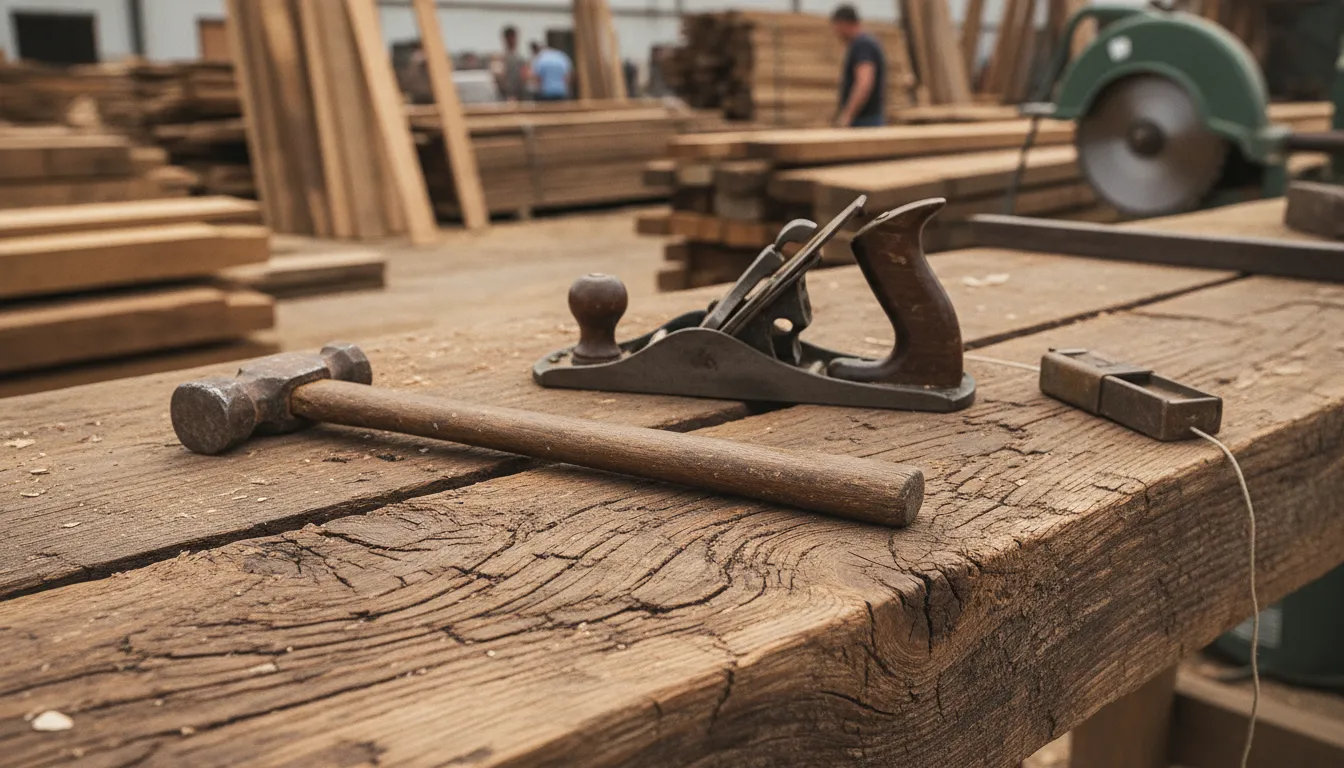
Salvage extends a material's prior service life
In a conventional linear model, wood moves from harvest to manufacturing, construction, use, and disposal. Circular construction changes the path after the first use. A sound board can be recovered, inspected, cleaned, graded, and prepared for another application. Its patina, wane, checking, and marks remain evidence of prior service rather than defects to erase.
The U.S. Forest Products Laboratory notes that lumber salvaged from building removal retains the environmental qualities associated with new wood while adding environmental attributes. A circular approach therefore recognizes both the material's renewable origin and the value of keeping an existing product in use. Read the Forest Products Laboratory discussion of reclaimed lumber.
Landfill diversion requires documented sourcing
Reclaiming wood can divert usable material from disposal, but the benefit is strongest when the chain of custody is clear. Wood Crafting sources 100% reclaimed material from old barns, horse corrals, and livestock fencing across the Northeast and Midwest. Its sustainable reclaimed wood sourcing model connects the finished product to a known origin and prior use.
For specifiers, provenance is practical information. It helps the team understand what was salvaged, where it came from, how it was prepared, and which application fits its condition. The same material can bring circular value to reclaimed wood siding and paneling or contribute character and history as reclaimed beams. Processing and transport still require evaluation. But reuse gives the project a defensible starting point: an existing material is being put back to work rather than replaced by newly produced stock.
Request a project quote for your material review
Does Regional Sourcing Change the Sustainability Equation?
Regional sourcing can shorten the path between salvage site, processing facility, and jobsite, while making the material's history easier to document. It does not guarantee lower impact. Route length, transfers, processing requirements, load efficiency, and project logistics all determine the transport portion of the comparison.
Wood Crafting sources salvaged lumber from old barns, horse corrals, and livestock fencing throughout the Northeast and Midwest. That regional network gives project teams a clearer starting point for asking practical questions: Where was the material recovered? How far must it travel for cleaning, grading, and milling? Can processing be coordinated with delivery, or will the material require multiple trips? These details are more useful than treating the word "regional" as an automatic emissions claim.
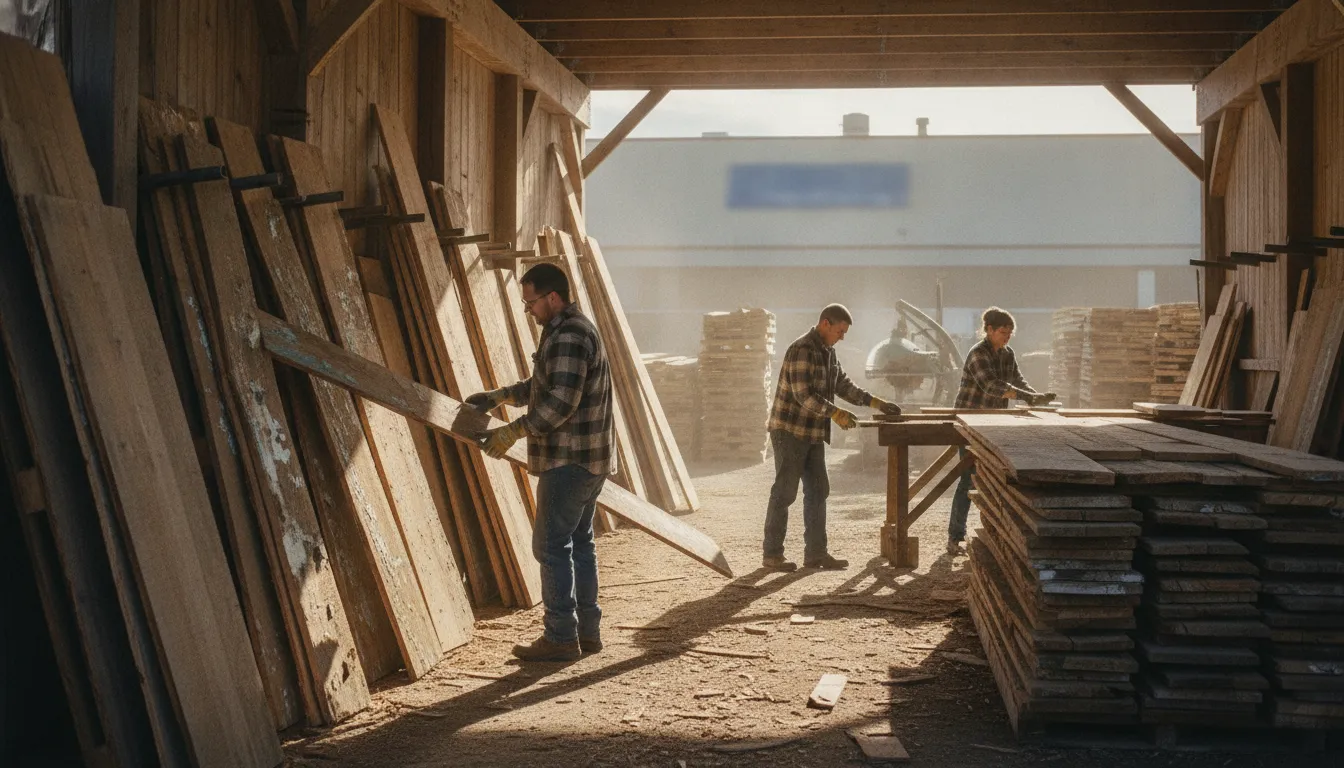
Provenance strengthens the specification
Regional sourcing also supports provenance, the documented story of a material's origin and prior service life. For architects, builders, and developers, that information can help distinguish genuine reclaimed wood from a new product made to look old. It may also support a more transparent material narrative for the owner, design team, and occupants.
The circular benefit is the continued use of wood already present in the built environment. Research from the USDA Forest Products Laboratory describes salvaged lumber as retaining the environmental qualities of new wood while adding environmental attributes. The BioResources review likewise connects upcycling traditional wood waste with circular-economy principles. Neither source establishes that every regionally sourced board has lower total emissions than every new board. Transport, energy for preparation, treatment, waste during grading, and the eventual end-of-life pathway all remain part of the assessment.
Ask for the logistics, not just the label
A defensible comparison should record the salvage location, processing steps, approximate delivery route, and any unusual handling needs. Teams can then compare those project-specific inputs with the new-lumber alternative instead of relying on a universal sustainability ranking. For more detail on Wood Crafting's sourcing philosophy and reclaimed material origins, visit sustainable reclaimed wood sourcing.
What Can Reclaimed Wood Claim, and What Should It Not Claim?
A responsible sustainability claim describes what is documented, identifies what depends on the project, and avoids turning a material characteristic into a universal environmental result. Reclaimed wood can support circular construction by extending existing lumber's service life and reducing demand for newly produced material. That does not make every application lower impact in every scenario.
Documentation checkpoint: Keep provenance, processing, delivery, and performance records together with the project specification.
Certifications and LEED documentation
Reclaimed content may contribute to a green-building strategy, but it should not be presented as an automatic certification or credit. Wood Crafting does not claim FSC certification, LEED certification, carbon neutrality, or a project-specific carbon offset without the documentation required for that claim. A design team pursuing LEED or another program should confirm the current credit language, accepted documentation, chain-of-custody requirements, and whether the product's actual processing and transportation data qualify.
Similarly, phrases such as "carbon neutral," "zero impact," or "better in every case" overstate what can be established from the material description alone. A defensible comparison considers salvage, transport, cleaning, processing, installation, maintenance, and eventual disposal or reuse.
Grading and engineering standards
Reclaimed lumber also requires care in structural specifications. A USDA Forest Products Laboratory review notes that wider adoption has been hampered by limited formal recognition of reclaimed lumber in grading and engineering design standards. That caveat does not make reclaimed wood unsuitable. It means the project team must establish the appropriate inspection, grading, testing, engineering review, and installation requirements for the intended use. Decorative paneling and a load-bearing beam do not carry the same verification burden.
For context, the USDA review describes reclaimed lumber as retaining environmental qualities associated with new wood while adding environmental attributes. It does not certify a particular supplier or prove a universal carbon advantage. Read the USDA Forest Products Laboratory review for the standards caveat and broader material context.
A practical claim-checklist
- State the provenance: identify where the material was salvaged and what prior use is documented.
- Separate fact from estimate: label supplier-specific impact figures as estimates, not universal results.
- Verify program claims: confirm LEED or other credit eligibility with the project certifier before promising an outcome.
- Document structural suitability: specify inspection, grading, engineering, and testing requirements where applicable.
- Include the full system: account for transport, processing, treatment, installation, and end-of-life assumptions.
This approach gives architects, builders, and developers a stronger basis for answering whether reclaimed wood is more sustainable than new lumber. Use documented provenance and project-specific evidence, not a blanket label.
How Can a Project Team Make a Defensible Material Decision?
A defensible sustainability decision explains more than a material's appearance or origin story. Designers, specifiers, contractors, and owners should compare reclaimed and new-material options using the same boundaries, then preserve the evidence behind each conclusion. The goal is to show why the selected material fits this project's sourcing, performance, logistics, and end-of-life conditions.
- Define the comparison boundary. Record the intended use, required dimensions, performance criteria, service life, and location of installation. State whether the comparison covers extraction, manufacturing, transport, installation, maintenance, and disposal. This prevents a favorable result from depending on an incomplete life-cycle view.
- Document provenance. Ask where the reclaimed wood came from, what prior structure or use it had, and whether the source is traceable to a region or supplier. Wood Crafting sources 100% reclaimed material from old barns, horse corrals, and livestock fencing in the Northeast and Midwest. A documented chain of custody is more useful than a broad sustainability label with no supporting detail. The USDA Forest Products Laboratory notes that reclaimed lumber can carry additional environmental attributes, but formal recognition in grading and engineering standards remains limited: review the USDA research.
- Verify quantity and yield. Confirm the available board footage, lengths, widths, thicknesses, and expected usable yield after defects or trimming. Compare that usable quantity with the project's actual takeoff. If reclaimed stock cannot meet the requirement, record the proposed substitute or combination rather than assuming that an unavailable material has zero impact.
- Record processing and grading. Identify cleaning, de-nailing, sawing, kiln treatment, surfacing, sorting, finish requirements, and grading or engineering documentation. Reclaimed wood may have a prior service history, visible checking, wane, or other character that affects yield and installation. The structural designer should approve any required evaluation rather than relying on appearance alone.
- Account for transport. Capture supplier location, delivery distance, shipment method, consolidation opportunities, and any return or replacement trips. Regional sourcing can support a more favorable result, but distance and freight still belong in the project comparison. Do not claim lower emissions without documenting the actual logistics.
- Plan end-of-life. State whether the material can be repaired, removed for reuse, recycled, or disposed of after the building's service life. Circular-economy research identifies upcycling traditional wood waste as a way to reduce waste and support demand for lower-impact alternatives: read the BioResources discussion.
Keep the provenance record, takeoff, processing notes, freight assumptions, approvals, and end-of-life plan with the specification. Industry benchmarks for reclaimed wood may be useful as background, but they are not a substitute for a project life-cycle assessment. Wood Crafting does not publish a measured carbon, waste-diversion, or embodied-energy result for every order. A transparent record lets the team explain both the environmental opportunity and the tradeoffs.
Decision rule: Treat reclaimed wood as a project-specific material choice, not as an automatic carbon claim.
Frequently Asked Questions
Is reclaimed wood more sustainable than new lumber?
Often, yes, when the comparison accounts for avoided new harvest, reuse of an existing material, and waste diversion. The result still depends on sourcing, transportation, processing, treatment, and the project's end-of-life plan. The USDA Forest Products Laboratory notes that salvaged lumber retains the environmental qualities of new wood while adding environmental attributes.
What are the main disadvantages of reclaimed wood?
Reclaimed wood requires careful inspection, cleaning, processing, and grading. Boards may contain fastener holes, checking, wane, or other evidence of prior service. Availability can also be less predictable than new lumber. For structural applications, the design team should confirm the appropriate evaluation and documentation before specifying the material.
Is reclaimed wood suitable for structural applications?
It can be, but suitability is project-specific. Species, dimensions, condition, previous use, defects, moisture history, and the intended load all matter. The USDA Forest Products Laboratory identifies limited formal recognition in grading and engineering design standards as a barrier to wider reclaimed-lumber acceptance. So structural use should follow the project's applicable professional review and code requirements.
How can a project team compare reclaimed and new lumber fairly?
Use the same functional requirements for both options, then document source, species, quantity, transport distance, processing, finish, expected service life, and end-of-life pathway. This life-cycle view avoids treating one attribute, such as low transport distance or a sustainability label, as the complete environmental answer. It also gives the owner and design team a defensible record of the decision.
Get started with a project-specific material review
Sustainability decisions are strongest when they account for the wood's history, sourcing distance, processing needs, specifications, and intended use. A project quote can help your team evaluate reclaimed material against the practical requirements of the build, without relying on broad environmental claims. To discuss your application, quantities, and project goals, request a project quote from Wood Crafting.