
Reclaimed Wood Green Building Sustainability Goals Guide
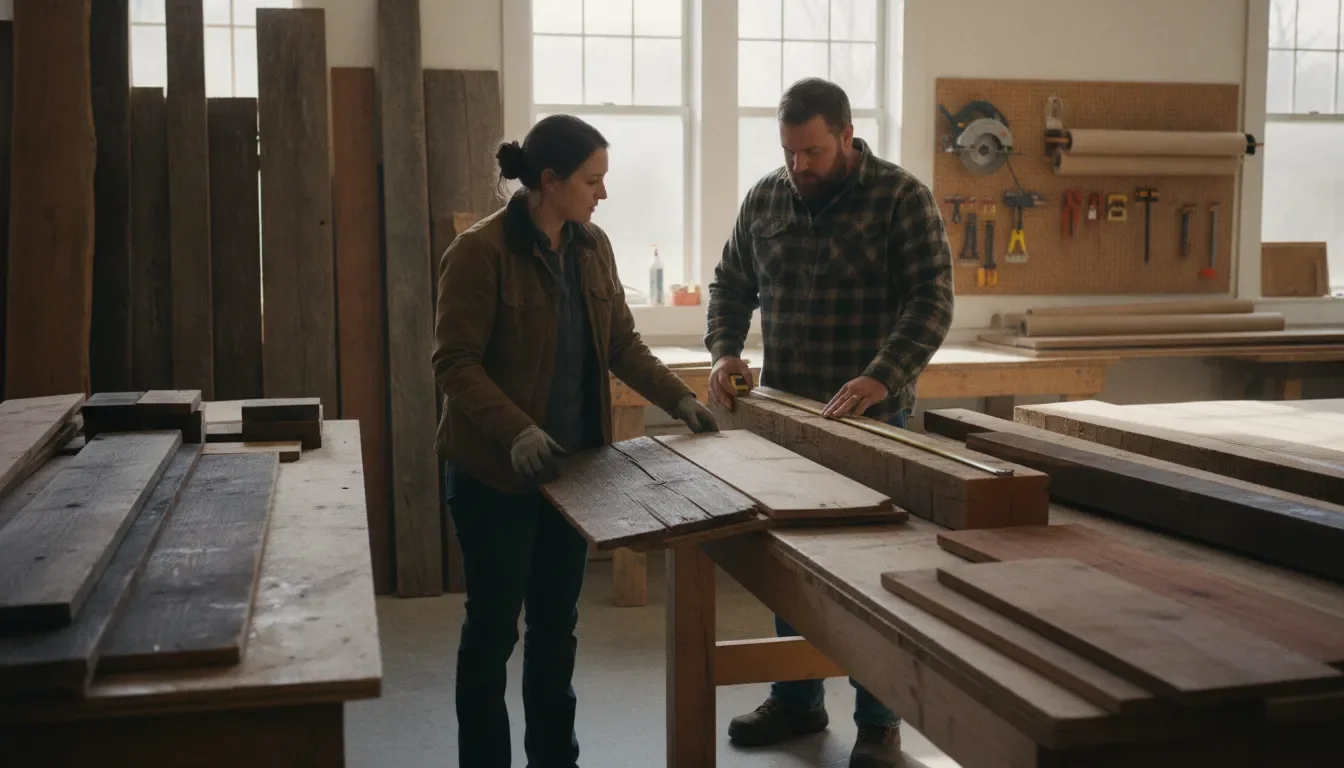
Reclaimed wood is most useful in a green-building plan when the team treats it as a documented material choice, not a decorative shortcut. Its second life can avoid emissions associated with manufacturing new virgin materials. Regional salvage can also keep usable wood in circulation and preserve the character of older agricultural structures. The USDA Forest Service explains why reuse can avoid emissions from new material manufacturing.
Request a project quote to discuss reclaimed material scope, sourcing, and documentation for your building project.
Reclaimed wood green building sustainability goals align when a project connects material reuse, waste reduction, regional sourcing, durability, and credible documentation. It may support a broader environmental strategy, but the architect, engineer, and rating-system team must determine which project claims are supported by the available records.
That distinction gives the project team a practical starting point: define the environmental objective, then evaluate how reclaimed boards, beams, or other components fit the building's material strategy. A closer look at reuse, sourcing, and project requirements helps turn good intentions into a defensible specification.
How does reclaimed wood fit a green building material strategy?
For a professional design team, reclaimed wood is best evaluated as one part of a project's life-cycle strategy, not as a universal substitute for every new material. The relevant question is how the material's prior use, proposed application, sourcing distance, processing, durability, and future recovery fit the project's environmental objectives.
Reuse changes the starting point of the material assessment. When existing wood is selected for a new application, the project can avoid emissions associated with manufacturing new, virgin materials. The USDA Forest Service research on reclaimed building materials identifies this avoided manufacturing burden as a distinct advantage of reuse. That benefit is strongest when the recovered material is durable and suitable for the intended use. It is also strongest when the material is installed in a way that allows it to remain useful for a long service life.
This is why material selection belongs early in design. The EPA notes that design practitioners can reduce environmental impacts and conserve resources through decisions made at the beginning of the process. A team might evaluate reclaimed boards for interior walls, ceilings, millwork, or other applications where their dimensions and condition are appropriate. Structural use, code compliance, fire requirements, moisture exposure, and engineering review remain project-specific decisions. Reclaimed does not mean automatically suitable for every assembly.
Regional sourcing adds another layer to the review. Wood Crafting supplies 100% reclaimed wood from old agricultural structures, including barns, horse corrals, and livestock fencing in the Northeast and Midwest. Keeping recovery and installation regions reasonably connected may strengthen the environmental case by reducing supply-chain emissions, a consideration reflected in EPA guidance on local supply chains. The design team should still examine actual transportation, processing, packaging, and delivery requirements rather than assuming that a regional label proves a lower impact.
Define the environmental objective before selecting the material, such as reuse, waste avoidance, or lower supply-chain impact.
Match recovered wood's condition and dimensions to an appropriate, reviewed application.
Record source, processing, transport, and installation assumptions for the project file.
Plan details that protect the material and preserve future repair or recovery options.
Project teams can also review Wood Crafting's commitment to sustainable reclaimed wood sourcing when assessing material provenance and regional history. That supplier context supports informed specification, but it does not replace the architect's, engineer's, or rating-system professional's determination of compliance.
Takeaway: reclaimed wood can support green building material strategy when reuse, sourcing, application, durability, and documentation are evaluated together. Its environmental potential is real, but the project team must establish the evidence and limits for the specific assembly.
Why is salvaged lumber a circular economy material?
Salvaged lumber fits a circular economy because its useful life does not end when its first building is dismantled. Instead of treating sound boards, beams, or flooring as disposable outputs, a project can recover them, assess their condition, and direct them into another application. The material remains in use while the next project avoids sending usable wood to disposal.
Sorting and documenting recovered boards helps a project match material character with an appropriate application.
A second life begins with careful recovery
Deconstruction is more selective than conventional demolition. Teams dismantle a structure in a way that preserves recoverable components, which can include framing lumber and wood flooring in a wood-framed building. The recovered material may then be sorted for a suitable new use. The application will depend on its dimensions, condition, prior exposure, and the requirements of the project team. It should not be treated as automatically interchangeable with new structural material.
The U.S. Forest Service identifies reclaimed framing lumber and wood flooring as materials that may be recovered through deconstruction: deconstruction and wood salvage research. That second-life approach preserves the value already embodied in the material, rather than discarding it at the end of one building's service period.
Design can keep the loop open
Circularity is not only a salvage operation at the end of a project. It can influence design decisions at the beginning. The EPA recommends designing for adaptation, disassembly, and reuse so materials can be taken apart and directed toward further use. That means considering how assemblies will be repaired, modified, or removed before they are installed.
Choose durable materials that are worth recovering for reuse or recycling.
Record materials, key components, structural properties, and repair access in an adaptation or disassembly plan.
Make future removal more practical by avoiding unnecessary permanent connections where the design allows.
These measures help a building respond to changing occupants and uses without requiring every component to be discarded. They also give future teams better information when they evaluate what can be repaired, adapted, or salvaged.
Waste diversion and heritage preservation
Buying used products, preserving existing structures, and salvaging materials are recognized ways to divert construction and demolition materials from disposal. The EPA notes that disposal wastes resources and landfill space, while salvage and reuse reduce the amount of usable material lost during a project. EPA guidance on reducing, reusing, and recycling construction materials connects these practices with more deliberate material management.
There is also a design value that is difficult to reproduce after the fact. Salvaged lumber can retain tool marks, weathering, joinery evidence, and other visible traces of its original setting. Reusing those characteristics allows a project to preserve a connection to regional building history while giving the material a practical role in a new interior or exterior application. The strongest circular-economy decisions respect both dimensions: they protect resources and make the material's history part of a considered design.
Takeaway: Salvaged lumber is circular when a project plans for recovery, gives the material a suitable second life. And designs today's assemblies so tomorrow's teams can repair, adapt, or disassemble them.
What documentation should a reclaimed wood supplier provide?
A useful supplier packet gives the project team a clear record of what the material is. Where it came from, how it was prepared, and what remains to be evaluated before installation. It should support specification and coordination without pretending to replace an architect's design judgment, an engineer's review, or a rating body's interpretation.
Early sample review gives the design team a shared reference for appearance, dimensions, and intended use.
Records that belong in the supplier file
Start with provenance. The record should identify the general source structure or agricultural use, the region of recovery, and whether the material is reclaimed rather than newly harvested. Wood Crafting describes its products as 100% reclaimed wood sourced from old barns, horse corrals, and livestock fencing in the Northeast and Midwest. That is company information, not a third-party certification.
Next, document the material itself. Useful records may include the apparent species or species group when known, surface character, patina. Fastener marks, nominal and actual dimensions, available lengths, and the sorting approach used for the order. If boards or beams were milled, trimmed, brushed, kiln-dried, treated, or otherwise processed, those steps should be stated plainly. A project team also needs to understand expected yield, usable face, defects, irregularity, and the possibility that selection will affect final quantity.
Source and recovery history, including regional origin when available.
Species or appearance description, dimensions, lengths, and sorting criteria.
Processing, cleaning, treatment, yield assumptions, and known limitations.
Packaging, delivery conditions, lead-time expectations, and site logistics.
Intended application discussed during the quote and any questions requiring design review.
What the project team must decide separately
Supplier documentation does not establish structural capacity, fire performance, code compliance, moisture suitability, or a safe installation method. Those decisions belong with the project's architect, engineer, contractor, and applicable authorities. The same distinction applies to whether a product or documented strategy satisfies a particular green-building program. EPA guidance recommends planning for adaptation and disassembly with information about materials, key components, structural properties, and repair access. The guidance also addresses worker movement and safety during adaptation, repair, and disassembly. Those are project-planning responsibilities, not assumptions to transfer to a supplier.
For example, a beam may be appropriate to evaluate for a visible structural or decorative application, but the design professional must determine its actual role. Likewise, reclaimed siding and paneling should be coordinated with the wall assembly, exposure, detailing, and installation requirements. Reviewing reclaimed wood beams or reclaimed wood siding and paneling can help the team identify the right material conversation before requesting project-specific quantities.
Takeaway: ask for a transparent material record, then have the qualified project team convert that record into specifications, safety decisions, and any sustainability documentation required by the project.
How do reclaimed wood green building sustainability goals guide a project?
Rating systems can give a project team a useful framework for discussing material reuse, embodied carbon, resource conservation, and responsible sourcing. They do not turn every reclaimed product into an automatic certification result. The practical question is whether the material's documented attributes align with the requirements of the specific program, credit version, building type, and project documentation process.
LEED, for example, includes criteria addressing environmentally preferable products. That recognition is a reason to evaluate reclaimed wood during design, not a promise that a particular board, beam, or panel will earn a point. The applicable requirements can change, and the architect, sustainability consultant, and certification team must determine eligibility. See the USGBC material on environmentally preferable products for program context.
Reclamation can also support a broader embodied-carbon strategy. EPA identifies salvaging and reusing existing materials as a green-building strategy that can reduce embodied carbon. USDA Forest Service research also identifies reclaiming wood as advantageous for greenhouse-gas reduction. These sources support the environmental rationale for investigation, but they do not replace project-specific calculations, product records, or professional review. A team should avoid converting a general benefit into a guaranteed carbon result.
Q: Can reclaimed wood guarantee LEED points or certification?
A: No. Reclaimed wood may be suitable to evaluate under environmentally preferable product, material reuse, or related criteria. But the outcome depends on the current rating system, the project's scope, and the documentation accepted by the relevant review process. Product selection should be coordinated with the project architect or sustainability professional before the team makes a credit claim.
To keep the sustainability narrative accurate, confirm the following before specifying or publishing a claim:
Project questionWhat to verifyWhat sustainability goal is in scope?Reuse, waste avoidance, regional sourcing, adaptability, or another defined objective.What material evidence is available?Source, reclaimed status, dimensions, processing, quantities, and intended application.Who determines compliance?The project architect, engineer, sustainability professional, or rating-system reviewer.
Program: Identify the rating system, version, building category, and specific material-related criteria being evaluated.
Material record: Confirm the reclaimed status, source description, product type, dimensions, sorting, processing, and intended application with the supplier.
Scope: Establish whether the material is decorative, finish, nonstructural, or part of an engineered assembly. Do not imply structural performance without engineering review.
Quantities: Record the installed quantity, location, and calculation method required by the project team or rating-system reviewer.
Chain of responsibility: Assign responsibility for reviewing supplier information, preparing submittals, and determining whether a claim is supportable.
Language: Use "can support," "may contribute," or "is being evaluated" until the project team confirms the final result.
The strongest approach is to treat rating systems as a coordination tool. Start the conversation early, preserve the evidence behind each environmental claim, and let the project professionals determine what can be submitted. Wood Crafting can discuss reclaimed material options for a project, while certification, engineering, and final compliance decisions remain with the responsible design and review team.
Request a project quote when your team is ready to review material options, quantities, and project logistics.
How should teams communicate the sustainability story of reclaimed materials?
A credible sustainability story connects a material's origin, present use, and future potential to decisions the project team can document. It should give owners and occupants a meaningful explanation, while giving contractors, architects, and reviewers enough specificity to evaluate the claim. The goal is not to make reclaimed wood sound universally better. It is to explain where its environmental value comes from and where project conditions still matter.
Start with provenance. Wood Crafting's reclaimed materials come from old agricultural structures, horse corrals, and livestock fencing in the Northeast and Midwest. That regional history is part of the material's identity: salvaging wood can preserve architectural history and the visible characteristics of hundreds of years of use. A team can describe the source structure, region, intended application, and finish honestly, then connect those details to the project's design narrative. The evidence-based guide to reclaimed wood sustainability provides useful background for that conversation.
Use audience-specific evidence
Different stakeholders need different proof. An owner may want to understand how reuse supports the project's environmental priorities. Occupants may respond to a material story that is specific to the region rather than a generic sustainability slogan. Contractors need clear information about dimensions, sorting, processing, installation, and expected variation. Reviewers need a record that separates supplier information from the determinations of the architect, engineer, or applicable rating-system body.
Owners: connect reclaimed material selection to reuse, local sourcing, durability, and the project's stated goals.
Occupants: explain the source structure and visible patina without implying that appearance proves environmental performance.
Contractors: document material limits, tolerances, preparation, handling, and the application approved by the design team.
Reviewers: retain source records, product descriptions, quantities, and project-specific calculations or decisions.
Local sourcing can strengthen the environmental case because it may reduce supply-chain embodied greenhouse-gas emissions while producing local economic benefits, according to EPA guidance on local supply chains. Use careful language such as "can reduce" rather than assigning a project-wide reduction without a documented assessment. The same discipline applies to material limits. Reclaimed boards, beams, and fencing may contain variation, previous fastener marks, weathering, or dimensions that require sorting and coordination. These characteristics should be disclosed early, not presented as defects after delivery.
Finally, discuss what happens after the current project. Designing for adaptation can extend a building's useful life. Fewer material types and visible, accessible connections can also support future salvage and disassembly, as described in EPA's guidance on reuse and disassembly. For exterior or agricultural-inspired applications, teams can review reclaimed corral fencing alongside the project's performance and maintenance requirements.
Takeaway: the strongest sustainability communication is a documented chain from regional source to intended use and future reuse, with every claim bounded by what the project can actually verify.
What is a practical reclaimed wood sustainability checklist?
A useful checklist turns a broad environmental intention into decisions the project team can document, coordinate, and revisit. It also keeps the distinction clear between a material's potential contribution and the project-specific evidence required by an architect, engineer, owner, or rating system.
Define the sustainability goal. Decide what the team is trying to improve, such as material reuse, resource conservation, regional sourcing, future adaptability, or reduced disposal. Record the goal in the project brief so material selection supports a defined outcome rather than a general slogan.
Identify the application and performance context. Specify where reclaimed wood will be used, whether as siding, paneling, beams, flooring, millwork, or another finish. Note exposure, loads, moisture conditions, fire requirements, durability expectations, appearance, and maintenance. The intended use determines which questions require professional review.
Establish the material scope. List the species or appearance sought, approximate dimensions, surface character, sorting preferences, quantity assumptions, and acceptable variation. Reclaimed material has an existing history and character, so the team should define what variation is desirable and what would be unsuitable.
Document source and processing information. Request supplier information about where the material originated, how it was recovered, and what processing or preparation is proposed. Wood Crafting supplies 100% reclaimed material sourced from old barns, horse corrals, and livestock fencing in the Northeast and Midwest. Treat those company records as supplier information, not as a substitute for certification or project verification.
Coordinate technical review early. Give the architect, engineer, contractor, and relevant specialists the material description before details are finalized. Confirm attachment methods, structural assumptions, clearances, treatment needs, code considerations, and any required testing. EPA guidance emphasizes that early design decisions can help conserve resources, but technical suitability remains project-specific.
Plan yield, logistics, and handling. Review available dimensions, sorting, expected usable yield, packaging, delivery access, storage, sequencing, and protection from moisture or damage. Align the material schedule with field conditions and installation labor. A strong reuse strategy can fail if the team has not planned how material moves from supplier to application.
Set the evidence and claims boundary. Decide which statements can be supported by supplier records, which require project calculations, and which belong to the architect, engineer, or rating-body review. Do not state that reclaimed wood automatically earns a certification point. Use language such as "can support" or "may contribute" when the outcome depends on the program and documentation.
Close out the material record. Save approved samples, source notes, submittals, substitutions, delivery records, installation details, and maintenance guidance. Document what was actually installed, including any changes from the original intent. This record helps the owner communicate the sustainability story accurately and supports future repair, adaptation, or reuse decisions.
A practical checklist makes reclaimed wood easier to evaluate responsibly: define the goal, verify the application, coordinate technical decisions, document the limits, and preserve the record.
Request a project quote to discuss material scope, application, sourcing, and logistics with Wood Crafting.
Frequently Asked Questions
What environmental benefits can reclaimed wood offer in a building project?
Reclaimed wood gives an existing material another service life, which can avoid some greenhouse gas emissions associated with manufacturing new virgin materials. It can also support waste diversion when usable wood is salvaged rather than sent to disposal. The environmental result depends on the material's condition, processing, transport, and intended use. USDA Forest Service research explains the emissions advantage of reusing building materials.
Can reclaimed wood help reduce embodied carbon?
It can support an embodied-carbon strategy, particularly when reuse avoids new material manufacturing and the supply chain is appropriately managed. That is a project-specific assessment, not a universal percentage reduction. The design team should define the comparison basis, account for processing and transportation, and document the assumptions used in its carbon analysis. USDA Forest Service research identifies reclaiming wood as advantageous for greenhouse gas reduction: carbon impacts of wood products.
Can reclaimed wood earn LEED points or other certification credits?
Reclaimed wood may be suitable to evaluate under environmentally preferable product or material-reuse criteria, but it does not automatically earn a point. Eligibility depends on the current rating-system rules, the product documentation, and the project's calculations. The architect, sustainability consultant, or certification body should make the final determination. USGBC guidance identifies environmentally preferable products within LEED materials criteria.
What should a project team document to connect reclaimed wood to its sustainability goals?
Start with the goal, intended application, and comparison method. Then record the material's source, species or appearance information, dimensions, sorting or processing, expected yield, treatment details, transportation assumptions, and installation requirements. Coordinate structural and safety decisions with the responsible professionals. This creates a credible project record without overstating what a supplier can certify.
Get started with a reclaimed wood project quote
A project review can help your team match reclaimed materials to the intended application while clarifying sourcing, documentation, and quantity needs. To discuss the material requirements for your project, request a project quote from Wood Crafting.