
Reclaimed Wood Hudson Valley Custom Home Guide
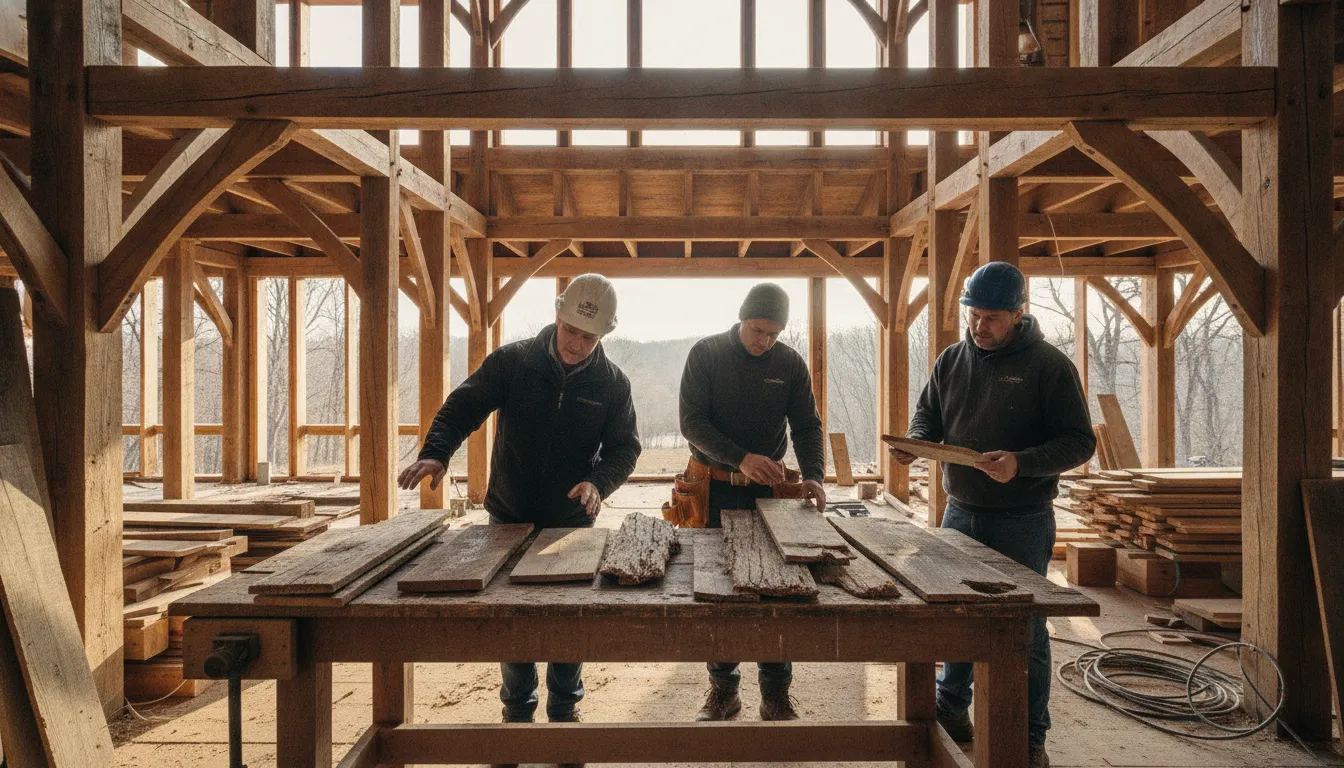
In a Hudson Valley custom home, reclaimed wood is not a last-minute finish. Species, board profile, thickness, surface character, and intended application all affect how the material should be specified, sampled, processed, and coordinated with the build schedule.
Request a reclaimed wood quote
For a reclaimed wood hudson valley custom home, start by matching authentic salvaged material to the project's performance and design requirements, then confirm sourcing, condition, dimensions, and processing before finalizing quantities. Regional availability can support the design, but not every board is Hudson Valley sourced.
The strongest results come from treating reclaimed wood as a documented project material rather than a uniform commodity. Responsible reuse can keep usable construction materials out of the disposal stream. Early planning also helps the design team make practical decisions about adaptation, disassembly, and future recovery, as the U.S. Environmental Protection Agency explains. That balance of character, fit, and responsible sourcing begins with understanding why builders specify authentic reclaimed wood in the first place.
Why Hudson Valley custom home builders specify authentic reclaimed wood
For a custom home, material selection is part of the architectural language. Authentic reclaimed wood brings visible depth, irregularity, and a sense of place that new, uniform lumber cannot reproduce. Mississippi State University Extension notes that old wood is popular in remodeling and new construction. The same source emphasizes that reclaimed material presents challenges before use. The appeal is real, but the material deserves deliberate evaluation rather than a generic allowance.
In the Hudson Valley, that evaluation often begins with the design concept and works outward. A team may be looking for weathered board with variation across a wall. A more restrained finish for a ceiling, or a material whose visible history supports the character of a custom residence. The specification should identify the intended visual result, application, dimensions, profile, finish, and acceptable variation. It should also distinguish decorative work from any application that requires separate structural review. Reclaimed wood is not automatically interchangeable with new structural lumber.
Authenticity is a specification decision
Reclaimed wood has individual marks that influence how it reads in a finished room: changes in color, surface wear, fastener holes, saw marks, and differences between boards. Those features are not defects to be hidden indiscriminately. They are part of the reason clients, architects, and designers select the material. At the same time, the project team needs agreement on which characteristics are essential and which can be sorted, trimmed, or processed. A clear sample review can prevent a mismatch between a highly weathered visual expectation and the material ultimately approved.
The sustainability case is strongest when it is tied to practical reuse. The U.S. Environmental Protection Agency identifies buying used and recycled products, preserving existing structures. And salvaging existing materials as ways construction teams and design practitioners can divert construction and demolition materials from disposal. It also explains that designing for adaptation, disassembly, and reuse can reduce waste and extend a building's useful life. These principles do not replace product-specific review, but they give the design team a responsible framework for considering reclaimed material.
- Define the visual character and acceptable variation before ordering.
- Coordinate dimensions, profiles, processing, and installation details with the plans.
- Review reclaimed material for project fit instead of assuming its history guarantees performance.
- Consider future adaptation and disassembly where the design allows it.
That planning is especially valuable because reclaimed wood can require decisions that are less important with standardized new stock. When the builder, architect, and client agree on the material brief early, authentic character becomes a controlled design asset rather than a late-stage source of uncertainty. EPA guidance on reuse and adaptable design offers a useful starting point for that conversation.
Which reclaimed wood materials fit a Hudson Valley custom home?
Material selection should follow the home's application, exposure, detailing, and desired level of visible character. The comparison below gives the design team a starting point before the full specification is developed.
| Material | Typical project role | Specification questions |
|---|---|---|
| Barn board siding and paneling. | Interior walls, ceilings, cabinetry details, or exterior cladding. | Species, thickness, profile, color range, exposure, and processing. |
| Corral board. | Cladding, accents, doors, or landscape elements. | Surface history, variation, intended use, and preparation level. |
| Reclaimed beams. | Decorative architectural volume or separately reviewed structural use. | Section dimensions, loading, connections, moisture, and engineering review. |
Material selection should follow the home's application, exposure, detailing, and desired level of visible character. Wood Crafting supplies 100% reclaimed barn boards, corral fencing, and reclaimed beams for builders, architects, designers, developers, and homeowners. The material is sourced from agricultural structures across the Northeast and Midwest, with some material from Eastern Canada. So a Hudson Valley project can achieve regional character without assuming that every board came from a local barn.
These are the primary material groups to evaluate during design development:
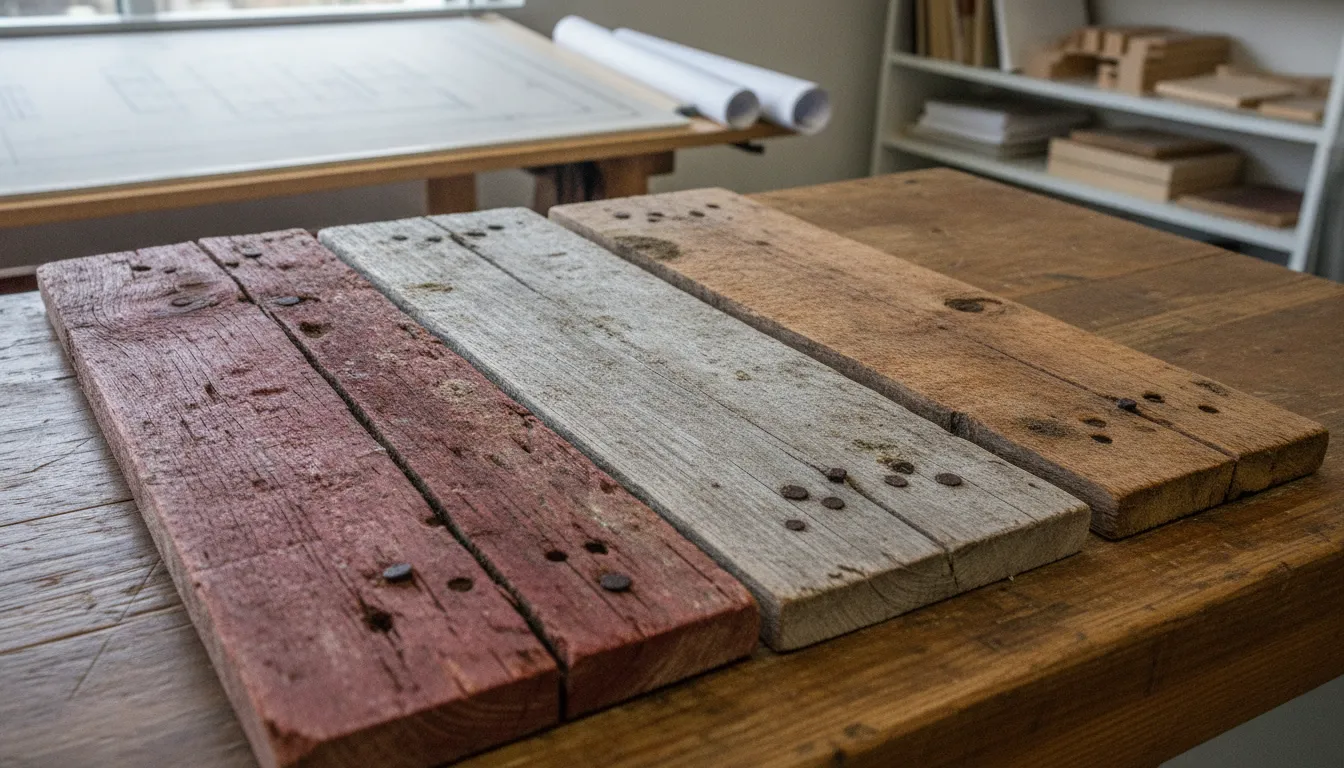
- Barn board siding and paneling: Reclaimed barn board is suited to interior feature walls, ceilings, cabinetry details, and exterior siding when the assembly and finish are specified appropriately. Available varieties include Red Barn Board, Reclaimed Gray Barn, Mixed Brown Board, Faded Red, White Reclaimed, and Wire Brushed. Red Barn Board is documented at 3/4-inch thickness in various widths, with plain, rabbeted bevel, and tongue-and-groove micro-bevel profiles. Reclaimed Gray Barn is listed at 3/4 to 1 inch thickness, with tongue-and-groove, board-and-batten, and channel-lap profiles. Mixed Brown Board is listed at 1 inch thickness in various widths and can be supplied in plain, channel-lap, tongue-and-groove, or board-and-batten profiles. Review the full reclaimed barn board siding options and barn board siding specifications before finalizing reveals, joints, and takeoffs.
- Corral board: Reclaimed corral fencing brings a different surface history than barn siding. It can work as wall cladding, architectural accents, doors, or landscape elements where weathering, variation, and evidence of agricultural use are part of the design intent. Specify whether the project needs material as-is, de-nailed, or power washed, then coordinate the selected condition with the finish schedule and adjacent materials. See the reclaimed corral fencing selection for application context.
- Structural or decorative beams: Reclaimed beams can anchor a great room, porch, entry, kitchen, or other major architectural volume. They may be considered for structural or decorative use, but those applications are not interchangeable. The engineer and builder should confirm section dimensions, loading, connections, moisture requirements, and any required processing before a beam is assigned a structural role. For decorative work, the design team can focus more heavily on scale, visible tool marks, patina, and integration with the ceiling or wall assembly. Explore reclaimed wood ceiling beams and the reclaimed beam sizing guide during coordination.
Processing is project-specific. Depending on the intended application, boards may be specified as-is, de-nailed, or power washed. That choice affects appearance, handling, installation, and the level of preparation required on site. A clear material schedule should identify the product family, profile, nominal thickness, width range, processing condition, intended location, and whether the use is structural or decorative.
How is reclaimed wood sourced and prepared for a custom home?
A reliable reclaimed-wood specification begins before boards reach the jobsite. The material should be evaluated as a recovered resource with a documented source, visible condition, intended use, and preparation plan. Wood Crafting sources salvaged lumber from agricultural structures and other older buildings across the Northeast and Midwest, with some material from Eastern Canada. That regional scope supports authentic character without assuming that every board came from a specific Hudson Valley structure.
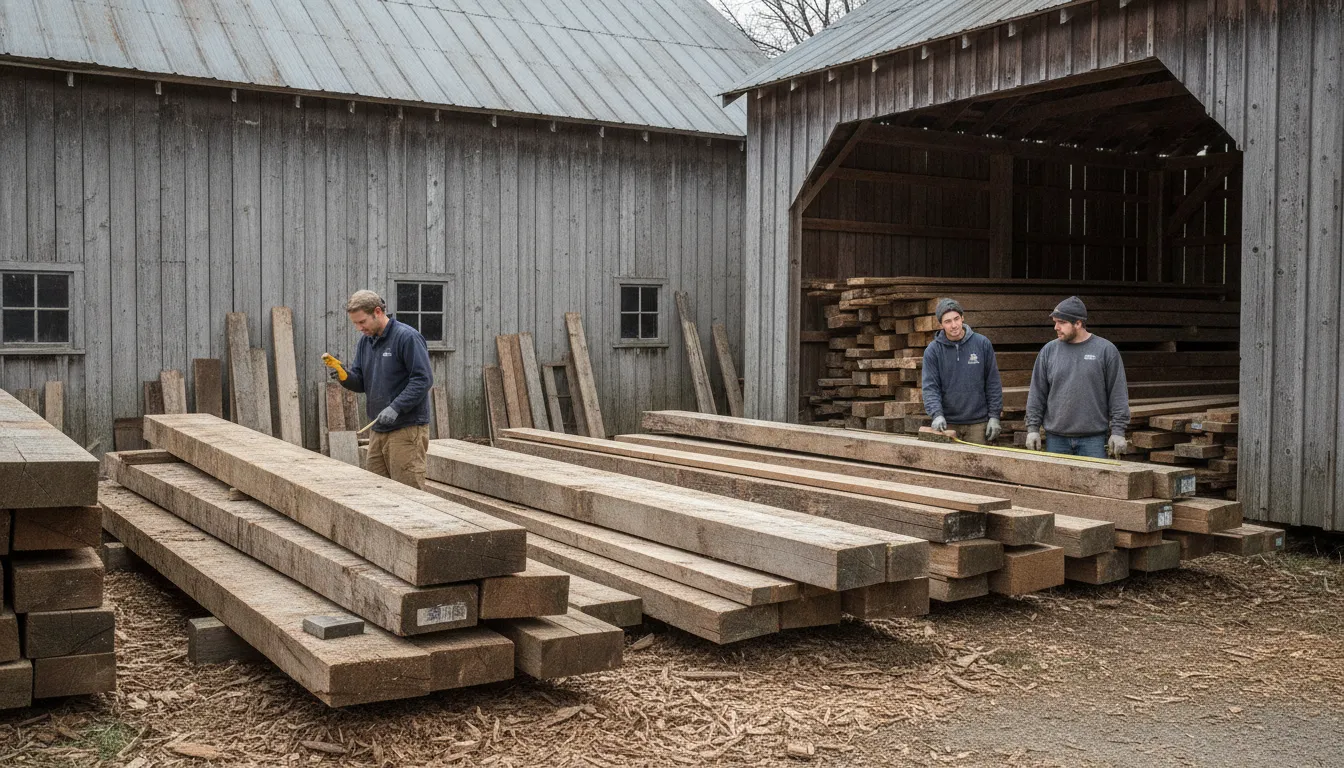
- Review the source and the project brief. Start by identifying whether the material comes from an old barn, horse corral, livestock fence, agricultural outbuilding, or another salvage source. Then match the expected character, species, dimensions, and quantity to the drawings. A source review is not a promise of a particular barn history. It is a practical way to establish what is known about the material before it is specified. The U.S. Environmental Protection Agency identifies careful salvage and reuse as ways to divert construction and demolition materials from disposal. Read the EPA guidance on reuse and salvage.
- Plan careful salvage rather than rapid demolition. Deconstruction can range from reusing an entire structure to removing selected assemblies or individual materials for reuse. For a wood supplier, that means removing usable boards and timbers with attention to breakage, embedded hardware, worker safety, and how each piece will be handled afterward. Property owners with older agricultural structures can also seek salvage consultation before a structure is dismantled. This step protects the material's character and improves the chance that usable stock remains available for a design application.
- Choose the preparation level. Reclaimed wood may be specified as-is, de-nailed, or power washed, depending on the project requirements. De-nailing reduces exposed hardware, while power washing can remove loose dirt and surface debris. Neither option should be treated as a substitute for inspection. The right choice depends on whether the boards will be used for interior paneling, siding, a ceiling application, or another decorative purpose. Review processing expectations early so the sample, allowance, and installation details describe the same material.
- Inspect dimensions, condition, and intended use. Review each lot for usable length, width, thickness, profile, surface character, fastener remnants, splits, decay, and other irregularities. Reclaimed wood has visual depth, but it also presents challenges that need to be addressed before use. Do not assume that a reclaimed board is suitable for a structural purpose because it looks substantial. Structural applications require project-specific review by the appropriate design and building professionals.
- Ask direct moisture and insect questions. Insect emergence is a documented reclaimed-wood concern. Mississippi State University Extension notes that old-house borers and other wood-boring beetles can affect stored or reclaimed lumber, and that moisture conditions matter for reinfestation risk. Ask what is known about storage, moisture condition, visible insect evidence, and any preparation or treatment decisions. Wood Crafting should not be represented as kiln-drying, treating, or certifying material unless those services are specifically confirmed for the order.
- Coordinate approval, quantities, and delivery planning. Before final approval, align the selected sample or lot with elevations, takeoffs, installation details, finish expectations, and sequencing. Allowances should account for the natural variation of recovered material rather than treating it like uniform commodity lumber. Confirm the processing specification and intended application in the quote discussion, then coordinate questions among the architect, builder, installer, and supplier. For a project-specific review, request a reclaimed wood quote with the relevant plans and material requirements.
What should you bring to a Millerton, NY showroom visit?
A productive showroom visit starts with the project information that will shape material selection. Wood Crafting is located at 76 Main St., Millerton, NY 12546, in the Hudson Valley. The showroom is documented as open Monday through Friday, 7:00 AM to 5:00 PM EST. Bring the working details of the project so the discussion can move beyond general inspiration and toward a material plan.
For a custom home, reclaimed wood decisions are easier when the design intent, quantities, and installation context are considered together. The materials may be sourced regionally from agricultural structures across the Northeast and broader sourcing areas. So do not assume a particular board is from the Hudson Valley unless its provenance has been confirmed.
Bring the design and quantity information
- Plans and elevations: Printed drawings or a digital set help identify wall areas, ceiling locations, transitions, openings, and other conditions that affect coverage and detailing.
- Quantity estimates: Bring square-foot calculations for siding or paneling, linear-foot requirements for trim, and dimensions for beam applications. If quantities are preliminary, label them as allowances rather than final takeoffs.
- Intended application: Explain whether the material is planned for interior paneling, exterior siding, a ceiling, a feature wall, cabinetry, or another decorative use. Reclaimed material should not be treated as structural without appropriate engineering and project review.
Be ready to discuss the specification
Bring the profile and finish requirements, not just a reference photograph. Discuss desired board width, thickness, texture, color range, and installation profile. Wood Crafting documents options such as plain, rabbeted bevel, tongue-and-groove micro-bevel, board-and-batten, and channel-lap profiles for applicable reclaimed board products. Processing may be specified as-is, de-nailed, or power washed, depending on the project's requirements.
It also helps to bring finish samples, adjacent material samples, and notes about the design's tolerance for variation. Reclaimed wood visibly carries the character of prior use, so agreeing on acceptable patina, knots, nail marks, color variation, and surface texture is part of responsible specification work. The Our Story page provides additional context on the salvage approach and the materials' history.
Include the schedule and pickup conversation
Share the construction phase, installation target, approval milestones, and any schedule constraints. This does not guarantee inventory, lead times, freight, or delivery availability, but it gives the team the context needed to discuss the project accurately. Customer pickup at the Millerton location is documented. For project-specific requirements, use the request a reclaimed wood quote page and include your drawings, estimated quantities, application, profile, finish, and timing notes.
How do you start a reclaimed wood project in the Hudson Valley?
For a reclaimed wood hudson valley custom home, start with a project brief rather than a product name. Give the supplier the room or exterior application, drawings or elevations, intended visual character, approximate quantities, and the required installation date. This establishes whether the material is decorative or part of a larger assembly that needs review by the project architect, builder, or engineer.
Define the material before choosing the finish
Describe the desired species or color family, board width, thickness, profile, texture, and degree of weathering. Wood Crafting documents options such as Red Barn Board, Reclaimed Gray Barn, Mixed Brown Board, Faded Red, White Reclaimed, and Wire Brushed material. Depending on the application, profiles may include plain boards, rabbeted bevel, tongue-and-groove micro-bevel, board-and-batten, or channel-lap. For ceiling or structural-looking elements, identify whether the beams are intended as decorative cladding or require separate structural evaluation.
Material selection is also a design-for-reuse decision. The U.S. Environmental Protection Agency recommends documenting materials and key components early, and notes that adaptation, disassembly, and reuse can reduce waste and extend useful life. Those principles support clear specifications, accessible connections, and fewer surprises during installation: EPA guidance on reuse and construction materials.
Review samples, allowances, and processing
Request representative samples or review available material before finalizing the allowance. Look at color variation, nail holes, saw marks, knots, edge condition, and the balance between consistent sorting and natural variation. Then state the quantity by the measurement your installer will use, allowing the design team to reconcile coverage, cuts, waste, and replacement pieces. Do not treat reclaimed boards as perfectly uniform commodity lumber.
Specify processing separately from appearance. Wood Crafting can document project requirements for material supplied as-is, de-nailed, or power washed. Confirm which preparation is appropriate for the site, the crew, and the finish system, and coordinate any additional inspection or treatment requirements with the responsible construction professionals. A clear scope protects the character of the material while keeping field decisions manageable.
Coordinate the quote with the full team
Send the brief, drawings, sample preferences, estimated quantity, profile, processing request, application, and site constraints together. Wood Crafting sources salvaged lumber from agricultural structures and other regional sources across the Northeast and Midwest. With some Eastern Canada material, so avoid assuming that every board has a Hudson Valley origin. The team can then respond to the actual specification instead of an overly broad request.
For siding or paneling decisions, review the barn board siding specifications before submitting the scope. When the brief is ready, use the request a reclaimed wood quote page to begin project coordination.
Request a reclaimed wood quote for your Hudson Valley project
Frequently Asked Questions
What types of reclaimed wood work well in a custom home?
Common options include reclaimed barn board for siding, ceilings, and wall paneling; corral board for rustic interior applications; and reclaimed beams for decorative or project-specific structural discussions. The right choice depends on the intended application, species, profile, thickness, finish, and required processing.
How is reclaimed wood sourced for a Hudson Valley project?
Reclaimed lumber may come from old barns, agricultural outbuildings, horse corrals, livestock fencing, and other salvaged structures. Wood Crafting sources material across the Northeast and Midwest, with some Eastern Canada material. So a Hudson Valley project should confirm the available source, appearance, dimensions, and quantity during specification.
What should builders check before installing reclaimed wood?
Confirm the intended use, dimensions, moisture condition, fastener requirements, and processing level. Reclaimed wood can present challenges, including emerging wood-boring insects, and Mississippi State University Extension recommends addressing those risks before use. Reclaimed material should not be assumed to be structural without appropriate evaluation.
How much does reclaimed wood cost?
Pricing is quote-based rather than a single published rate. The final quote can depend on species, profile, thickness, usable quantity, sorting, de-nailing, power washing, finish expectations, and project requirements. Share plans, elevations, estimated quantities, and the intended application so the material can be evaluated accurately.
Ready to plan your reclaimed wood project?
A project-specific review can help align material selection, dimensions, quantities, and intended applications before ordering. Share the details of your Hudson Valley custom home so the conversation starts with a clear understanding of the work.