
Reclaimed Wood Sustainable Building Materials: An Expert Guide for Green Construction
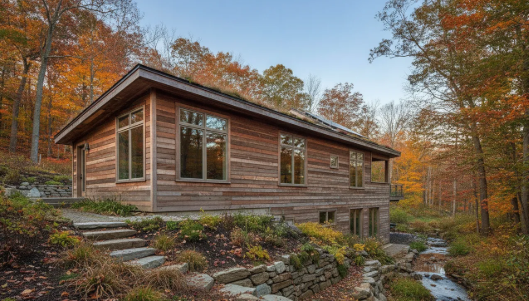
Choosing salvaged timber for your next design project can reduce carbon emissions by up to fifty percent compared to new lumber. Reclaimed wood sustainable building materials offer a path to build with character while meeting ambitious green goals. This authentic lumber delivers rare strength, visible history, and a story that no factory-produced material can replicate.
Ready to specify reclaimed wood sustainable building materials for your project? Contact Wood Crafting to discuss your requirements or call 845-373-8020. Our team helps architects and builders match the right salvaged material to every project.
Reclaimed wood sustainable building materials are high-quality wood products salvaged from old barns, corrals, and factories for reuse in new construction. These materials lower carbon footprints by avoiding new logging while providing authentic patina and structural strength that new lumber cannot match.
This guide covers everything architects, builders, and designers need to know about specifying reclaimed wood for green building projects. From environmental impact and material origins to sourcing strategies and cost considerations, you will find the expert insights needed to make informed decisions.
What Are Reclaimed Wood Sustainable Building Materials?
Reclaimed wood is lumber saved from old buildings for new use. These materials are far more than aged timber, they are a cornerstone of responsible construction. When we reuse boards from historic structures, we preserve the past while keeping waste out of landfills. Using reclaimed wood sustainable building materials creates spaces with soul, character, and a measurable environmental advantage.
The path of deconstruction
Conventional demolition often sends good wood straight to the landfill. Modern green projects use a better approach. The EPA defines deconstruction as taking a building apart piece by piece to salvage as many components as possible for reuse. While slower than demolition, this process protects the planet, preserves rare old-growth timber, and transforms obsolete structures into material banks for new construction.
Typical materials recovered through deconstruction include structural timbers and beams from barns and industrial buildings, barn board siding, corral boards, floor joists, and fence posts.
Salvaging wood this way reduces demand for virgin timber, keeps forests healthy, and diverts millions of tons of debris from landfills annually. This cycle of reuse is the heart of a circular building economy.
Clear signs of the past
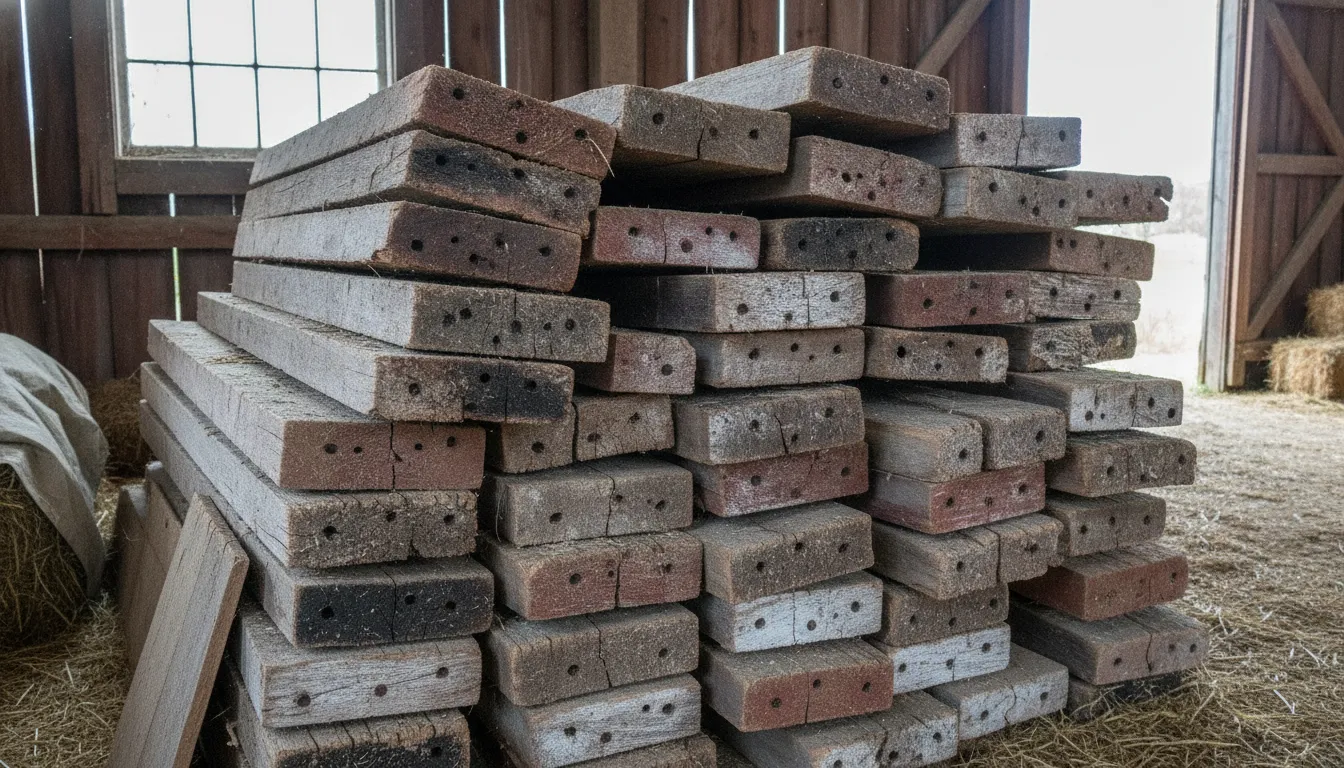
Each reclaimed board carries a visible history. You can see it in the deep patina, old nail holes, circle-sawn textures, and the natural checking patterns that developed over decades of service. These marks are not flaws, they are the soul of the wood, giving rooms a warm, grounded feel that no new material can replicate. Because no two pieces are identical, every project becomes truly one-of-a-kind.
Authentic material terminology
When specifying reclaimed wood sustainable building materials, using the correct terminology ensures clear communication with suppliers. Important terminology includes barn board, corral board, patina, checking, wane, circle-sawn textures, and different processing levels like de-nailed and power washed.
Barn board refers to siding or paneling salvaged from agricultural buildings, available in varieties like Red Barn Board, Reclaimed Gray Barn Board, Mixed Brown Board, Faded Red, White Reclaimed, and Wire Brushed. Corral board describes boards salvaged from horse corrals and livestock fencing with distinct silver-gray weathering. Patina is the aged surface character developed through years of exposure. Checking refers to natural small cracks that add texture. Wane is the natural edge of a board where bark was once present. Circle-sawn and band-sawn textures come from historic milling methods. De-nailed and power washed describe processing levels that indicate preparation.
Understanding this vocabulary helps architects and builders specify exactly the right material for each application.
How Reclaimed Wood Reduces Environmental Impact in Building Projects
Using wood that already exists is one of the most effective strategies for lowering the environmental cost of construction. Reclaimed wood avoids the energy-intensive chain of logging, milling, and kiln-drying new timber. It also keeps usable materials out of landfills where stored carbon would release as decomposition occurs. The EPA confirms that builders and design teams can significantly reduce waste by salvaging and reusing existing materials.
Carbon storage and avoided emissions
Every piece of wood stores carbon absorbed during the tree's growth. When that wood is reused, the carbon remains locked inside the board instead of entering the atmosphere. Choosing reclaimed lumber can reduce carbon emissions by up to 50% compared to newly harvested wood. This benefit stacks from two sources: stored carbon remains sequestered, and no new energy is spent cutting, transporting, and processing fresh logs. For building teams tracking embodied carbon targets, reclaimed materials provide a significant head start.
Landfill diversion and circular economy
Wood is the second-largest component of the construction and demolition waste stream in the United States. When old barns, factories, and agricultural structures are conventionally demolished, their wood typically ends up buried in a landfill. Salvaging that wood keeps it in productive use and extends its lifecycle indefinitely. This is the core principle of the circular economy: materials stay in circulation rather than serving a single use before disposal. Wood Crafting specializes in this approach, sourcing 100% genuine salvaged lumber from agricultural structures across the Northeast, Midwest, and parts of Eastern Canada.
Preserving old-growth forest resources
Using reclaimed wood directly reduces pressure on remaining old-growth forests. Many trees harvested a century ago for the barns supplying today's reclaimed market grew slowly in dense, competitive forests. This slow growth produced exceptionally tight grain patterns and superior structural strength. When you specify salvaged lumber, you choose materials that have already delivered a full lifetime of service and are ready for a second one. This approach fits naturally into a broader sustainability strategy that values both historic preservation and environmental responsibility.
Where Reclaimed Wood Comes From: Agricultural Structures and Regional Sourcing
Understanding the origins of reclaimed wood helps architects and builders make informed sourcing decisions. The majority of high-quality reclaimed lumber available in the Northeast comes from agricultural structures that have reached the end of their original service life. Wood Crafting sources from old barns, horse corrals, and livestock fencing across the Northeast and Midwest. With some materials also coming from Eastern Canada where product details specify that provenance.
Barns and agricultural buildings
The classic American barn was built to last. Farmers constructed these buildings with old-growth timber, often using species like oak, pine, hemlock, and chestnut that are rare or unavailable in today's conventional lumber market. When a barn is decommissioned, its timbers and boards become a source of exceptional reclaimed building materials. The wood carries the history of the structure it came from, visible in the patina, nail holes, and weathering patterns that developed over decades of agricultural use. Architects and builders prize these materials for the authenticity they bring to modern projects.
Corral boards and livestock fencing
Gray Corral Board represents a distinctive category of reclaimed wood salvaged from animal fencing. These boards develop their characteristic silver-gray patina through direct exposure to sun, rain, and livestock contact over many years. The result is a surface texture and color that architects prize for exterior cladding, accent walls, and landscape features. This type of reclaimed wood brings an unmistakable agricultural character to contemporary designs.
Processing: from structure to building site
Reclaimed wood requires careful handling to prepare it for new construction. The process follows a series of steps. First, the structure is carefully dismantled piece by piece to maximize material recovery. Next, every nail, bolt, staple, and piece of metal hardware is removed from each board. Then the wood is power washed to clean dirt and contaminants. Boards are sorted by species, dimensions, character grade, and processing level. Finally, materials are stacked and bundled according to project specifications.
Some materials are sold as-is for clients who want the rawest possible character, while others receive additional processing to meet specific project requirements. This preparation ensures every piece is ready for siding, paneling, beams, or other applications without compromising the authentic patina.
Reclaimed Wood vs. New Lumber: A Sustainability Comparison
Choosing between reclaimed wood and new lumber involves weighing environmental impact, performance characteristics, and aesthetic value. While new wood is readily available and standardized, it carries a larger environmental footprint. Building teams can significantly reduce waste by specifying wood that has already served one lifetime.
| Feature | Reclaimed Wood | New Lumber |
|---|---|---|
| Embodied Carbon | Very low; keeps carbon stored indefinitely | Higher; requires new harvest and processing |
| Material Density | High (up to 10x rings per inch from old growth) | Lower; fast-growth plantation wood |
| Waste Impact | Diverts debris from landfills; extends material life | Generates harvest and milling waste |
| Visual Character | Authentic patina, nail holes, checking, saw marks | Uniform, consistent, mass-produced appearance |
| Certifications | Rarely carries FSC/SFI labels (pre-dates systems) | Often carries FSC, SFI, or PEFC chain-of-custody |
| Dimensional Consistency | Variable by batch; requires project-specific quoting | Standardized dimensions; consistent supply |
Material density and durability
Quality is a defining advantage of reclaimed wood. Much of it comes from old-growth trees that grew slowly in competitive forest conditions. This slow growth produces exceptionally tight grain, with old-growth wood containing up to ten times the number of annual rings per inch as fast-growth plantation lumber. The resulting density makes reclaimed wood stronger, more dimensionally stable, and more resistant to rot and pests. New lumber from fast-growing farms is typically softer and more prone to warping over time.
Certification and sourcing facts
New lumber often carries labels like FSC or SFI that verify responsible forest management. Most reclaimed wood does not carry these formal labels because its original harvest predates modern certification systems by many decades. It is impractical to trace a barn board back to a specific forest from a century ago. However, the act of reuse itself constitutes a powerful form of sustainable building. Do not claim formal environmental certifications like FSC/SFI or LEED documentation packages for reclaimed wood unless those certifications have been explicitly obtained for the specific batch.
Applications of Reclaimed Wood in Green Building and Design
Reclaimed wood serves a wide range of applications in sustainable construction. Architects and builders specify it for exterior siding, interior paneling, structural and decorative beams, fencing, and accent features. Each application leverages the material's unique character while contributing to the project's sustainability targets.
Exterior siding and paneling
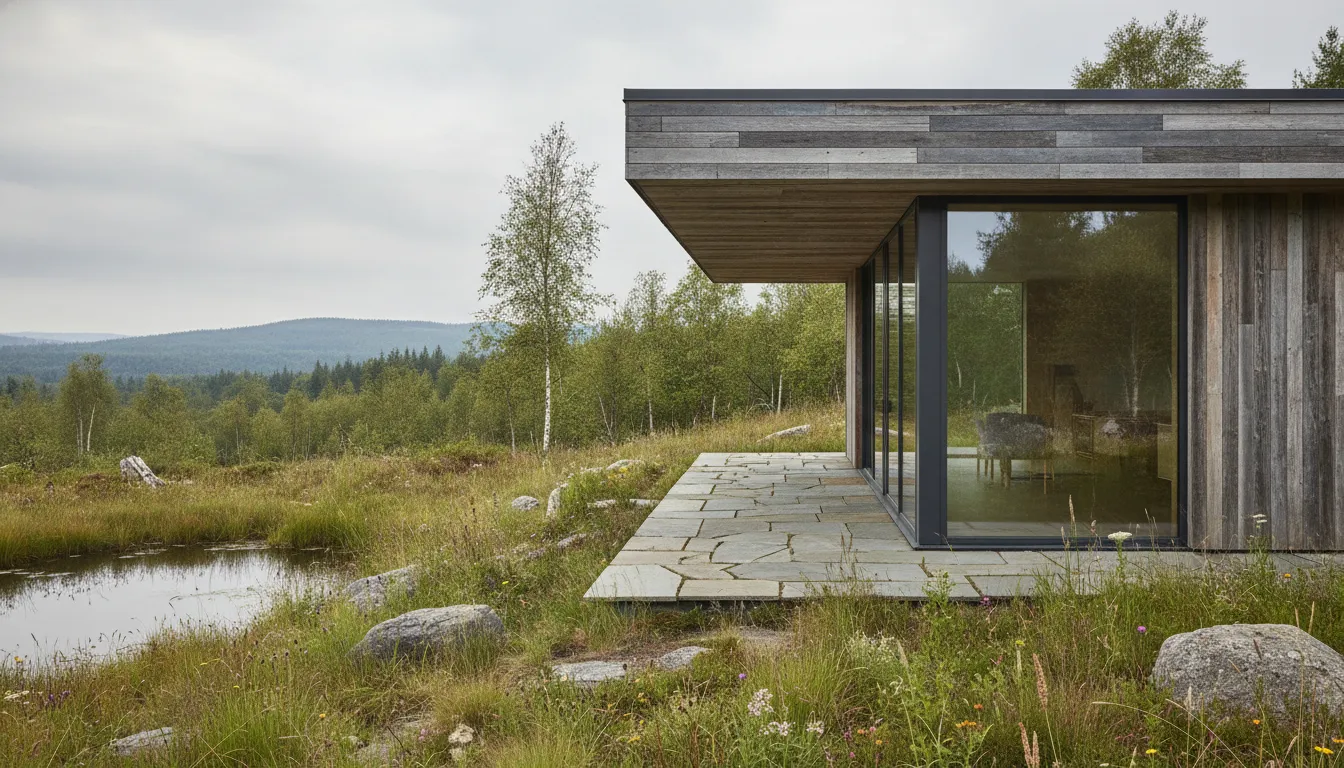
Reclaimed barn board is a popular choice for exterior siding on both residential and commercial projects. The weathered surface provides natural weather resistance, and the authentic patina adds depth that painted or stained new wood cannot achieve. Barn board siding creates a warm, grounded aesthetic suited to modern farmhouse designs, contemporary mountain retreats, and historic renovations. Available varieties include Red Barn Board, Reclaimed Gray Barn Board, Mixed Brown Board, Faded Red, White Reclaimed, and Wire Brushed, giving designers broad flexibility in tone and character.
Structural and decorative beams
Reclaimed beams serve both structural and aesthetic roles in green building projects. Old-growth timbers salvaged from barns and industrial buildings provide exceptional strength for post-and-beam construction, exposed ceiling frameworks, and mantle pieces. The dense grain structure of old-growth wood makes these beams dimensionally stable and resistant to warping. Because each piece varies in dimensions, species, and character, custom reclaimed beams require project-specific quoting. Designers value them for the visible history and warmth they bring to interior spaces.
Interior paneling and accent walls
Inside the home or commercial space, reclaimed wood paneling creates striking feature walls, ceiling treatments, and wainscoting. The varied color ranges between different barn board types allow designers to create contrast and rhythm within a space. Whether used as a full-wall treatment or as an accent behind a reception desk, fireplace, or headboard, reclaimed paneling adds texture that paint and drywall cannot match.
Corral board and agricultural character
For projects calling for a distinct Western or agricultural aesthetic, reclaimed corral board offers an unmistakable look. Salvaged from horse corrals and livestock fencing, these boards carry the distinctive silver-gray patina developed through years of animal contact and open-air exposure. Weathered corral board is particularly well suited to exterior cladding, accent walls, and fence installations where the design goal is to bring authentic agricultural character into the built environment.
What to Consider When Sourcing Reclaimed Wood for Your Project
Buying salvaged lumber is fundamentally different from ordering new wood at a lumberyard. These materials are inherently unique and do not follow standard sizing or species categories. Every batch comes from a specific structure with its own history, and planning must accommodate the material that is available rather than expecting uniform supply.
Custom nature of salvaged wood
Reclaimed wood is not a commodity with uniform specifications. Lead times and available inventory change based on which structures are being deconstructed at any given time. Engage your supplier early to understand current stock and obtain pricing for your specific requirements. Wood Crafting operates on a quote-based model, with quotes valid for 30 days to accommodate the custom nature of each order. Pricing is project-specific because materials vary by batch, dimensions, processing level, delivery logistics, and quantity.
When budgeting for reclaimed wood, consider these factors. Batch variability means each deconstruction yields different species, dimensions, and character grades. Processing level affects cost as-is boards are less expensive than de-nailed material. Delivery logistics depend on distance and order size. Project timelines may require longer lead times than commodity lumber, and some varieties have minimum order requirements due to limited stock.
Planning for the future
Building with sustainability in mind also means planning for the end of a building's life. Designers can help future generations by making structures easy to deconstruct. Using mechanical fasteners like bolts, screws, and nails instead of permanent adhesives makes it possible to salvage the wood again in the future. This practice, called design for disassembly, ensures that the materials chosen today can remain in the circular economy for generations.
Key design for disassembly principles include using bolted connections rather than welded or glued joints where possible. Specify standard-size components for common future applications to make reuse practical later. Avoid composite assemblies that bond different materials permanently. Document material sources and fastening methods so future teams can deconstruct efficiently. Design open-span structural systems that allow panels and beams to be removed individually.
How to Source Reclaimed Wood Sustainable Building Materials for Your Next Project
Getting started with reclaimed wood is straightforward when you work with a specialized supplier. Wood Crafting LLC, based in Millerton, New York, supplies 100% genuine reclaimed wood products sourced from agricultural structures across the Northeast and Midwest. The team works with architects, builders, and homeowners to match the right material to each project's specifications and sustainability goals.
The quote process
Because reclaimed wood is custom by nature, every project begins with a consultation and quote. You describe the scope including dimensions, processing level, and delivery requirements. The team identifies available stock from current deconstruction projects and prepares a project-specific price. Quotes remain valid for 30 days, giving you time to finalize your design and budget before committing. This process ensures you receive exactly the material your project needs without paying for features you do not require.
Visit the showroom
The best way to evaluate reclaimed wood is to see and touch it in person. Wood Crafting's showroom at 76 Main Street in Millerton, New York, displays samples of barn board. Corral board, and beams so you can examine the patina, texture, and color variation firsthand. Visiting the showroom also allows you to discuss your project with knowledgeable staff who understand the material's history and performance characteristics.
Contact information
To begin the process, call 845-373-8020 or request a quote online. Wood Crafting serves clients throughout the Hudson Valley, Dutchess County, Litchfield County, New York, Connecticut, Massachusetts, and the broader Northeast region. Whether you are specifying materials for a custom home, a commercial development, or a historic renovation. The team can help you select the right reclaimed wood sustainable building materials for your project.
Frequently Asked Questions
What is the most sustainable wood for construction?
Reclaimed wood is widely considered the most sustainable choice for green building projects. This wood is salvaged from old structures instead of harvested from living forests. According to the EPA, using wood from building deconstruction helps preserve old-growth forest resources and keeps usable materials out of landfills. Because reclaimed wood requires significantly less energy to process than new lumber. It carries a substantially lower carbon footprint, making it a top choice when specifying reclaimed wood sustainable building materials.
Is reclaimed wood cheaper than buying new lumber?
Reclaimed wood does not follow commodity pricing. The cost depends on the batch, dimensions, species, processing level, and delivery requirements. Each piece is unique and varies in size and character. At Wood Crafting, pricing is project-specific because materials differ by batch and logistics. While reclaimed wood may cost more than basic commodity lumber, it offers superior strength, unique character, and documented environmental benefits that standard new wood cannot provide.
Does reclaimed wood need special cleaning before it is used?
Yes, salvaged wood requires preparation to be ready for construction. After materials are recovered from old barns and fences, they undergo processing that typically includes de-nailing and power washing to remove dirt and debris. Some material is sold as-is for clients seeking maximum authenticity, but most builders specify de-nailed and cleaned boards that are ready for siding, paneling, or beam installation. Wood Crafting can advise on the appropriate processing level for each application.
Where can I find reclaimed wood for sale in the Northeast?
High-quality reclaimed wood is available from specialized suppliers who source directly from regional deconstruction projects. Wood Crafting LLC, based in Millerton, New York, supplies 100% genuine reclaimed lumber from agricultural structures across the Northeast, Midwest, and Eastern Canada. The company maintains an active showroom at 76 Main Street in Millerton where architects, builders, and homeowners can examine materials in person. Call 845-373-8020 or request a quote online to discuss your project requirements.
How long does reclaimed wood typically last in construction?
Reclaimed wood from old-growth sources often outperforms new lumber in durability. The dense grain structure developed over centuries of slow growth makes these boards resistant to rot, pests, and warping. Many historic barns in the Northeast have stood for over a century using the same timbers now being reclaimed for new construction. When properly maintained, reclaimed wood siding and paneling can last another 50 to 100 years or more, making it a genuinely lifetime building material.