
Reclaimed Wood Beams Hudson Valley Sourcing and Design Guide
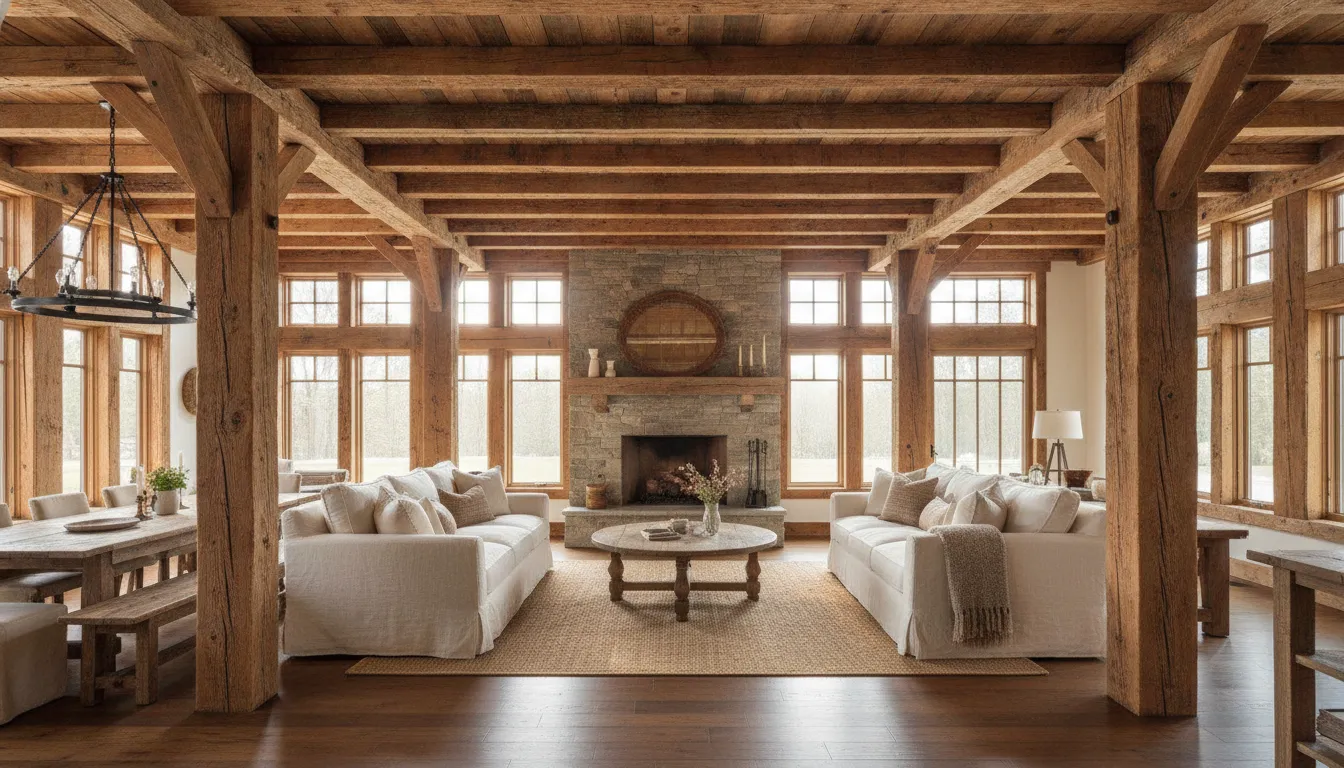
In a Hudson Valley custom home, a ceiling beam can do more than carry a load or define a room. Reclaimed wood beams Hudson Valley architects and builders choose for a custom build connect the home to the region's working-farm history, especially when saw marks, nail holes, and a weathered surface remain visible. For builders and architects, that character offers a material story that new timber cannot reproduce.
The appeal is also practical. Reclaimed beams can serve structural or decorative purposes, and they can be supplied as-is, de-nailed, or power-washed to suit the installation and finish plan. Sourcing through a specialist helps the project team evaluate provenance, dimensions, condition, and the level of processing before the beam reaches the jobsite.
Reclaimed wood beams hudson valley projects work best when the beam's historic character, intended use, required dimensions, and finish are considered together. Wood Crafting sources authentic reclaimed wood from old barns and agricultural structures in the Northeast and Midwest, with options for custom residential applications.
That combination of authenticity and specification control makes reclaimed beams useful across farmhouse-inspired interiors, historic renovations, and cleaner contemporary designs. Wood Crafting's reclaimed wood beams specification and sourcing guide provides a deeper reference for applications and project requirements. First, it helps to understand why Hudson Valley builders and architects continue to specify this material.
Request a quote for your reclaimed wood beam project
Why Do Hudson Valley Builders and Architects Specify Reclaimed Wood Beams?
For Hudson Valley custom homes, reclaimed beams bring more than an attractive surface. They give a project material with visible history, practical flexibility, and a finish that cannot be reproduced with newly milled lumber.
Wood Crafting sources authentic 100% reclaimed wood from old barns and agricultural structures. Each beam carries the evidence of its former life, including saw marks, nail holes, weathering, and natural variation. These details are not manufactured distressing. They are the physical record of centuries of use, which gives an interior or exterior structure a sense of permanence.
Authentic character that supports the design
Architects and builders often specify reclaimed beams when the design calls for warmth without sacrificing material integrity. A hand-hewn beam can anchor a modern room, while rough-sawn timber can reinforce a farmhouse or historic renovation. The irregularities help a large space feel connected to the region's agricultural building traditions.
That character also gives design teams a clearer material story. Instead of selecting a new product made to look old, they can specify wood that has already aged naturally. Color, texture, grain, and surface marks vary from beam to beam, so early review of available stock is important when the project depends on a particular visual balance.
One material, two application paths
Reclaimed beams can serve both structural and decorative purposes. Structural members may be incorporated into a building plan when dimensions, condition, and engineering requirements support that use. Decorative beams can add the appearance and substance of exposed timber around ceilings, openings, mantels, and other architectural features without carrying the building load.
Project requirements also determine how the material is prepared. Wood Crafting can provide beams as-is, de-nailed, or power-washed. As-is material preserves more of the original surface. De-nailed stock helps reduce installation hazards while retaining character. Power-washed beams offer a more cleaned-up starting point when the design requires a refined presentation.
Sustainability with specification value
Reusing existing timber supports the sustainability goals behind many high-performance building projects. For architects pursuing LEED-related material strategies, reclaimed wood can offer an eligible material option, subject to the project's documentation and certification requirements. It also gives the specification a tangible environmental story rather than relying only on a decorative claim.
For a closer look at dimensions, applications, preparation, and sourcing considerations, review the reclaimed wood beams specification and sourcing guide. The right beam selection starts by aligning the material's existing character with the project's structural demands, finish expectations, and architectural intent.
What Are the Regional Design Trends for Exposed Reclaimed Beams?
Across the Hudson Valley, exposed beams are giving new homes a sense of permanence. They also make historic renovations feel connected to their original setting. In a contemporary farmhouse, a reclaimed beam can become the visual anchor above a kitchen, great room, or dining area. In an older structure, it can reinforce the building's agricultural character without making the interior feel like a museum.
The strongest installations treat the beam as architecture, not decoration added at the end. Reclaimed wood brings visible saw marks, nail holes, weathering, and patina created by years of use. Those details create a focal point in a high-ceiling or open-concept room, where a smooth new finish might otherwise leave the upper plane feeling empty. This is one reason the material works so well in regional homes that balance clean lines with historic references.
Contemporary farmhouse warmth without visual clutter
Modern farmhouse design often depends on contrast. White or lightly finished walls, simple cabinetry, and large windows establish a restrained background. A rough-sawn or hand-hewn beam adds warmth and texture without requiring a room full of rustic furnishings. The result feels transitional: modern enough for a new build, but grounded in the Hudson Valley's farming and building traditions.
That same balance appears in hospitality settings. Our guide to reclaimed wood beams in interior design explores how beam scale, placement, and patina can shape an experience without overwhelming the surrounding materials. Residential projects can apply the same principle by selecting one or two strong visual moments rather than covering every ceiling with heavy timber.
Box beams or full structural timbers?
Not every project needs a full structural timber. Reclaimed box beams can provide the appearance and character of solid wood while functioning as a trim-like architectural element around a ceiling, ridge, or transition. They are useful when the existing structure, engineering plan, or ceiling assembly does not allow for heavy structural members.
Full timbers are appropriate when the beam has a documented structural role and the project team has accounted for engineering, connections, bearing points, and installation access. Reclaimed beams can serve structural or decorative purposes, but the distinction must be established during design rather than assumed from appearance. A specialist can help coordinate the desired character with the architect, engineer, and builder.
Defining open-concept rooms with natural material
In an open floor plan, strategically placed beams can establish zones without adding walls. A beam aligned over a kitchen island can visually separate cooking from living space. Another can mark the transition between a dining area and a great room while preserving sightlines and natural light.
This approach also supports biophilic design, which brings natural materials and visual connections to the outdoors into interior spaces. Reclaimed timber adds an authentic tactile element, not a printed imitation of one. When the placement is intentional, the beam connects the room's structure, circulation, and material palette in one move.
Where Can I Find Reclaimed Wood Beams in the Hudson Valley?
For reclaimed wood beams in the Hudson Valley, start with a specialty reclaimed-timber supplier rather than a general lumberyard. Local lumberyards may carry new dimensional lumber, manufactured box beams, or occasional salvaged pieces. A specialist works with the material every day and can help match species, dimensions, surface character, and intended use to the requirements of your project.
The regional supplier landscape includes reclaimed-lumber dealers, architectural salvage yards, and timber specialists serving builders, architects, and homeowners. Some focus on flooring and siding, while others maintain deeper inventories of hand-hewn and rough-sawn beams. Ask whether the supplier regularly handles full timbers, not just small decorative pieces. That distinction matters when a project calls for long spans, substantial depth, or multiple beams with a consistent appearance.
What should a reclaimed-beam supplier verify?
Ask how the beams were sourced, what species are available, and whether the material came from old barns or other agricultural structures. Provenance is not just a marketing detail. It helps explain the saw marks, nail holes, weathering, and tight-grain character that make reclaimed timber different from newly milled lumber.
Condition and preparation deserve the same attention. Reclaimed beams should be inspected for stability, hidden damage, and pests before installation. Depending on moisture content and the intended indoor application, kiln-drying may be appropriate to improve stability and remove excess moisture. A reputable supplier should explain what inspection and processing each beam has received, rather than treating every salvaged timber as ready for immediate installation.
Also clarify whether the beams are structural or decorative. Structural use requires coordination with the project engineer and a supplier who can provide dimensions and material information. Decorative beams offer more flexibility, including box-beam construction or selected timbers used as ceiling accents, mantels, or architectural details. The right specialist will help you avoid specifying a beautiful beam that does not suit the installation conditions.
A Hudson Valley specialist for custom projects
Wood Crafting is based in Millerton, New York, and sources authentic 100% reclaimed beams from old barns and agricultural structures across the Northeast and Midwest. Its inventory supports both structural and decorative applications, with materials available in forms that can be selected around the needs of a custom build or renovation.
Review the available custom reclaimed wood beams and bring your plans, target dimensions, and finish preferences into the conversation. Comparing real beam stock with the project details early helps your builder or architect make a sound choice before framing and installation decisions are finalized.
How Does Local Sourcing Benefit Hudson Valley Beam Projects?
For a Hudson Valley project, provenance is more than a detail on a materials schedule. Reclaimed beams from Northeast barns and agricultural structures carry the marks of the region's building history, including hand-hewing, rough-sawn faces, weathering, and years of practical use. Those details give a finished space a sense of place that new lumber cannot reproduce.
The species also reflect the forests and construction traditions of the Northeast. White oak is valued for strength, decay resistance, and structural integrity. Chestnut, hemlock, and pine offer different combinations of grain, color, weight, and surface character. A specialist can help match the available timber to the project's engineering requirements and the visual language of the room.
Shorter transport supports a more considered material choice
Local or regional sourcing can reduce the distance reclaimed timber travels before it reaches a jobsite. The U.S. Environmental Protection Agency identifies local material sourcing as a strategy for reducing transportation-related embodied carbon in construction supply chains. The same guidance connects regional supply relationships with local economic benefits.
That does not make every local material automatically lower impact. Transport distance is only one part of a beam's environmental profile, alongside salvage methods, processing, storage, and installation. Still, choosing a Northeast-provenance beam for a Northeast project keeps the sourcing decision aligned with both material reuse and regional availability. Read the EPA's guidance on embodied greenhouse gas emissions and local economic benefits.
See the material before it reaches the jobsite
Regional access also makes inspection more practical. At Wood Crafting's showroom at 76 Main St in Millerton, New York, builders, architects, and designers can evaluate beam stock in person. Seeing the timber reveals qualities that photographs often miss: the depth of a saw mark. The variation in patina, the visibility of old nail holes, and how a beam's actual dimensions relate to the plans.
That review can improve coordination before fabrication or delivery. Teams can discuss whether a beam is best suited to a structural application, a decorative wrap, a mantel, or another architectural feature. It also creates an opportunity to compare several pieces for color and character when a project calls for a consistent run.
Wood Crafting is based in Millerton and Amenia, New York, and sources authentic reclaimed wood from old barns across the Northeast and Midwest. Explore the available custom reclaimed wood beams and share the project's dimensions, intended use, and design direction when evaluating the right material.
Matching Species and Finish to Your Hudson Valley Build
Species selection sets the visual weight of a beam before any finish is applied. In a Hudson Valley farmhouse renovation, white oak may reinforce a substantial, structural impression. White pine can feel lighter and more informal in a cottage or contemporary room. Chestnut and hemlock sit between those extremes, bringing distinctive grain, color, and regional character.
These are practical starting points rather than rigid rules. Reclaimed stock varies because each beam carries the evidence of its former use. Saw marks, nail holes, oxidation, and weathering can differ even within the same species. A specialist can help match available material to the span, dimensions, and level of character your project requires.
| Species | Character | Best For |
|---|---|---|
| White oak | Dense, pronounced grain with a grounded, durable appearance. | Structural-looking ceiling members, mantels, and refined farmhouse interiors. |
| Chestnut | Warm, historic character with irregular grain and an unmistakable aged presence. | Historic renovations, statement beams, and interiors where provenance matters. |
| Hemlock | Strong, varied grain with a softer, more weathered visual quality. | Rustic ceilings, open-plan spaces, and projects balancing old and new. |
| White pine | Light-toned, approachable character that accepts a range of treatments. | Cottages, bedrooms, lighter interiors, and decorative box-beam applications. |
Finish determines whether the beam reads as an artifact, an architectural plane, or a deliberate color element. A raw or natural treatment keeps oxidation, tool marks, and old nail holes visible. It lets the beam act as a direct visual connection to the barns and agricultural structures where the timber was used. That approach suits interiors built around stone, plaster, wide plank floors, and other quiet natural materials.
A stain can deepen a pale species, unify varied boards, or bring a beam closer to cabinetry and flooring. It can also make the beam feel more designed and less purely rustic. Use a restrained stain when the goal is a modern Hudson Valley interior, or preserve more variation when the room needs a stronger historic focal point. The patina formed through time, oxidation, and historical use cannot be recreated by a new finish, so aggressive color changes should be considered carefully. See the finishing reclaimed wood beams guide before specifying a treatment.
Finally, confirm whether the beam is structural or decorative before choosing dimensions and surface preparation. Finishing decisions can affect the visual relationship between a beam and the surrounding materials, while sourcing and condition affect the project scope. For budgeting context, review the reclaimed wood beams cost buyer's guide.
Why Visit the Showroom in Millerton, NY Before Ordering Beams?
Photos can show color and texture, but they cannot fully communicate how a reclaimed beam feels in your hands or reads at full scale. At Wood Crafting's showroom at 76 Main St, Millerton, NY, builders, architects, designers, and homeowners can examine available beam stock before making a project decision.
The showroom sits near the Columbia and Dutchess County border, making it a practical Hudson Valley stop for teams sourcing reclaimed wood beams. An in-person visit gives you a clearer sense of proportion, surface variation, and the differences between individual pieces. Those details matter when a beam will remain visible in a great room. Span a gathering space, frame a fireplace, or become part of a renovation with historic character.
Inspect patina, species, and length together
Reclaimed wood salvaged from old barns and agricultural structures carries evidence of its previous life. Saw marks, nail holes, weathering, softened edges, and changes in tone may appear differently from one beam to the next. Seeing the material directly helps you decide whether the available character fits your design intent or needs additional processing.
It also allows you to compare species and dimensions in context. A sample photograph may not reveal how a hand-hewn surface catches light, how deep a mark is, or whether a particular length works with your ceiling layout. You can sort through stock by the needs of the project rather than selecting a piece based on an isolated image.
Bring the information that shapes the selection
Bring architectural plans or measured drawings, especially when the beam must coordinate with openings, ceiling heights, posts, or other structural elements. Even preliminary dimensions help narrow the search and identify where a specific length or profile may be appropriate.
Style references are useful as well. Bring photographs, finish references, or a short description of the desired atmosphere, such as lightly weathered, deeply patinated, hand-hewn, or clean and architectural. Cladding and finish samples can help compare the beam with nearby flooring, siding, stone, metal, or cabinetry.
For a larger build, gather the beam schedule, intended application, preferred species, finish expectations, and any processing requirements before visiting. Wood Crafting offers reclaimed materials as-is, de-nailed, or power-washed according to project needs. Reviewing those options alongside the actual stock makes the next specification conversation more precise.
How to Start a Reclaimed Beam Project with Wood Crafting's Local Team
A successful beam project starts with clear decisions about the role the material will play in the build. Reclaimed beams may serve a structural purpose or provide decorative character, but those applications require different specifications. Treat the process as a material consultation, not simply a search for a particular size or finish.
- Define the project scope. Identify where the beams will be used, how many are needed, and whether they are intended to be structural or decorative. For structural applications, the design team and engineer should establish the required dimensions, loads, connections, and approvals. Then discuss preferred species, surface character, color, and finish. Reclaimed material can retain saw marks, nail holes, weathering, and other evidence of its previous use, so decide how much of that character belongs in the finished space.
- Request a quote with complete project information. Use Wood Crafting's request-a-quote form and include the project type, location, quantity, approximate dimensions, application, timeline, and any plans or specifications available. Mention whether the beams need to be supplied as-is, de-nailed, or power-washed. Specific information gives the team a practical basis for identifying suitable material and preparing a responsive quote.
- Visit the showroom or send your specifications. If you are working in the Hudson Valley, visit the showroom at 76 Main St in Millerton, NY. Seeing reclaimed beam stock in person helps you evaluate patina, surface texture, color variation, straightness, and available lengths. If an in-person visit is not practical, send drawings, dimensions, photographs, finish references, and other relevant specifications so the team can review the requirements remotely.
- Review the material recommendation and quote. Wood Crafting can help match available reclaimed material to the project's visual and practical requirements. Review the recommended species, dimensions, surface preparation, finish expectations, quantity, and quote details with the builder, architect, designer, or engineer responsible for the project. This is also the point to resolve substitutions or appearance preferences before placing an order.
- Order the material and coordinate delivery. Once the specifications and quote are approved, confirm the order, delivery requirements, site access, and installation schedule. Coordinate timing with framing, masonry, finish, and other trades as needed. Clear delivery planning helps protect the material and ensures the beams arrive when the project is ready to receive them.
When you are ready to discuss species, dimensions, finish, or quantity, send the project details through the request-a-quote page so Wood Crafting's local team can help define the next step.
Start your Hudson Valley reclaimed beam project
Frequently Asked Questions
Where can I find reclaimed wood beams in the Hudson Valley?
Start with a specialty reclaimed-lumber supplier rather than a general lumberyard. Wood Crafting is based at 76 Main St in Millerton, NY, where you can review available beam stock and discuss a custom project.
What types of reclaimed beams are available for custom homes?
Options can include hand-hewn and rough-sawn beams, with species such as oak, chestnut, hemlock, and pine. Availability depends on current reclaimed inventory, so share your preferred dimensions, finish, and character before selecting a beam.
Are box beams a good alternative to structural reclaimed timbers?
They can be. A box beam is a hollow or built-up decorative element that can wrap an existing structural member or add the appearance of a heavy timber without carrying the same structural load. Confirm engineering requirements before choosing between the two.
What should I look for when sourcing reclaimed lumber?
Ask about species, dimensions, provenance, moisture condition, insect or rot inspection, and available preparation. Wood Crafting can provide material as-is, de-nailed, or power-washed, depending on the project's needs.
Do reclaimed wood beam suppliers offer custom furniture?
Some specialty suppliers use reclaimed timber for custom furniture and related architectural elements as well as beams. If your project includes a mantel, table, built-in, or other piece, provide drawings or dimensions so the supplier can confirm the material and fabrication options.
Ready to Start Your Reclaimed Beam Project?
Every Hudson Valley project has its own plans, proportions, and material priorities. Sharing those details early helps Wood Crafting identify reclaimed beams that fit your design and intended application. Request a custom quote for your reclaimed beam project with your drawings, dimensions, preferred character, and timeline. You can also visit the showroom at 76 Main St, Millerton, NY. For questions, call (845) 373-8020.