
Reclaimed Wood New Construction Specification Guide
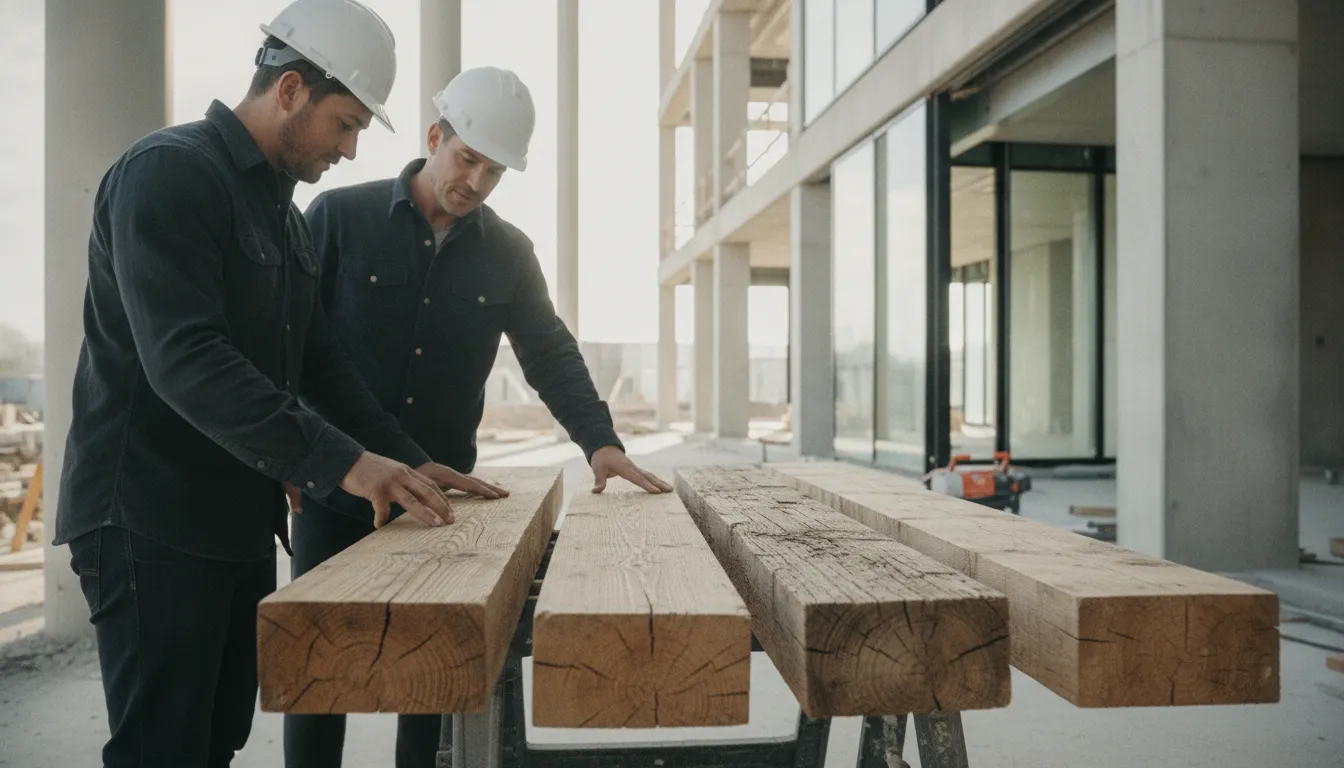
Reclaimed wood can be specified in a modern build without turning the project into a preservation exercise. Define the material by application, performance, moisture, finish, and level of processing before procurement, giving the design and construction team a clear basis for submittals and coordination.
Get a project-specific quote for your reclaimed wood new construction specification by sharing your plans and quantities with Wood Crafting. Request a project quote to start.
A practical reclaimed wood new construction specification identifies the intended use, required grading or engineering review, moisture condition, dimensions, finish, treatment, and acceptable natural variation. Wood Crafting supplies 100% authentic reclaimed beams, siding, paneling, and corral board sourced from agricultural structures across the Northeast and Midwest, with project-specific processing options.
The material brings more than visual warmth. Its nail holes, patina, grain, and other marks reflect genuine use, so the specification should protect those characteristics while setting workable tolerances. For beam applications, the reclaimed wood beams specification guide provides a useful starting point, and the project team can then evaluate why reclaimed materials suit new construction and support broader sustainability goals.
Why New Construction Projects Are Specifying Reclaimed Wood
New construction teams specify reclaimed wood to strengthen sustainability and design narratives while capturing authentic material character. Reuse keeps viable lumber in service, supports circular-construction goals, and can reduce reliance on virgin extraction. But benefits depend on responsible sourcing and appropriate application rather than automatic certification outcomes.
Reclaimed wood gives architects and builders a way to make material selection part of a project's environmental and design strategy. Instead of sending usable lumber from an older structure to disposal, the material can be recovered, prepared, and incorporated into a new building. The EPA identifies reclaimed wood as a construction and demolition material that new building projects can reuse, reducing the need to extract virgin resources. That approach supports the EPA's Sustainable Materials Management framework.
For teams evaluating a reclaimed wood new construction specification, the sustainability case is practical rather than abstract. Reuse keeps material in productive service and can reduce the demand for newly harvested resources. Research published in Nature Reviews Materials shows wood construction can avoid some of the energy and carbon footprint of steel and concrete. It also identifies wood products as potential long-term carbon sinks while they remain in service. These benefits still depend on responsible sourcing, appropriate application, and a design that keeps the material in use for the long term.
Reclaimed wood also fits the broader move toward circular construction. A circular approach treats building materials as resources that can be recovered and used again, rather than as disposable inputs. Research in Nature Communications identifies circular wood use as an important opportunity to accelerate decarbonization. In project documentation, that value can support sustainability narratives, material-reuse goals, and conversations about embodied carbon. It is not a guaranteed certification outcome, since each project's credits depend on the full design and documentation package.
Value beyond the carbon calculation
Material value is not limited to environmental metrics. Reclaimed lumber carries evidence of its previous service: changes in grain, hand-worn surfaces, nail holes, saw marks, and variations in tone. Those characteristics cannot be reproduced consistently with a factory finish. They give a new structure a sense of permanence and regional history while allowing the surrounding architecture to remain thoroughly modern.
That distinction is especially useful in spaces where the material needs to do more than fill a finish schedule. A beam can establish scale in a lobby or gathering space. Siding and paneling can add depth to a clean interior palette. Each application benefits from early decisions about the desired character, amount of variation, and level of processing.
- Environmental value: reuse diverts viable material from disposal and reduces reliance on virgin material extraction.
- Project value: documented reuse and material provenance can strengthen sustainability and design narratives.
- Design value: authentic patina and working marks provide character that new manufactured materials cannot duplicate.
Specifiers can review applications, sourcing considerations, and documentation in this reclaimed wood beam specification guide. For projects centered on exposed structural or decorative members, the reclaimed beams collection is a useful starting point for defining the material direction before the specification is finalized.
How to Write a Reclaimed Wood New Construction Specification
Write the specification around intended use, then performance, moisture, dimensions, finish, treatment, and acceptable variation. State whether each material is structural or decorative, assign grading or engineering review, and describe the material's inherent character. The design and construction team can then share the same expectations from submittal to install.
A useful specification turns reclaimed material from a visual idea into a coordinated construction package. It should tell the design team, supplier, engineer, and installer what material is required. Where it will be used, how it will be evaluated, and what conditions it must meet before installation. Start the specification early, especially when the project depends on particular beam dimensions, board widths, patina, or a consistent species.
For background on sourcing, applications, and technical questions, review this reclaimed timber specification guide. Then build the project specification around the following elements.
- Define the material and grade. Identify the product as 100% reclaimed or salvaged wood, then state the expected species, nominal and actual dimensions, allowable defects, surface character, and processing level. Explain whether nail holes, saw marks, checking, knots, color variation, and weathering are accepted characteristics or reasons for rejection. Reclaimed wood varies by source and history, so the grading language should describe the appearance and performance the project can accept rather than imply factory uniformity. The specification should also identify whether the material is intended as structural framing, a nonstructural finish, siding, paneling, or another application.
- Set moisture requirements. Include the required moisture content range at delivery and the conditions for measuring it. Moisture equilibrium matters because wood can shrink or expand after installation when its moisture level differs substantially from the building environment. State where measurements will be taken, how the material will be stored, and whether the installer must confirm readings before fastening. The goal is not simply to request dry lumber. It is to receive material that is appropriate for the expected interior or exterior exposure and has had a reasonable opportunity to acclimate. Proper moisture language helps protect joints, reveals, fasteners, and finished surfaces.
- Describe the intended application. Name the exact locations and functions, such as exposed ceiling beams, wall paneling, rainscreen siding, millwork, or decorative cladding. Include orientation, finish expectations, edge treatment, fastening visibility, and coordination with substrates or insulation. If paneling is part of the scope, the reclaimed wood paneling specification guide can help organize substrate, layout, and appearance decisions.
- Separate structural requirements from visual requirements. For beams or other load-bearing components, list the design loads, span, bearing conditions, connection requirements, and required engineering documentation. Structural reclaimed beams need review by a qualified professional before they are assigned a load-bearing role. Do not treat a visually sound beam as automatically suitable for the design load. If the material is decorative, state that clearly and specify the support system independently.
- Require inspection and documentation. Request professional inspection and grading records that confirm suitability for the intended end use. A submittal can include representative photographs, dimensions, species information where known, moisture readings, treatment records, proposed finish samples, and any engineer's review. Define who approves the submittal and when approval occurs, before fabrication, shipment, or installation.
Clear requirements reduce avoidable substitutions and give the supplier a practical basis for assembling the right material. They also create a shared record for review when the reclaimed wood arrives. Letting the team evaluate it against the approved performance and appearance criteria rather than deciding informally on site.
Integrating Reclaimed Beams, Siding, and Corral Board in One Build
Integrate reclaimed beams, siding, and corral board by choosing one primary material for the largest visual area. Use beams to define scale and reserve corral board for close-up accents. Coordinate undertone and finish rather than matching surface pattern, and review samples together under the project's actual lighting before finalizing the layout.
A cohesive reclaimed-wood palette starts with a shared design intention, not with making every surface look identical. In a new build, beams can establish proportion and structure overhead, siding can carry warmth across a larger plane. And corral board can add a more tactile layer at an entry, kitchen, stair, or feature wall. Each material should have a defined role, while the group still feels connected.
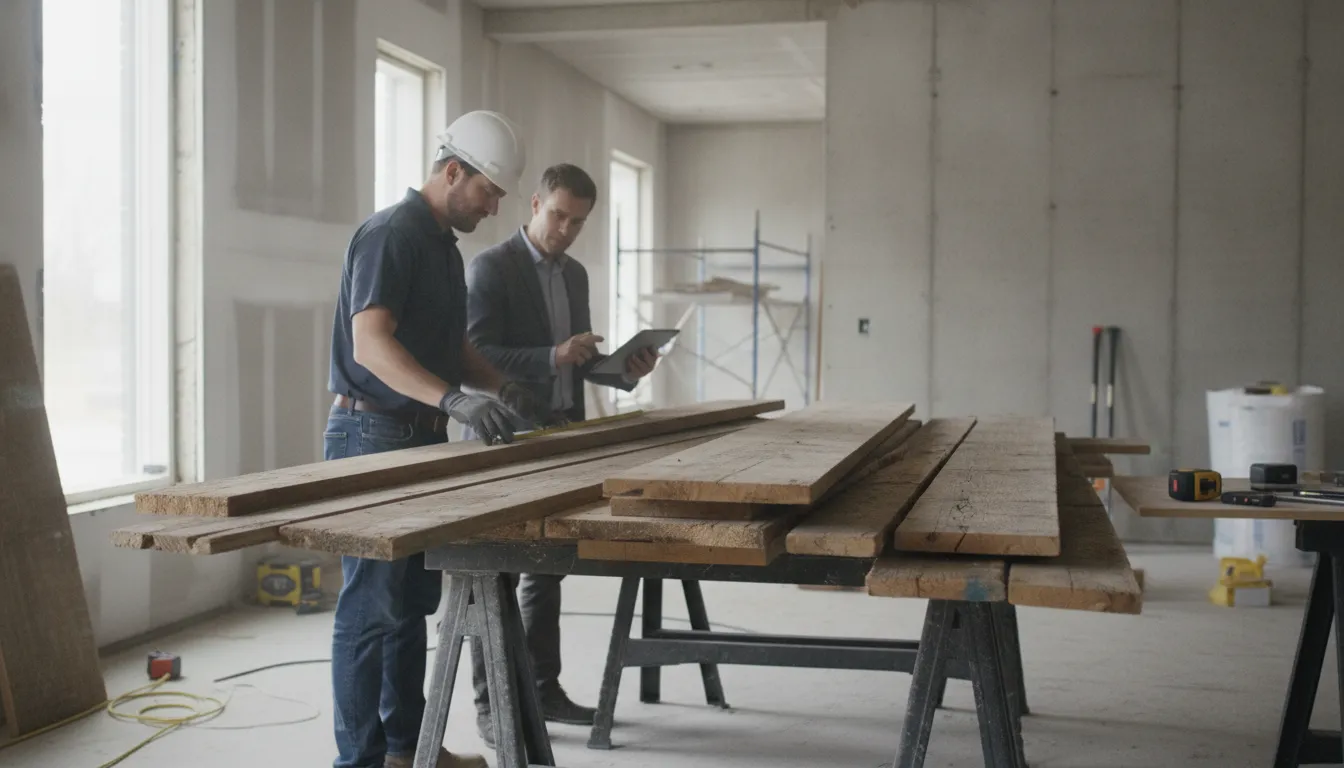
Material variance is part of the specification. Reclaimed boards and timbers naturally differ in color, texture, width, nail holes, weathering, and patina because each piece records a different history. That variation should be reviewed early and written into the design expectations rather than treated as a defect during installation. The reclaimed-barn-board specification guide describes this variation as a fundamental part of the material's aesthetic value: reclaimed wood siding and paneling can provide a broad field of character, while selected beams create visual anchors.
Use contrast deliberately
One effective approach is to coordinate the materials by undertone and finish instead of matching their surface pattern. For example, a dark, heavily weathered beam may pair well with lighter siding that has restrained gray-brown tones. Corral board can then bridge the two through repeated warm tones, a shared edge detail, or a consistent finish sheen. If the siding is the dominant background, keep beam placement simple and let the irregularity of the boards provide the visual movement. If the beams are the focal point, use corral board in smaller, more controlled areas.
- Choose a primary material for the largest visual area.
- Use beams to define scale, circulation, or key gathering spaces.
- Reserve corral board for accents where its texture and history can be seen up close.
- Review representative samples together under the project's actual lighting.
Coordinate finishes and detailing
Finish coordination should account for the materials' different exposure levels and textures. A low-sheen protective finish may preserve authentic character without making a weathered board appear newly manufactured. Confirm edge treatments, board orientation, fastener visibility, transitions, and trim colors before fabrication. These decisions matter where siding meets a beam, where corral board turns a corner, or where reclaimed surfaces meet clean contemporary materials.
Reclaimed elements can function as high-performance aesthetic and finish components that give a modern build its historical narrative. The authentic patina, nail holes, and marks of use cannot be factory replicated, so the goal is not to erase them through uniform staining. For projects with substantial overhead material, begin by specifying reclaimed wood beams and coordinate the surrounding palette from those selections. For a more agricultural, textural accent, review reclaimed corral board as a complementary element. Together these choices let a new structure tell a credible material story while retaining a clear, intentional architectural language.
Specification Sheets and Material Data for Architect Submittals
Build each submittal package with species and provenance when known, dimensions, processing, finish, and intended location, plus grading or inspection documentation. Distinguish inherent reclaimed character from performance-affecting conditions, and state whether each beam is structural or decorative so reviewers can evaluate suitability and schedule work correctly.
A strong submittal package turns reclaimed wood from a design intention into a material the project team can evaluate, approve, and coordinate. For each product, identify the species when known, source or provenance, dimensions, processing, finish expectations, and intended location. The package should also distinguish characteristics that are inherent to salvaged material, such as variation in color, texture, patina, and nail holes, from conditions that would affect performance. These variations are part of reclaimed wood's value, but they should be described clearly so the architect, contractor, and owner share the same expectations.
Include grading and inspection documentation with the product data. Professional inspection helps confirm performance and suitability for the stated end use, giving the design team a basis for review instead of relying on photographs or general descriptions. For beams, the report should identify whether the material is being proposed for a structural or decorative role and state any limitations on its use. Structural reclaimed beams require evaluation by a qualified professional for load-bearing capacity before they are integrated into new construction. The structural vs decorative reclaimed beams guide can help clarify that distinction during design development.
Include the information reviewers need
- Grading and inspection: Provide the inspection or grading report, visible defect criteria, dimensional tolerances, and the professional responsible for the evaluation.
- Moisture documentation: Record moisture content at inspection and explain the expected moisture equilibrium for the installation environment. Moisture balance matters because unmanaged changes can contribute to shrinkage or expansion after installation.
- Application and loads: State whether the product is a structural beam, nonstructural finish, siding, paneling, or another application. For structural uses, identify the design loads and require engineering review.
- Processing and treatment: Note whether material is de-nailed, surfaced, cleaned, or otherwise prepared, along with finish and treatment requirements.
Structural and decorative grades should not be presented as interchangeable. A decorative beam may be selected for appearance, proportion, and historic character without serving as a primary load-bearing member. A structural proposal needs the additional documentation and review required for its location and loads. Conversely, specifying a structural grade does not mean every board will have a uniform factory appearance. The submittal should preserve both sides of the decision: verified suitability for the application and an honest description of reclaimed character.
Structural versus decorative reclaimed timber at a glance
| Consideration | Structural reclaimed timber | Decorative reclaimed timber |
|---|---|---|
| Primary role. | Load-bearing member such as a beam or column. | Finish element such as cladding, paneling, or nonstructural trim. |
| Engineering review. | Required by a qualified professional before use. | Generally not required for appearance-only applications. |
| Documentation. | Grading report, design loads, connection details, inspection records. | Appearance criteria, dimensions, finish samples, tolerances. |
| Material selection. | Selected primarily for strength and suitability under load. | Selected primarily for patina, color, character, and proportion. |
| Variation tolerance. | Limited by documented performance requirements. | Embraced as part of the intended aesthetic. |
For a broader checklist covering sourcing, applications, and performance considerations, link the package to this reclaimed wood beams specification guide. Clear material data at submittal stage reduces avoidable questions later, supports coordinated detailing, and gives the field team a practical reference when the material arrives.
How Do You Manage Delivery and Moisture for a Reclaimed Wood New Construction Specification?
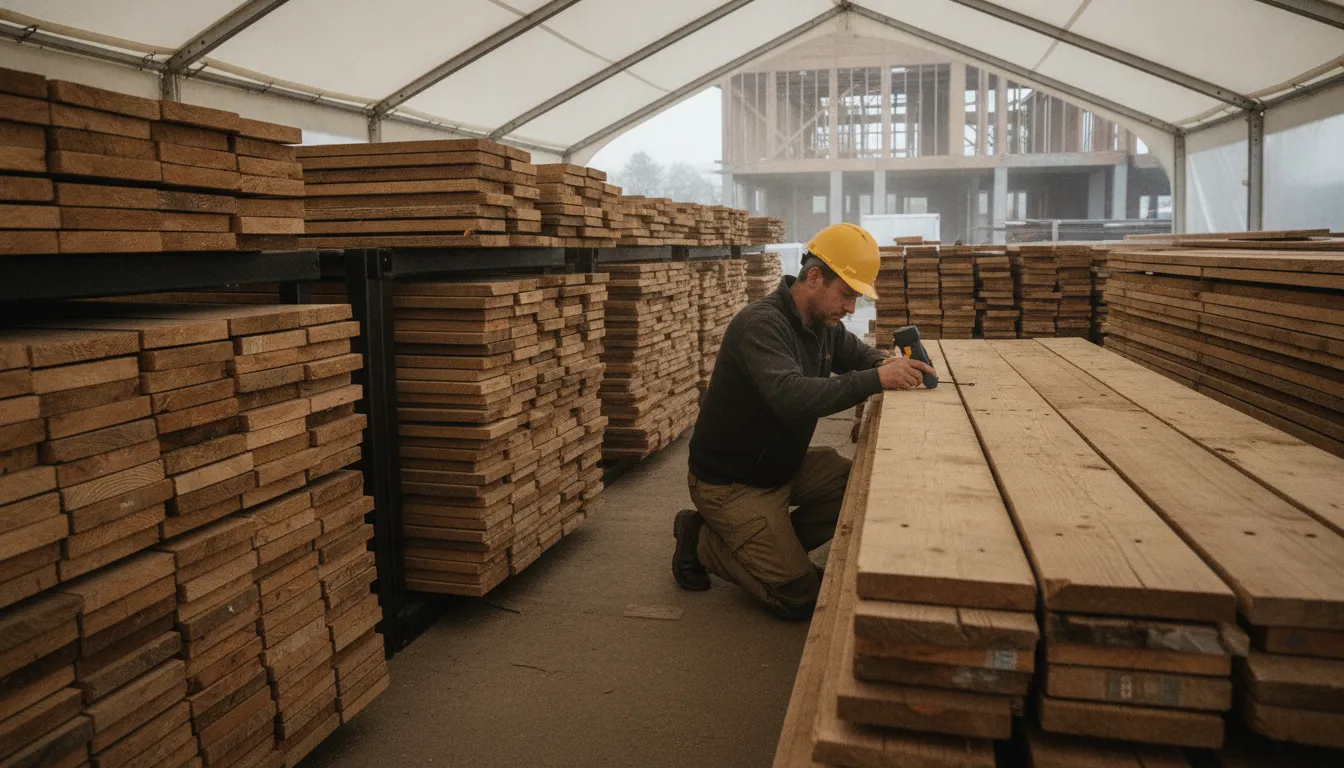
Manage reclaimed wood delivery on an active site by buying early, treating material for pests before it enters the space. Staging it off the ground under cover, and allowing it to reach moisture equilibrium with the installation environment before install. Confirm access, storage, and install dates with the supplier so material arrives ready to place.
Reclaimed wood performs best when delivery is treated as part of the installation plan, not as a separate logistics task. On an active site, framing, drywall, mechanical work, and exterior weather exposure can all affect when material should arrive. Confirm the installation area, access route, storage capacity, and expected install date before finalizing the order. Ordering early helps the project team reserve the right material while leaving time for treatment, inspection, sorting, and acclimation.
Build the delivery schedule around the building's environmental conditions. Material should arrive when the site can receive it safely and the space is close to its service environment. Reclaimed wood must reach moisture equilibrium with its surroundings before installation to limit post-installation shrinkage and expansion, especially at tight joints, wall panels, and beam connections. The specification should state the expected moisture range and who verifies the material is ready to install. The reclaimed wood beams guide can help align material expectations with the project's application.
A practical delivery sequence
- Order before the schedule becomes critical. Share the construction timeline, required quantities, dimensions, finish expectations, and access limitations with the supplier. Confirm whether material needs processing or additional sorting before shipment.
- Complete treatment before material enters the finished space. All reclaimed timber should receive professional pest treatment, even when it appears structurally sound. This step addresses latent wood-boring pests and should be documented in the project records. The reclaimed barn board specification guide describes treatment as a necessary part of responsible reclaimed timber preparation.
- Stage material off the ground. Use clean, level supports with airflow beneath the stack. Keep boards and timbers separated from standing water, mud, concrete splash, and other sources of site contamination. Do not seal material in airtight plastic if condensation could collect inside the wrap.
- Allow acclimation before installation. Place the material in or near the installation environment for the period established by the project team. Check moisture conditions rather than relying only on elapsed time, particularly after wet weather or major changes in heating and ventilation.
- Protect the installed work. Coordinate finishing with the installer and protect surfaces from rain, ultraviolet exposure, impact, dust, and subsequent trade damage. Proper finishing can prolong the life of the installation and reduce the need for premature replacement.
Weather protection should be specific to the construction phase. A covered, ventilated staging area is preferable to a tightly wrapped pile exposed to temperature swings. Once installed, finishes should match the material's location and expected exposure, while temporary protection should not trap moisture against the wood. Confirm responsibility for inspections, moisture readings, treatment records, and finish approval during the submittal process. That simple assignment of ownership prevents delivery delays from becoming installation defects.
What Are the Disadvantages of Reclaimed Wood in New Construction?
Reclaimed wood can give a new building depth and material character, but it requires more coordination than a uniform, newly manufactured product. The primary challenge is variance. Color, texture, dimensions, nail holes, weathering, and patina can differ from one board or beam to the next. That variation is a defining feature rather than a defect, but it affects elevations, takeoffs, finish expectations, and replacement planning. Designers reduce surprises by reviewing representative samples early, defining acceptable variation in the submittal, and letting the material story guide the final layout. The specification should describe the desired range, not promise an impossible factory-level match. This approach reflects the material variance documented in Wood Crafting's reclaimed wood specification guide. This approach reflects the material variance documented in Wood Crafting's reclaimed wood specification guide.
Structural use adds another layer of responsibility. A reclaimed beam that appears sound is not automatically approved for a load-bearing application. Structural reclaimed timbers need evaluation by a qualified professional before they are integrated into new construction. The project engineer should review the intended loads, span, connections, condition, and available documentation. For a concise distinction between load-bearing members and design features, see this guide to structural versus decorative reclaimed beams. In some designs, engineered new framing carries the loads while reclaimed beams serve as visible finish elements. Preserving the appearance without asking salvaged material to perform outside its verified role.
Treatment is also part of the cost and schedule. Even structurally sound reclaimed timber should receive professional treatment to eradicate latent wood-boring pests. Treatment, inspection, de-nailing, cleaning, milling, and finishing may need to occur before delivery, so they should be in the project schedule rather than handled as last-minute preparation. Moisture management and protected staging matter for the same reason: the material must be ready for the building conditions and installation sequence.
Availability and lead time can be less predictable than for commodity lumber. Suitable quantities, dimensions, species, and surface character depend on what can be responsibly sourced and processed. Cost is similarly quote-based. Species, provenance, quantity, processing, treatment, finish, and delivery can all change the final figure, so an early budget allowance should be confirmed with a project-specific quote. Sharing drawings, quantities, dimensions, intended use, and schedule through a request for a project quote gives the supplier enough context to identify viable material and realistic next steps.
Working with Wood Crafting from Design Phase to Delivery
For a builder, architect, or developer, reclaimed wood sourcing is not a final finish selection. It can affect dimensions, detailing, sequencing, documentation, and how the team coordinates materials. Wood Crafting works as a consultative sourcing partner from the design phase forward, matching authentic salvaged material to the intended application and jobsite requirements.
Every product is 100% reclaimed or salvaged. Wood Crafting sources lumber from agricultural structures across the Northeast and Midwest, including barns, horse corrals, and livestock fencing. That provenance matters when a project calls for material with genuine wear, variation, and a visible history rather than a newly manufactured surface designed to look old.
Early conversations are useful when the plans are still flexible. Share the project type, approximate quantities, dimensions, finish expectations, and whether the material is decorative or part of a structural design. The team can then discuss available material and processing options, including:
- As-is: Retains more of the original surface character for projects that prioritize patina and visible history.
- De-nailed: Removes embedded nails and similar hazards before the material reaches the installation team.
- Power washed: Provides a cleaner starting point when the design requires a more prepared surface.
Those choices should be reflected in the project specification and coordinated with the desired appearance. A designer may want maximum variation for a feature wall, while a commercial contractor may need a more consistent preparation level for efficient installation. For beam applications, review the reclaimed beam options alongside the structural requirements and detailing prepared by the project team.
Wood Crafting uses a quote-based model rather than fixed online pricing, so a project-specific quote confirms scope, material, preparation, and delivery planning for the exact build. Because reclaimed inventory varies, requesting a quote with project-specific information is more useful than relying on a generic square-foot allowance or assumed beam size.
To start the conversation, send the plans or material schedule, quantities, application, and target timeline through the request a quote page so the team can confirm availability and next steps. A clear early brief helps Wood Crafting advise on sourcing and preparation before selections become difficult to change, supporting a smoother path from concept and submittals to delivery.
Ready to specify reclaimed wood for your build? Share your plans, dimensions, and intended applications with Wood Crafting at the request a quote page to confirm available material and next steps.
Frequently Asked Questions
What is the lifespan of reclaimed wood?
Reclaimed wood can serve for decades when the material is properly selected, acclimated, installed, finished, and maintained. Its service life depends on the species, prior exposure, current moisture condition, intended use, and protection from water. Specify the finish and maintenance requirements alongside the material so the project team can protect the wood after installation. Proper finishing can prolong the life of a reclaimed wood installation, as the reclaimed barn board siding specification guide explains.
What are the disadvantages of reclaimed wood?
The main trade-offs are natural variation, limited availability in a specific size or quantity, additional inspection, and more coordination than a uniform manufactured product. Color, texture, patina, nail holes, and dimensions can vary from piece to piece. Treat those characteristics as part of the specification rather than a defect. Reclaimed timber also requires professional pest treatment, and structural applications need qualified review, topics covered in depth in the reclaimed barn board siding specification guide.
What type of wood is reclaimed wood?
Reclaimed wood is not one species or one standardized product. It is lumber salvaged from an earlier structure or use, then sorted and processed for a new application. The available material may include reclaimed beams, siding, paneling, barn board, or corral board, with species and dimensions determined by the source structure. Your specification should identify the required appearance, size, grade, moisture condition, and end use.
Can reclaimed wood be used for structural framing?
It can be considered for structural use, but it should not be accepted on appearance alone. A qualified professional must evaluate reclaimed beams for load-bearing capacity before they are integrated into new construction. Include the intended loads, grading or inspection requirements, dimensions, moisture criteria, and connection details in the submittal package, as outlined in this reclaimed barn board siding specification guide.
Get Started With Your Reclaimed Wood Specification
Early coordination helps your team evaluate material requirements, finish preferences, and project timing before procurement decisions are finalized. Share your plans, dimensions, and intended applications with Wood Crafting to discuss suitable reclaimed materials for the build. Request a project quote to get started.