
Reclaimed Wood Shelving Custom Built-Ins: A Complete Guide
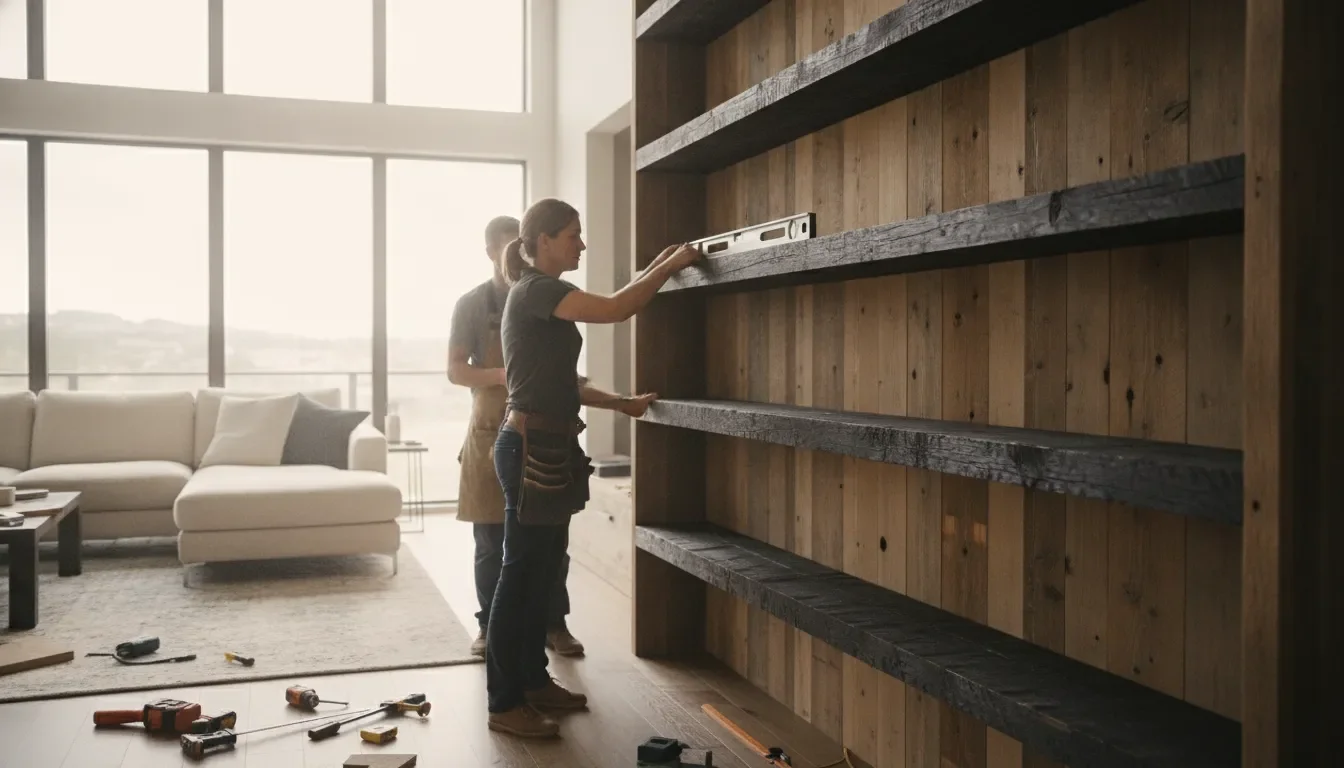
A mass-produced drywall alcove lacks the character that a century-old barn board shelf immediately brings to a room. Genuine vintage lumber turns standard millwork into a deep, historically rich focal point.
Reclaimed wood shelving custom built-ins combine dense old timber with modern design to create highly durable, beautiful home storage. These units typically feature thick, weathered barn board shelves or heavy, load-bearing beam stock salvaged from historic barns. According to a U.S. Environmental Protection Agency deconstruction report, reusing these salvaged materials diverts heavy debris from landfills and conserves old forest resources. This sustainable sourcing method results in dense, stable shelves that resist warping and bowing under heavy loads far better than new wood. When properly de-nailed, milled, and sealed, this authentic custom shelving provides a strong, long-lasting focal point that standard drywall alcoves cannot match.
But how do you select the right boards to ensure your shelving is safe and sturdy? You can match these shelves with heavy timbers from our Reclaimed Wood Beams: Applications, Specifications, and Sourcing for Custom Projects guide. Understanding why reclaimed wood shelving belongs in custom built-ins is where the process starts.
Request your free quote for custom reclaimed wood shelving built-ins today.
Why Reclaimed Wood Shelving Is the Right Choice for Custom Built-Ins
Custom shelving makes any room feel warm and complete. If you plan a home project, using reclaimed wood shelving custom built-ins is a smart move. Real wood from old barns has a deep texture that new timber cannot match. It turns basic storage units into unique focal points.
Authentic Patina and Historical Character
Old wood has a unique look called patina that comes from decades of natural wear. Genuine reclaimed wood beams and barn boards add deep charm to indoor areas because of this history. Each board shows original saw marks, nail holes, and weathered grains. These distinct features tell a rich story of old barns from the Northeast. You can learn more about how to source these boards in our guide on reclaimed wood beams for custom projects.
When you build custom units, you want wood that holds up well over time. Wood salvaged from old structures lasts for years. This strong wood resists warping because it has dried slowly over a long time. You can choose from many wood types and tones. For thin shelf faces or backing accents, try using barn board from our reclaimed siding and paneling stock.
Sustainability Benefits of Reclaimed Wood
Choosing old wood is also a great way to help the planet. Reusing wood for custom built-ins cuts the need for freshly cut trees. This practice preserves living forests and keeps wild homes safe. When we salvage old building parts, we also divert large amounts of waste from local landfills. This keeps useful wood in use instead of letting it go to waste. You can read about the impact of these efforts in the EPA guide on building deconstruction.
Reclaimed wood programs do more than protect forests. They also help local areas grow with new wood reuse jobs. Saving old lumber takes careful work, from taking down barns by hand to denailing the boards. This labor preserves wood that we can then process into fine shelves. To learn how wood reuse helps both nature and local markets, review the USDA Forest Service report on wood reuse.
Using Reclaimed Beam Stock for Deep-Profile Built-In Shelving
Deep shelves must hold a lot of weight. Books, heavy pottery, and art can cause thin shelves to sag over time. Thick timber cut from historic beams is the best choice for these projects. If you want strong reclaimed wood shelving custom built-ins, thick beam stock is an excellent choice. When you build custom built-ins with reclaimed wood beams, you get shelves that will not bend under load. This thick stock offers a bold, deep profile that modern manufactured wood cannot match. This lumber has a unique look with deep cracks and aged colors that new wood lacks.
Using these heavy materials needs careful planning from the start. You must understand how to source, mill, and secure these thick pieces of timber. Working with thick timber is different than using standard lumber from a local store. You can learn more about how these timbers are sourced in our guide on reclaimed wood beams. Selecting the right beam stock takes a few key steps to make sure your custom built-ins are strong and safe.
Choosing and preparing beam stock
Inspect for rot and insects. You must check each timber for soft spots, water damage, or pest holes before you begin. Genuinely reclaimed beams should be dry and solid to ensure they can hold heavy items. Any wood with deep rot must be cut away to keep the shelves strong.
Remove all metal by hand. Old timber often has hidden nails or bolts. You must pull all nails and bolts by hand to protect the saws during milling, as shown in the EPA deconstruction guidelines.
Mill the timber to size. Cut the beams into deep, thick slabs for your shelving. You can use a band saw or a planer to get the flat surfaces you need. Keep the original rough-sawn face on the front edge of the shelves to preserve the wood's rustic character.
Choose fasteners based on wood hardness. Old pine is softer, but old oak can be very hard. You need to pick the right screws and pre-drill holes so the wood does not split when you put it together.
Structural support and load capacity
Heavy shelves need strong support to stay safe. You must anchor the shelving frame directly into the wall studs. Use heavy steel brackets or thick wood cleats to carry the weight of the slabs. Standard drywall anchors will not hold these heavy shelves. When you build with these historic timbers, your custom built-ins will last for decades.
Combining Barn Board and Beam Material for a Cohesive Built-In Aesthetic
Using both thin barn boards and thick beams is a great way to design custom built-ins. This mix of different wood sizes brings a rich history and deep character to your room. Thin boards work well as backing panels or trim, while thick beams make sturdy shelves. To make the unit look uniform, you must plan how these distinct pieces fit together.
Matching textures and colors
To get a clean finish, you must plan your wood texture and color matching. Mixing rough, dark beams with light, smooth boards can look messy. Instead, select pieces that share a similar wood species or weathering history. Research from North Carolina Wesleyan University shows that your chosen wood style and finish must match your current home decor.
Designing the layout
A balanced layout uses each piece for its best purpose. For example, use thin barn board siding to line the back wall of your unit. This creates a warm, textured background that makes books and art stand out. Then, use thick reclaimed wood beams to build reclaimed wood shelving custom built-ins that last for decades.
Processing the wood
Before using the wood, you must prepare the surfaces. Reclaimed lumber often needs careful de-nailing and power-washing to remove old dirt and debris. A light sanding can smooth out rough spots while keeping the old saw marks and nail holes. This step prepares both boards and beams to receive a clear sealer.
Sourcing matched materials
Sourcing your boards and beams from the same source is the easiest way to match them. An expert team can help you select pieces that weathered together in the same barn. This shared history means the wood will have matching grain patterns and patina. Buying both your barn board siding and thick beam stock together ensures a simple, uniform look.
Load-Bearing and Thickness Considerations for Reclaimed Wood Shelving Custom Built-Ins
Making custom shelving with old timber requires careful planning. You must match the wood type and thickness to the weight it will hold. Building safe shelves means looking at wood strength and how far a shelf can stretch without sagging. Let us look at the main factors that keep your shelves strong and straight.
Wood species and weight
Custom shelves can use many types of wood. Hardwoods like oak are heavy and strong. Softwoods like pine are lighter and easy to work with but bend more under a load. Softwoods work best for light items or short spans.
Salvaged beams and boards are very dense because they came from old-growth trees. According to the U.S. Environmental Protection Agency, building deconstruction saves these top-grade woods, which helps protect our forests. This dense wood makes your shelves last for years and gives them a deep patina you cannot find in new wood. Using old wood also diverts waste from local landfills.
Wood SpeciesTypical ThicknessRelative StrengthBest Shelving UseReclaimed Oak.1.5 to 2 inches.Very High.Heavy books and large kitchen items.Reclaimed Pine.1 to 1.5 inches.Medium.Light display and light pantry items.Hemlock Beam Stock.2 to 3 inches.High.Deep alcove shelves and mantel displays.
Thickness and span rules
To prevent sagging, you must plan how long and how thick each shelf will be. Standard modern shelves are often thin. But real old wood boards are thicker, which gives them more strength. A thin pine board may sag if it spans more than two feet without support.
A thick oak board can span three feet or more without bending. If you plan to load shelves with heavy items, keep the spans short. For longer spans, you can add support brackets or select thicker boards. You can check the AWI shelf span tool to find exact limits so your shelves will not bow.
Hardware and wall support
Even a strong shelf will fail if the wall support is weak. Reclaimed wood weighs more than new wood, so it needs solid hardware to stay safe. You must screw brackets straight into the wooden studs behind the wall. Do not use dry-wall anchors for these heavy boards because they will pull out over time.
Screws must go at least two inches into the wood studs to hold the weight. Heavy steel brackets offer the best support for deep shelves. When you build reclaimed wood ceiling beams into a shelving system, you need heavy-duty bolts. Hard woods like oak can snap screws unless you drill pilot holes first.
Finishing and Sealing Options for Shelving in Living Spaces
Checking the wood first
Before you apply any finish, you must inspect your boards. You should inspect the wood closely for signs of rot to make sure the wood is strong. If you find soft spots, you may need to cut those parts away.
Choosing wood that is dry and free of pests is key to a long life. It is vital to choose wood that is properly treated and sealed to prevent pests and decay. This prep work ensures your shelves will last for years.
Water-based versus oil-based coats
Once the wood is clean, you must choose a top coat. You must seal the wood with the right finish to protect it from daily wear and moisture. Water-based clear coats are a great choice if you want to keep the light, natural tone of the wood. These coats dry fast, do not smell strong, and will not turn yellow over time.
Oil-based coats sink deep into the wood grain. They bring out the rich, warm tones of old pine or oak. They also take longer to dry and have a strong scent while they cure.
If you are planning custom built-ins with reclaimed wood beams, you need to decide how to finish your reclaimed wood shelving custom built-ins. Some finishes will darken the wood and hide the light brown or gray color. You can test your finish on a small scrap piece of wood first to see the final look.
Hard wax and flat sheens
If you want a natural feel, hard wax oils are a great option. They protect the wood from within. They do not leave a thick film on top, which preserves the history of your boards. You can apply them with a rag, and they are easy to patch if a spot gets scratched.
To keep the rustic look of your shelves, you should use a flat or matte sheen. Satin finishes have a soft glow, but high-gloss coats will make reclaimed boards look fake. A flat coat keeps the wood looking raw. It also hides minor scratches and dust, which makes it perfect for busy living spaces.
How to Order Reclaimed Material for a Custom Shelving Project
Sourcing the right wood for a new project is simple if you plan ahead. When planning reclaimed wood shelving custom built-ins, you must decide on the overall style and size first. Working with a local mill ensures you get real wood with a rich past.
Planning your shelf design
You first need to choose between thick beam stock and classic barn boards. Beams offer deep profiles and rich texture, while barn boards give a lighter look. Many builders mix both woods to get the right look. If you want a sleek, modern layout, you can learn more about reclaimed wood floating shelves to see how they fit. Choosing the right wood species is also key. For instance, pine offers a softer look with warm tones, while oak gives a very strong, tough shelf. You should talk to your shop about the story of each batch, as some woods have unique marks from their past life.
Choosing how wood is prepped
Local mills do not just sell raw old lumber. Through value-added manufacturing, shops turn raw salvaged wood into premium shelving that is ready to install. This work is highly detailed. Cleaning old wood is hard work because workers must find and remove all old metal by hand. A single missed nail can damage mill gear, causing costly repairs and long delays. You can order your wood as-is, de-nailed, power-washed, or fully milled to your exact needs. You can choose the level of prep work for your boards. If you want a rustic style, you can opt for simple de-nailing and a power wash. If you want a smooth, modern finish, you can request that the wood be planed, ripped, and sanded. Milled wood is easier for your builder to install on site.
Shipping and lead times
When you buy custom wood, you must plan for lead times and shipping. Milling and hand-prep take time, mostly during busy seasons. Most orders take a few weeks to prepare and ship to your job site. Because wood is heavy, shipping costs depend on the total weight and your zip code. A local mill will help you choose the best shipping plan for your project. To start planning your build, you can request a quote and share your project details.
Get a quote for your reclaimed wood shelving project before you buy.
Frequently Asked Questions
Does reclaimed wood need inspection for pests and rot before installation?
Yes, old wood must be checked before you use it. According to an industry guide on Recycled Wood Near Me, you should inspect reclaimed wood for rot, decay, and insects. A supplier will clean, de-nail, and dry the boards. You should also seal the shelves with a clear finish to protect the wood from moisture and daily wear.
Can you use reclaimed barn boards for custom built-in shelves?
Yes, old barn boards are great for custom shelving. A report by the EPA shows that reusing wood helps local businesses grow. These boards are strong and versatile. However, you must mill and install them correctly. This ensures the shelves can support heavy loads in your built-ins without sagging.
Is reclaimed wood shelving more expensive than new wood?
Reclaimed wood can save you money. An industry study on Recycled Wood Near Me says salvaged lumber offers great cost savings. It also brings natural beauty and green benefits to your home. While the raw cost varies, the material is highly durable. This makes it a smart investment for custom built-ins.
How do you choose fasteners for different types of reclaimed wood?
You must match your fasteners and brackets to the wood species you choose. Old wood like oak is much harder than pine. As shown in a guide on Recycled Wood Near Me, you must check the wood for strength before installing. Harder woods need strong screws and pre-drilled holes to prevent splitting.
Why is using reclaimed wood for custom shelves good for the environment?
Using salvaged lumber protects our natural forests. A publication by the EPA reports that deconstruction saves old-growth trees. It also keeps waste out of local landfills and creates green jobs in the community. Reusing wood is a great way to build a sustainable home.
Get a Quote for Your Reclaimed Wood Shelving Project
Ready to bring custom reclaimed wood shelving to your home or build site? As a consultative supplier, we help you match the right species, beam stock, barn board, thickness, and finish to your project. Share your dimensions and design goals, and we will guide every choice from sourcing to completion. Get a project quote today.