
Reclaimed Wood Siding for Sale: A Project Buyer’s Guide
When you are looking for reclaimed wood siding for sale for a substantial project, the right choice depends on more than a color name. You need to align the intended appearance, board character, preparation, quantity, documentation, and schedule before asking for project information. This guide gives builders, architects, designers, contractors, and qualified homeowners a practical way to organize that work.
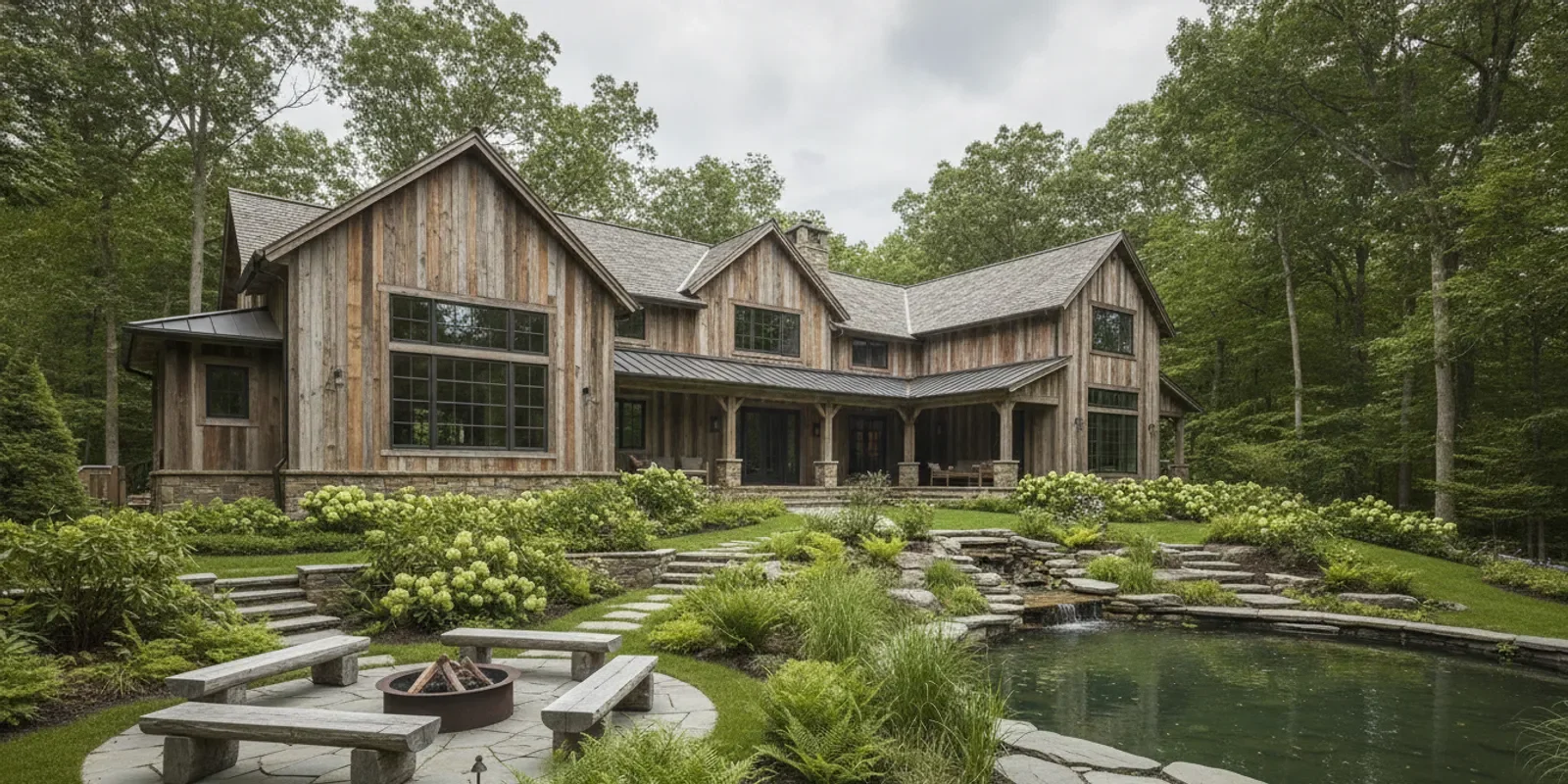
What should you define before looking for reclaimed wood siding for sale?
Begin with the role the siding will play. Is it the principal exterior finish on a custom home, a repeated finish across a development, a feature on a restaurant or hospitality property, or one element in a larger material palette? The answer affects how closely the team needs to control color, texture, board dimensions, variation, and sequencing.
Put the project context into a short brief before reviewing products. Include:
Project type and scale: Identify whether the scope involves one home, multiple buildings, a commercial property, or several construction phases. Wood Crafting focuses on reclaimed siding and paneling for larger-volume projects, so explain the scale rather than sending only a product name.
Location and exposure: Note the project region, exterior use, orientation, and any conditions the design team considers important. Coordinate the wall assembly and weather-management details with the project’s architect, builder, and other qualified professionals.
Visual direction: Describe the desired color family, texture, age, and degree of variation. Reference images can communicate the overall mood, but they should not be treated as a promise that every board will match.
Decision milestones: Share when the team expects to review material, complete the specification, approve the selection, and coordinate procurement. Availability and timing must be confirmed for the actual project.
Review authority: Establish who will approve samples, images, preparation, and changes. A clear decision path prevents a late preference change from being mistaken for a supplier issue.
Wood Crafting sources reclaimed lumber from old barns, horse corrals, and livestock fencing structures across the Northeast and Midwest, with some material from Eastern Canada. Its reclaimed barn board range includes Red Barn Board, Reclaimed Gray Barn, Mixed Brown Board, Faded Red, White Reclaimed, and Wire Brushed options. Start with the reclaimed barn board siding options, then narrow the field using the project brief.
How can you compare reclaimed siding options?
Reclaimed boards carry visible evidence of prior use. That character is often the reason a project considers the material, but it also means the comparison should address the complete surface rather than relying on a label. Ask reviewers to evaluate the following attributes together.
Color family and contrast
Decide whether the elevation should read mostly gray, brown, red, whitewashed, or as a deliberate mixture. Consider the relationship between the siding and roofing, trim, windows, stone, metal, and adjacent cladding. A color direction that works on a small accent may feel more dominant when repeated over a broad elevation.
Surface texture and visible marks
Some teams want a strongly weathered surface with knots, nail marks, saw marks, and other signs of use. Others prefer a calmer texture that still shows age. Wire-brushed material is one available option, but the actual appearance should be reviewed in relation to the rest of the design.
Variation across the elevation
Define what variation means for the project. It may refer to differences in tone, width, surface wear, edge condition, or the distribution of darker and lighter boards. Reclaimed material should be evaluated as a character-rich surface, not as a factory-finished product expected to repeat exactly.
Scale and coverage
Review the material across a representative area whenever practical. A single board, a small sample, and a full elevation answer different questions. Look for how the chosen character reads at the viewing distance of the finished building and how it changes under the project’s expected light.
Preparation
Wood Crafting lists material as-is, de-nailed, or power-washed. The appropriate choice depends on the project’s handling, appearance, and specification needs. Ask which preparation options apply to the selected material and record the decision rather than leaving it as an informal assumption.
For a broader overview of species, textures, sorting, pricing, ordering, and installation questions, use the complete reclaimed barn board siding specification guide. It should support the decision process, not replace project-specific review.
What should the siding specification say?
A useful specification connects design intent to procurement. It does not need to answer every construction question in the first draft, but it should make the material decision clear enough for the project team to review and revise.
Name the product direction
Identify the product family or the options under consideration. If the team is choosing between Reclaimed Gray Barn and Mixed Brown Board, say so directly. If several options could work, list them in order of preference and explain whether the alternatives are acceptable substitutes or simply part of an early comparison.
Describe the intended appearance
Use plain language for color, texture, age, and variation. For example, a brief might call for a predominantly gray exterior with visible weathering and moderate board-to-board variation. Avoid vague instructions such as “match the inspiration image” unless the team also identifies which qualities in that image matter most.
Record preparation and review
State whether the project is considering as-is, de-nailed, or power-washed material. Identify who will review samples or product images, what area they represent, and how approval will be recorded. If the design depends on a particular elevation or lighting condition, preserve that context in the approval record.
Separate material selection from installation design
Product sourcing and installation design are related, but they are different responsibilities. The architect or builder should coordinate the wall assembly, attachment, drainage, fire and code questions, and other construction details with qualified project professionals. Do not infer a complete installation system from a product description alone.
For another starting point, review the reclaimed wood siding information page. Teams comparing siding with related paneling applications can also explore siding and paneling products.
How should you plan quantity and project scope?
Use the project’s normal estimating process to prepare a documented takeoff. Keep gross wall areas, openings, gables, changes in plane, and special conditions visible in the working documents. Record the drawing revision, measurement source, and assumptions so a later design change can be reconciled without losing the original logic.
For a larger scope, divide the material into useful packages. You might separate buildings, elevations, wings, or construction phases. This helps the team identify where material is needed first and whether each package shares the same appearance requirements. It also exposes a decision that is easy to miss: does the project want one visual direction throughout, or a deliberate relationship between different reclaimed options?
Keep three quantities distinct during planning:
Measured area: The area calculated from drawings or field measurements before product-specific adjustments.
Planned coverage: The quantity the estimating team carries after accounting for the project’s layout, openings, and material characteristics.
Requested scope: The quantity and package information sent to the supplier for review and confirmation.
Do not turn an early area calculation into a confirmed order quantity without checking the project’s design, material format, and procurement requirements. Confirm how the selected option is supplied and what allowance or sorting approach the team should use. These points depend on the actual product and scope.
How should a team review samples and images?
Samples and images are useful for understanding direction and character. They should not create an expectation that every board across a large order will look identical. Ask the team to review the attributes that matter to the design: overall tone, texture, visible marks, edge character, and the acceptable range of variation.
Use a repeatable review sequence:
Set the question: Decide whether the review is about color family, texture, preparation, variation, or overall fit. One sample rarely answers every question.
Share one reference set: Give the architect, builder, owner, designer, and procurement contact the same images or material references.
Place the reference in context: Review it beside the intended trim, roofing, masonry, windows, or adjacent cladding when practical.
Write down the approval: Record what is accepted, what remains open, and which characteristics are essential.
Revisit only when scope changes: A material review may need to be reopened if the quantity, elevation, design, or schedule changes materially.
For example, a design team may like a strongly aged surface but want a calmer overall elevation. That request needs a more precise follow-up: is the priority reduced color contrast, fewer prominent marks, a narrower color family, or a more controlled layout? Defining the priority gives the supplier and project team a useful question to address.
What construction and compliance questions belong in early coordination?
Reclaimed siding selection should not be separated from the project’s broader design review. The team should raise questions early when they could affect the material choice, the wall assembly, or the approval path.
Intended use: Confirm with the design and construction team that the proposed product and assembly fit the project conditions.
Wall assembly: Coordinate substrate, attachment, drainage, ventilation, flashing, and related details through the project’s qualified professionals.
Local requirements: Check the applicable building, fire, energy, and planning requirements with the project’s local authority and design team. A general product discussion is not a code determination.
Material assessment: Ask how the team will evaluate reclaimed boards for the intended application and what documentation it needs for its own review.
Variation expectations: Agree on how reclaimed character will be communicated to the owner, client, or approval committee.
Phasing: Clarify how the takeoff, ordering, storage, and construction phases relate to each other.
Documentation: Keep the product direction, preparation choice, approvals, revisions, and supplier questions together in the project record.
For background on structural assessment, timber restoration, and code-compliance considerations in reclaimed wood work, consult the professional guide to architectural restoration and timber framing. Use that resource as background only; the project’s own architect, engineer, builder, and local authority must determine which requirements apply.
What does a useful quote request include?
A quote request is more actionable when it explains the project instead of naming only “reclaimed siding.” Assemble the information that allows the supplier to understand the material direction and the scope being considered.
Project type, location, and approximate scale.
Whether the scope covers one building, several buildings, or multiple elevations.
Preferred product options and acceptable alternatives.
Desired color family, texture, and degree of variation.
Known quantities or the drawings and takeoff used to develop them.
Preparation preference, if already established.
Target decision dates, phases, and procurement milestones.
Elevations, drawings, reference images, or notes that explain the design intent.
The person responsible for material review and follow-up.
Questions about availability, packaging, delivery coordination, or project sequencing.
If a decision is still open, say so. For example, explain that the team is choosing between gray and mixed-brown material, or that preparation will be confirmed after review. A clear open question is more useful than a request that presents an unsettled choice as final.
Wood Crafting uses a quote-based process. Use the quote request page to send project-specific information. For background on the company’s reclaimed wood sourcing and approach, visit Wood Crafting’s story.
How does authentic reclaimed siding compare with a manufactured alternative?
These categories serve different priorities, so the comparison should begin with the project’s requirements rather than a general claim that one is better.
When authentic character is central
Reclaimed siding may suit a design where weathering, surface marks, prior-use evidence, and natural variation are part of the intended result. The team should be comfortable evaluating a variable surface and documenting how that character will be reviewed across the project.
When repeatability is central
A manufactured alternative may be considered when the design depends on tightly repeated appearance or a more controlled specification. Compare the exact product information with the project’s performance and visual requirements, and confirm suitability with the manufacturer and design team.
When the project needs a deliberate material conversation
The useful question is not simply whether a product is reclaimed or manufactured. Ask which characteristics are nonnegotiable: historical appearance, surface variation, repeatability, maintenance approach, availability, documentation, or installation requirements. The answer can clarify whether the team should continue evaluating reclaimed boards, compare a different material, or use distinct materials in different areas.
For a focused discussion of the decision criteria, see reclaimed wood versus composite cladding. The comparison is a planning resource, not a substitute for product review.
What mistakes can delay a large siding decision?
Several avoidable gaps create confusion during procurement. A team can reduce them by addressing the following points early:
Using a color name as the entire specification: Color does not explain texture, variation, preparation, quantity, or intended coverage.
Reviewing only one board: A single board cannot communicate how the material will read across a large elevation.
Leaving the quantity unqualified: A number without a takeoff source, phase, or allowance context is difficult to review.
Mixing open and approved decisions: Mark unresolved preferences so they are not treated as final procurement instructions.
Assuming a product page answers code questions: Coordinate the complete assembly and local requirements with qualified project professionals.
Waiting to share the schedule: Availability and timing should be discussed against the actual project milestones.
Changing the visual direction late: Keep the decision record current and communicate revisions to every reviewer.
Frequently Asked Questions
Is reclaimed wood siding suitable for a large project?
It can be considered for larger residential and commercial projects, but suitability depends on the product, design, scope, wall assembly, and applicable construction requirements. Share the project context and confirm the relevant details with the supplier and qualified project professionals.
Can every board be expected to match a sample?
No. Reclaimed material naturally varies. Use samples and images to understand general character, then document the acceptable range and review process rather than expecting every board to be identical.
What preparation options are available?
Wood Crafting lists material as-is, de-nailed, or power-washed. Confirm which options apply to the selected product and which preparation best fits the project’s requirements before specifying it.
What should I send with a quote request?
Include the project location and type, approximate scale, product preferences, known quantities, preparation questions, schedule milestones, and drawings or visual references. Identify choices that are still under review.
Can a project be confirmed from a product name alone?
No. A product name is a starting point. Availability, quantity, preparation, variation, review requirements, and timing should be discussed in the context of the complete project scope.
What is the next step for your siding project?
Gather the takeoff, visual direction, preparation questions, compliance questions, and procurement milestones in one project brief. Then ask Wood Crafting about your project so the conversation can focus on the reclaimed siding options and details that fit its scale.
Explore reclaimed siding options
A clear scope helps your project team make a considered material decision and ask more useful questions before procurement moves forward.
