
Reclaimed Wood vs. Composite Exterior Cladding
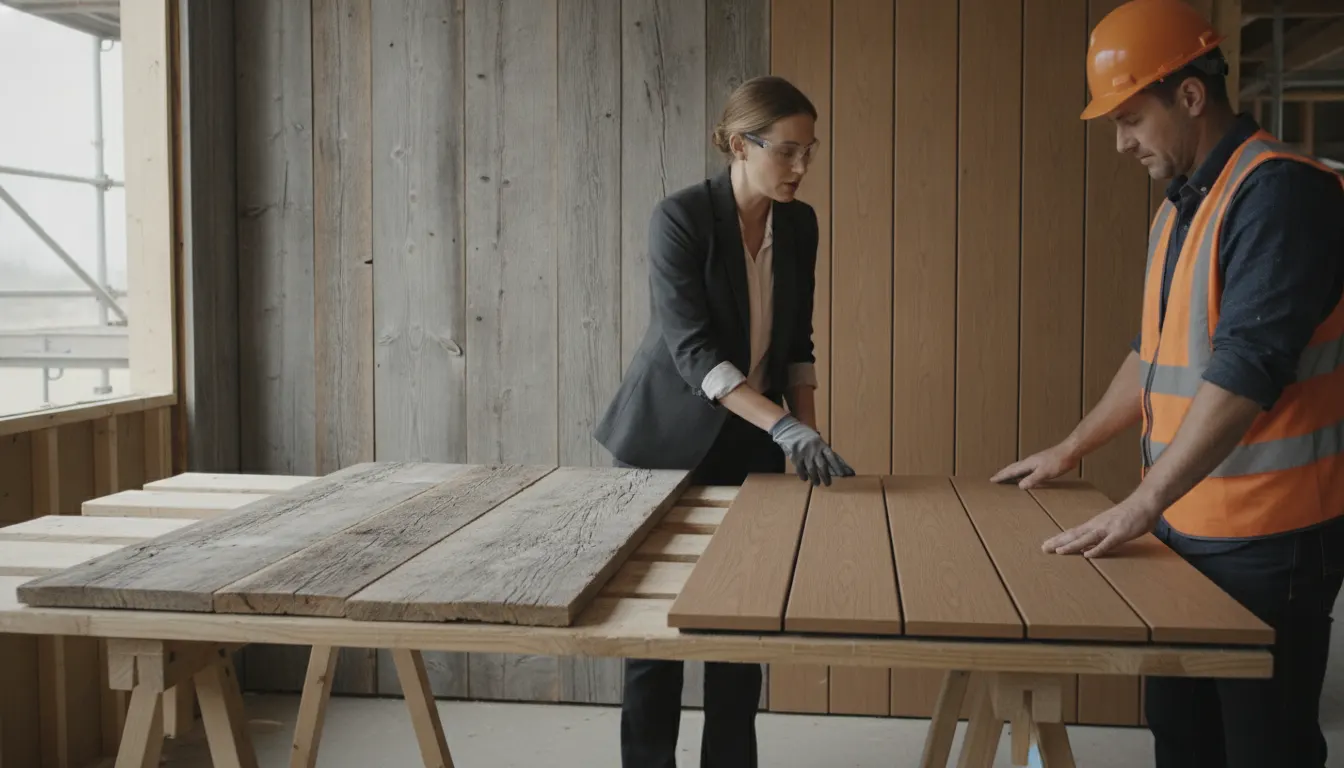
When a project team evaluates reclaimed wood vs composite exterior cladding, the decision is not simply about choosing a wood look. It is a specification question involving material authenticity, weathering, maintenance, documentation, installation, and the character the finished building should communicate.
Reclaimed wood is the stronger choice when authentic patina, material provenance, and natural variation are central to the design. Composite cladding is often better when consistent dimensions, predictable appearance, and lower routine maintenance carry more weight. The right selection depends on exposure, project goals, detailing, and the evidence available for each material.
This comparison is written for architects, builders, developers, designers, and owners making a serious exterior-material decision. It does not treat either material as universally superior. Instead, it shows where each option fits, what must be verified, and how to move from a visual preference to a defensible project specification. For broader green-building context, see Wood Crafting's reclaimed wood and green-building resource.
What is the difference between reclaimed wood and composite exterior cladding?
Reclaimed wood exterior cladding is salvaged lumber recovered from a previous structure, then sorted and prepared for a new application. Composite exterior cladding is a manufactured product engineered to provide repeatable dimensions and a controlled appearance. One begins with an existing material and its visible history. The other begins with a controlled manufacturing process and a performance specification.
That distinction affects nearly every downstream decision. Reclaimed boards may show checking, wane, nail holes, circle-sawn or band-sawn surfaces, knots, and differences in color or width. Those characteristics are part of the product's appeal, but they also require a design that welcomes variation. Composite boards are generally selected for consistency. Their profiles, lengths, and color range are intended to be easier to coordinate across a larger elevation.
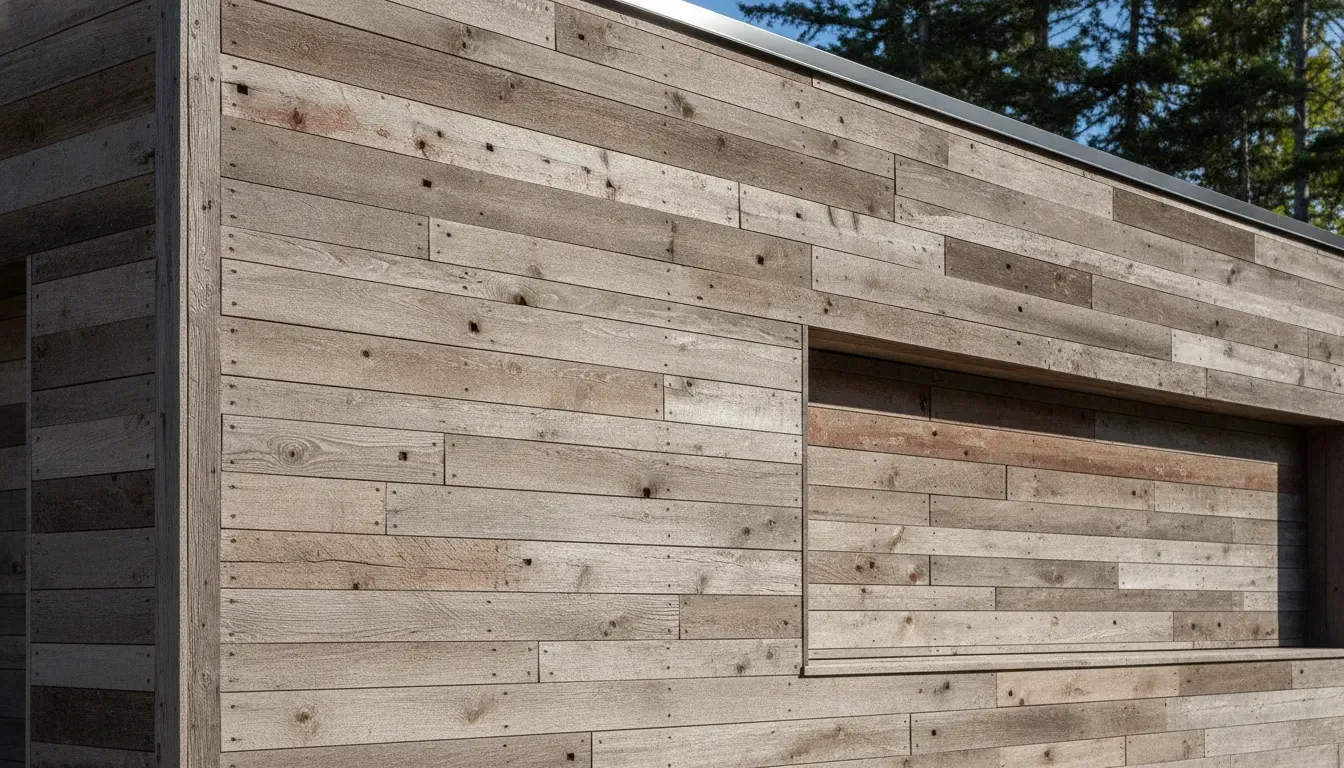
Wood Crafting's reclaimed siding and paneling collection illustrates why product selection should start with the actual material, not a generic label. Species, thickness, profile, processing level, available quantity, and intended exposure all matter. A builder should review samples and project requirements before assuming that every reclaimed board can be installed in the same way as a new manufactured cladding system.
- Reclaimed wood: authentic prior use, visible variation, and a material story that becomes part of the architecture.
- Composite cladding: repeatable profiles, controlled appearance, and a manufacturer-defined product system.
- Both options: require compatible substrates, sound flashing and drainage details, correct fasteners, and an installation plan appropriate to the exposure.
Key takeaway: Compare the actual board, profile, and installation assembly, not just the words reclaimed or composite. Review Wood Crafting's sourcing approach before translating a material preference into a project requirement.
What do longevity, maintenance, and weathering require?
Longevity depends on the assembly, exposure, drainage, detailing, and maintenance plan more than on a material label alone. Reclaimed wood is expected to weather and may need inspection, cleaning, or finish decisions that preserve its character. Composite systems typically emphasize dimensional consistency and reduced routine maintenance, but the manufacturer's warranty and care requirements still control.
Exterior cladding has to manage rain, splashback, ultraviolet exposure, freeze-thaw cycles, humidity, insects, and temperature movement. The correct comparison therefore begins with the wall assembly and site conditions. A sheltered facade under a generous roof overhang presents a different risk profile from a fully exposed elevation near the coast or a grade-level wall that receives repeated splashback.
Reclaimed wood may arrive as-is, de-nailed, or power washed. It may also need additional sorting, trimming, or project-specific preparation. The team should decide whether the desired finish is raw and weathered, lightly protected, or part of a more controlled coating system. A finish can change the color and maintenance profile, while leaving the material unfinished allows natural weathering to remain visible. Neither approach is automatically correct for every facade.
Composite cladding can make maintenance planning more predictable because boards are manufactured to a controlled profile. Modern Mill's ACRE materials, for example, are presented as a wood alternative with water, pest, and weather resistance. Those are product claims, not a substitute for reading the current installation instructions, warranty terms, and limitations for the exact profile being specified.
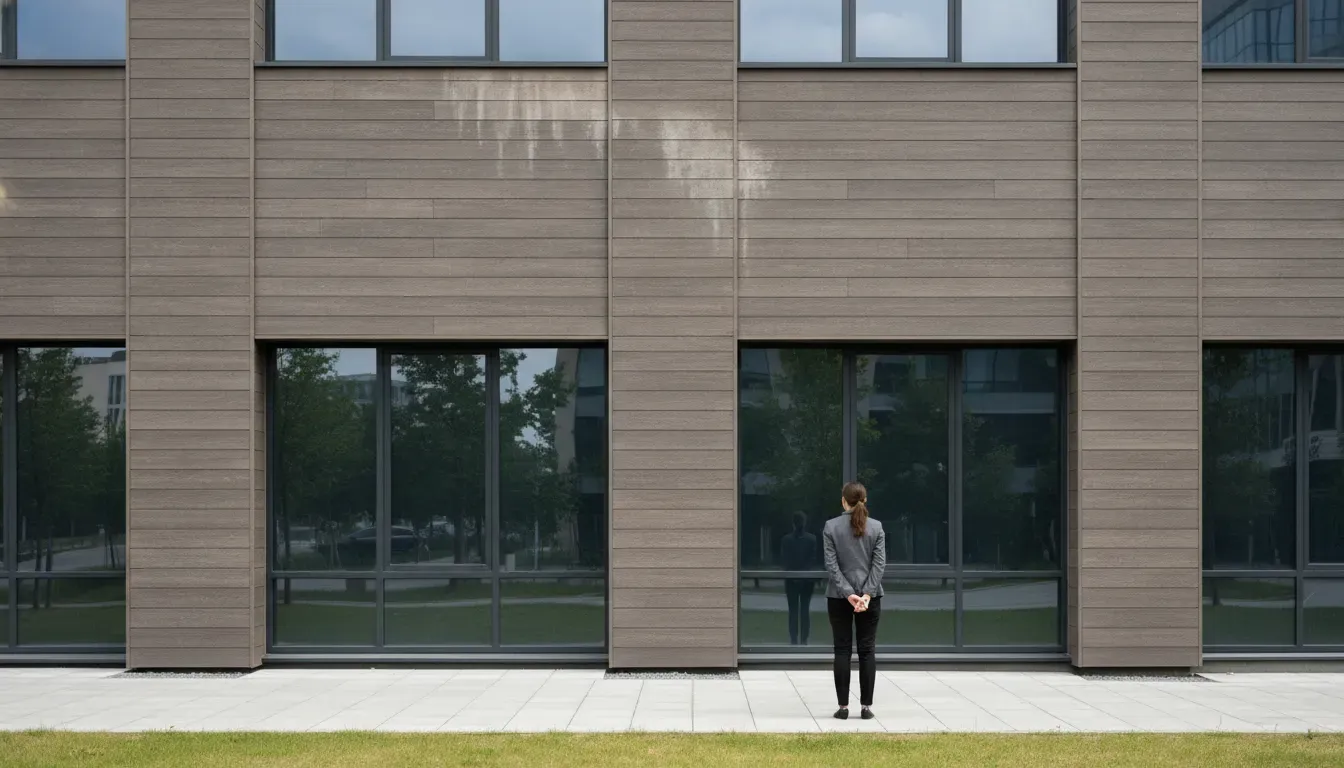
A useful maintenance comparison asks practical questions:
- How much color change is acceptable as the facade ages?
- Will the design celebrate natural variation or require a uniform field?
- What inspection interval is realistic for the owner?
- How will the assembly handle water at corners, openings, transitions, and the base of the wall?
- What cleaning, recoating, replacement, or warranty steps does the manufacturer or supplier require?
For a reclaimed installation, the project team should establish acceptance criteria before delivery. Define acceptable checking, wane, width variation, color range, and fastener evidence. For a composite installation, define the desired profile, color, accessory package, and replacement path. Clear expectations reduce field disputes for either material.
How do the environmental profiles compare?
Reclaimed wood can extend the service life of existing lumber and avoid some impacts associated with manufacturing a replacement from virgin feedstock. Composite products may use upcycled or recycled inputs and can provide product-specific environmental documentation. A fair comparison reviews sourcing, processing, transport, service life, maintenance, and end-of-life evidence rather than assuming a category wins automatically.
Reuse is the central environmental argument for reclaimed wood. A board or beam that has already served in a barn, corral, or other agricultural structure can be prepared for another use rather than discarded. The USDA Forest Service research on reclaimed building materials describes how reuse can avoid part of the manufacturing burden associated with a new material. The project still needs to account for sorting, de-nailing, cleaning, machining, transport, and expected service life.
Regional sourcing can also be relevant. Wood Crafting sources salvaged lumber from old barns, horse corrals, and livestock fencing in the Northeast and Midwest. That provenance may support a shorter or more transparent supply chain for a Northeast project, but a regional claim is not a complete carbon calculation. The team should ask how far the material travels, how it is processed, what yield is expected, and how delivery is handled. The EPA's supply-chain guidance is useful context for that review.
Composite products should be evaluated with the same discipline. A product-specific environmental product declaration, when available, can identify the declared unit and the life-cycle stages included in the assessment. For example, Modern Mill's ACRE documentation describes a cradle-to-gate scope. That document does not, by itself, answer every question about installation, operational maintenance, replacement, or end of life on a particular project, so the design team should obtain and review the current documentation for the exact product specified.
Key takeaway: Environmental credibility comes from matching the claim to the evidence. See the green-building guide for a framework that separates reuse, sourcing, documentation, and project-specific decisions.
- Ask about origin: Where was the material recovered, and what prior use did it have?
- Ask about preparation: What sorting, metal removal, washing, machining, or coating is included?
- Ask about transport: What route and delivery assumptions support the environmental comparison?
- Ask about documentation: Is there an EPD, chain-of-custody record, product data sheet, or supplier statement?
- Ask about end of life: Can the installed material be removed, repaired, reused, or recycled?
Do not use unsupported carbon savings, landfill diversion figures, LEED points, or certification claims in a specification. Reclaimed wood may support a project's sustainability narrative, but the architect, engineer, rating-system professional, or owner team must determine which claims are substantiated for the actual assembly.
Why does design authenticity matter in exterior cladding?
Reclaimed wood offers authentic patina and evidence of prior service that a manufactured surface can imitate but cannot reproduce as the same material history. Composite cladding offers visual control and repeatability. The design choice depends on whether the facade should foreground irregularity and provenance or provide a consistent, low-variation envelope language.
Authenticity is not a vague decorative benefit. It changes how a facade reads at close range and from a distance. Reclaimed boards may carry old fastener holes, subtle species changes, saw marks, mineral staining, and weathering gradients. Those details can anchor a hospitality, residential, adaptive-reuse, or cultural project in a sense of place. They also mean that mockups and sample review are essential.
Composite cladding can be the better fit when the design requires a tight module, predictable reveals, or a consistent color field across several elevations. It may also help a project team coordinate a modern exterior with a controlled material palette. That consistency is a legitimate design value, especially where the cladding must align closely with windows, rainscreen joints, metal panels, or other manufactured components.
The choice should be made with the full elevation in view. Review samples in daylight, at the intended viewing distance, and beside adjacent materials. For reclaimed wood, confirm that variation is acceptable across the whole order, not only in the best sample. For composite, confirm that the texture and color remain convincing at the project's scale and lighting conditions. A small sample can conceal repetition that becomes obvious across a large facade.
How should you evaluate total project cost?
Total project cost includes more than the board or panel price. Compare material availability, yield, sorting, preparation, fasteners, substrate and flashing details, labor, finishing, maintenance, replacement, delivery, and the value of design character. Reclaimed materials are quote-based because condition, dimensions, quantity, and processing vary by project.
Wood Crafting does not publish a universal price for reclaimed cladding because each order depends on available material and project requirements. That is the correct reason to request a quote rather than insert a generic range into a design narrative. A useful quote request should identify approximate square footage, application, desired species or color family, profile, processing level, delivery location, and schedule.
Composite comparisons should be built from the exact product and system being considered. Confirm board coverage, trims, clips or fasteners, waste allowance, substrate requirements, labor assumptions, delivery, and warranty conditions. Avoid comparing one material's bare board price with another material's complete installed assembly. That produces a number but not a useful decision.
For a commercial or custom residential project, use a simple comparison worksheet:
- Define the facade area, exposure, substrate, and desired appearance.
- Request a reclaimed-wood quote that states processing, usable yield, and delivery assumptions.
- Request composite pricing for the complete profile and accessory system, not only a sample board.
- Estimate installation labor using the actual detailing and expected field cutting.
- Record the maintenance, replacement, warranty, and end-of-life assumptions for each option.
- Review mockups with the owner and design team before final selection.
This method keeps the comparison honest. It also gives the owner a clear explanation for why a material was selected, whether the priority was provenance, maintenance predictability, visual consistency, long-term stewardship, or a balance of those factors.
Which exterior cladding is the better fit for your project?
Choose reclaimed wood when the project benefits from authentic material history, natural variation, regional provenance, and a facade that can age visibly. Choose composite cladding when repeatability, controlled appearance, and a lower-intervention maintenance plan are more important. In either case, approve the assembly through samples, technical documents, and project-specific detailing.
Wood Crafting's reclaimed wood siding guide can help teams review exterior profiles and installation considerations. For a project that needs a specific quantity, color range, or processing level, the next step is a conversation about the actual material available and the intended application.
Request a quote for your exterior cladding project
Frequently Asked Questions
Is reclaimed wood better than composite cladding?
Neither material is better for every project. Reclaimed wood is often the stronger fit for authentic patina, provenance, and natural variation. Composite may be the stronger fit for consistent dimensions, controlled appearance, and lower routine intervention. Exposure, detailing, documentation, and owner priorities should determine the selection.
Does reclaimed wood require more maintenance than composite?
It can require more inspection and more deliberate decisions about cleaning, finishing, weathering, and board replacement. Composite products are designed for predictable performance, but they still require correct installation and care under the manufacturer's instructions. The final maintenance burden depends on the assembly and exposure.
Is composite exterior cladding environmentally sustainable?
Some composite products use recycled or upcycled inputs and publish environmental documentation. The answer depends on the specific product, manufacturing process, transport, service life, maintenance, and end-of-life pathway. Review the product's current EPD and scope instead of treating the composite category as a complete environmental claim.
How should architects compare reclaimed wood and composite cladding?
Compare full assemblies, not sample-board prices. Review the intended exposure, profile, substrate, flashing, fasteners, labor, usable yield, maintenance, warranty, replacement, sourcing, and available environmental evidence. Approve a representative mockup before finalizing the specification.
Can Wood Crafting quote reclaimed exterior cladding?
Yes. Wood Crafting uses a quote-based process because reclaimed material varies by available stock, dimensions, species, color, processing, quantity, and delivery requirements. Provide the project scope and desired characteristics so the team can discuss suitable material options.