
Reclaimed Wood Embodied Carbon: Builders & Architects
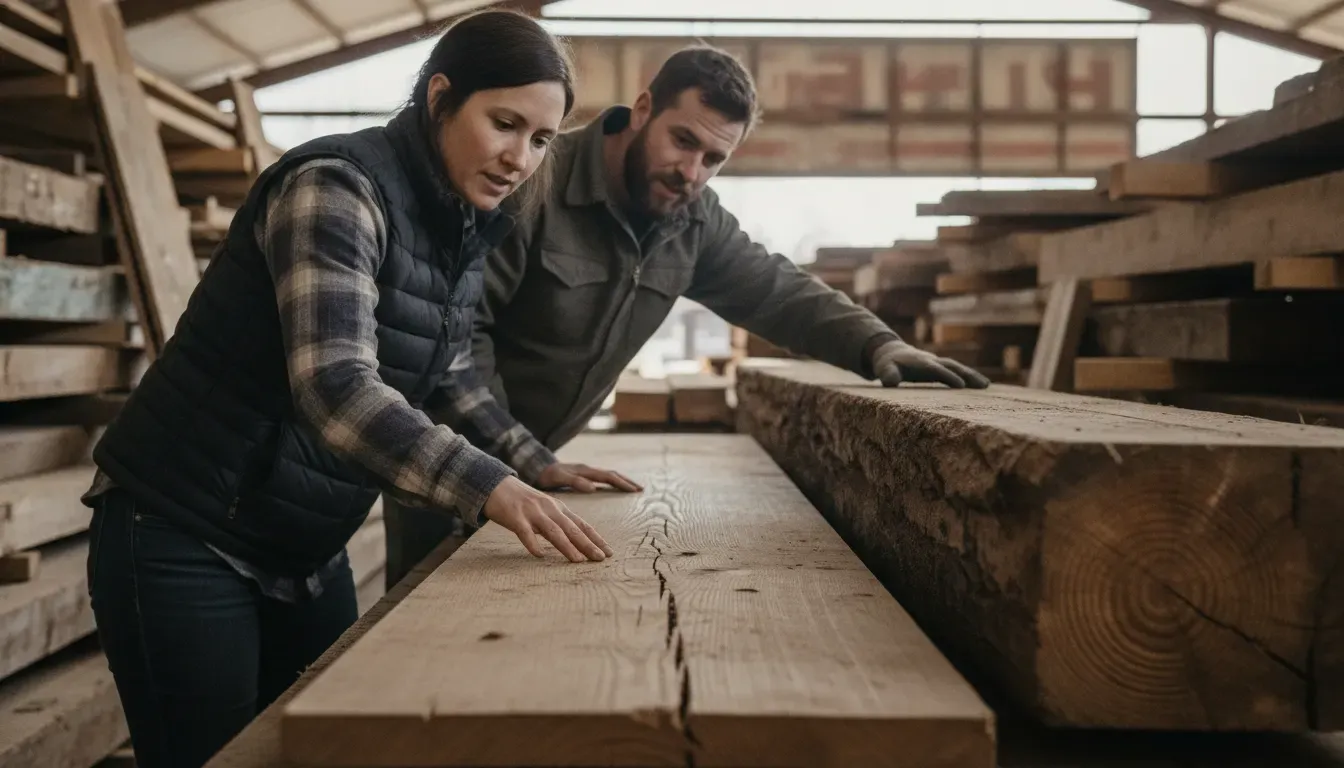
For the search intent behind reclaimed wood embodied carbon builders architects, the practical question is not whether reclaimed lumber sounds sustainable. It is how reuse, transport, preparation, installation, service life, and end-of-life assumptions should be handled in a defensible material decision. This guide gives project teams a clear framework for evaluating reclaimed wood while keeping supplier evidence separate from formal life-cycle assessment.
Request a quote for project-specific reclaimed wood guidance.
What is embodied carbon, and why does it matter in material selection?
Embodied carbon is the greenhouse-gas impact associated with building materials across relevant life-cycle stages, including extraction, manufacturing, transportation, installation, maintenance, replacement, and disposal. It differs from operational carbon, which comes from running a building. A whole-building life-cycle assessment combines these stages using defined boundaries and carbon dioxide equivalent units.
The U.S. Department of Energy explains that embodied carbon is typically evaluated through life-cycle assessment, or LCA. The method matters because a material's result depends on the product system and assumptions, not just the material label. A useful project review therefore asks:
- Which life-cycle stages are included in the comparison?
- What functional unit is being compared, such as a square foot of cladding or a structural member?
- What transportation distance, processing energy, finishes, and installation waste are assumed?
- What service life and end-of-life pathway are used?
For a specification team, embodied carbon is a decision input alongside structural performance, moisture behavior, fire requirements, durability, availability, cost, and constructability. It should not be treated as a substitute for those checks.
The U.S. Department of Energy's embodied-carbon guide provides a useful technical definition of these boundaries and explains why LCA is the normal accounting method.
How can reclaimed wood compare with new lumber on embodied carbon?
Reclaimed wood can avoid some impacts associated with harvesting and manufacturing a new product because the primary material has already been produced. Reuse can also keep sound lumber in service and reduce the demand for a new replacement product. Those are the central circular-economy arguments for reclaimed material.
That does not mean every reclaimed wood application automatically has a lower result. A fair comparison must account for the work required to recover and prepare the material. Relevant factors include:
- Recovery: Deconstruction, salvage, sorting, and handling determine how much material is retained and how much becomes waste.
- Preparation: De-nailing, power washing, trimming, re-sawing, milling, and drying can add energy and labor impacts.
- Transportation: The source structure, processing location, jobsite, and delivery route all affect the transportation stage.
- Yield: Irregular widths, checking, wane, nail holes, and other character may affect usable yield and installation waste.
- Substitution: The comparison should use products that perform the same function. A reclaimed board used as interior paneling is not automatically comparable to a new structural member.
- Longevity: Continued service, repairability, and the possibility of another reuse cycle can influence the whole-life discussion.
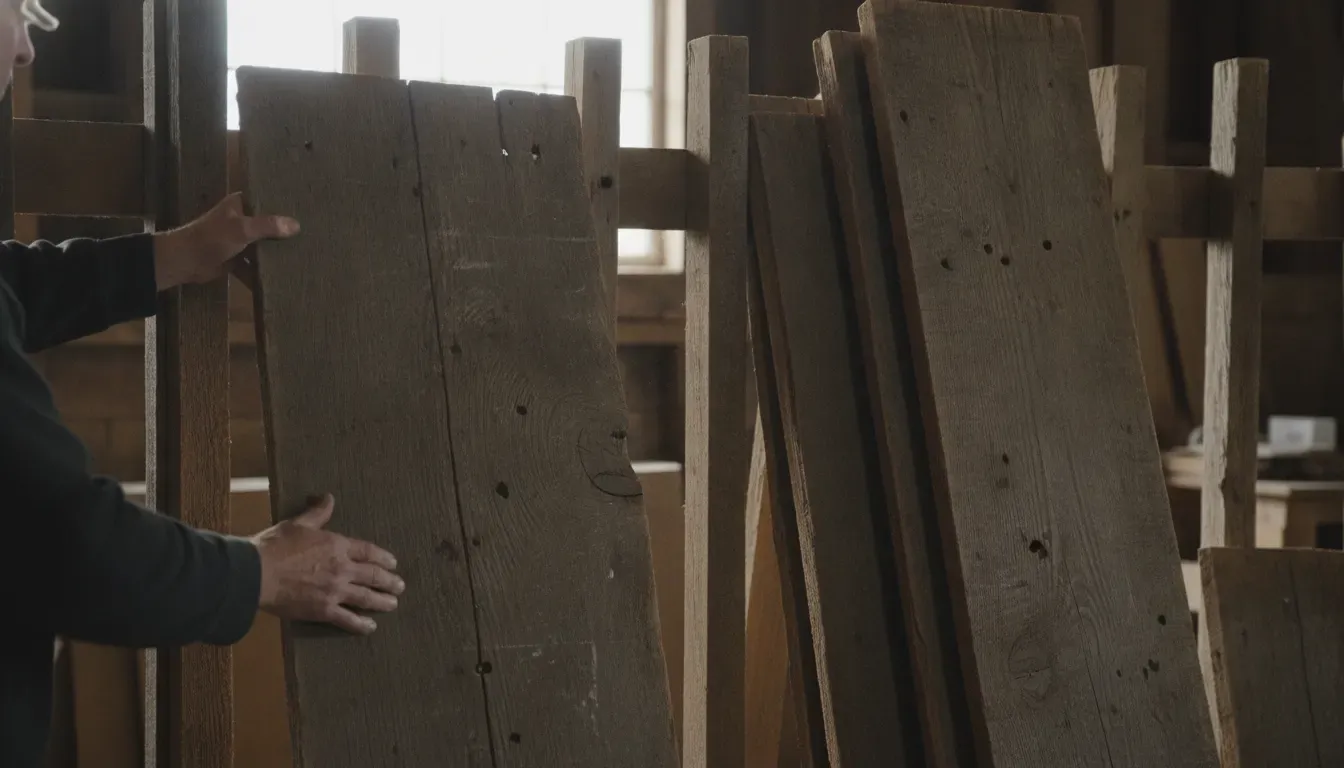
For this reason, avoid unsupported statements such as "carbon neutral," "carbon negative," or a fixed percentage reduction unless a qualified LCA has established the claim for the exact product and comparison. The strongest material narrative is more precise: reclaimed wood may reduce demand for newly manufactured material, while the project team verifies the complete system boundary.
Wood Crafting sources 100% reclaimed materials from old barns, corrals, and other agricultural structures in the Northeast and Midwest. Its catalog describes reclaimed barn board, corral board, and custom reclaimed beams, with options such as as-is, de-nailed, and power-washed preparation. Those facts help a team understand provenance and material condition, but they are not a product EPD or a project-specific carbon calculation.
Review Wood Crafting's sourcing and material story before building the project evidence set.
What can and cannot a reclaimed wood supplier provide for carbon accounting?
A supplier is often the best source for product-specific facts, but not every supplier is an LCA practitioner or EPD program operator. Before requesting documentation, define which evidence belongs in the procurement file and which analysis must come from the architect, engineer, sustainability consultant, or approved program.
Supplier evidence that can support a material review
- Material category, species information when known, dimensions, profiles, and available processing.
- General source region or structure type, when the supplier can substantiate it.
- Whether the material is supplied as-is, de-nailed, power washed, trimmed, or milled.
- Packaging, delivery, minimum order, quote, and lead-time details for the proposed project.
- Photographs or samples that help the team evaluate grade, patina, checking, wane, and other visible characteristics.
- Any formal declarations or chain-of-custody records that the supplier actually maintains. Do not assume these exist because the material is reclaimed.
Evidence a project team should not assume
- An Environmental Product Declaration, Health Product Declaration, or product-specific LCA.
- A verified carbon factor that can be inserted into an estimator without reviewing its boundary and functional unit.
- Automatic LEED credit eligibility or a guaranteed procurement outcome.
- A universal carbon saving figure that applies to every species, source structure, processing method, and delivery route.
- Structural grading, engineering approval, fire-rating documentation, or code compliance unless expressly documented for the proposed use.
The Carbon Leadership Forum's recent guidance on reused construction materials is particularly relevant here. It explains that reused-material EPDs require consistent modeling rules and that methodological gaps can make credible carbon disclosure difficult. That is a reason to document assumptions carefully, not a reason to overstate what a supplier can certify.
Read the Carbon Leadership Forum guidance on LCA modeling for reused construction materials.
How are architects and builders using material selection to reduce project embodied carbon?
Material selection works best as part of an early coordination process. Architects can identify where reclaimed wood is functionally appropriate, builders can test availability and installation constraints, and the supplier can clarify what material can be assembled for the project. Bringing these questions forward reduces late substitutions that erase the intended sustainability benefit.
Start with a defined application
Separate exterior siding, interior paneling, decorative beam wraps, ceiling elements, and structural uses. Each application has different performance requirements, tolerances, finishing needs, and acceptable character. Wood Crafting's siding and paneling collection and reclaimed beams information can help teams start that product conversation.
Use character as a specification variable
Reclaimed material is not a uniform commodity. State whether the design expects visible nail holes, checking, wane, saw marks, patina variation, mixed widths, or a more consistent weathering pattern. A clear character schedule prevents usable historic features from being rejected as defects after delivery.
Coordinate quantity and yield early
Ask how much material is available in the required profile and length, then allow for sorting and installation waste. A quote should be based on the project's actual coverage, dimensions, finish, and processing requirements rather than a generic reclaimed-wood allowance.

Keep the carbon claim proportional to the evidence
Use language such as "reused material selected to reduce demand for new production, subject to project LCA assumptions" when that is what the evidence supports. Reserve quantified comparisons for a documented assessment with a stated boundary, functional unit, data source, and reviewer.
What practical steps belong in a low-carbon reclaimed wood material spec?
A useful specification gives the contractor and supplier enough information to price, source, inspect, and install the material without turning sustainability language into an unsupported guarantee. The following sequence is suitable for early design development and procurement coordination.
- Define the function. Identify the assembly, location, exposure, performance criteria, and whether the material is decorative, finish, nonstructural, or structural.
- Define the appearance range. State acceptable species, color, profile, thickness, width variation, saw marks, patina, checking, wane, and fastener marks.
- Define processing. Specify as-is, de-nailed, power washed, trimmed, milled, or another documented preparation. Coordinate dust, finish, and substrate requirements.
- Define quantity and yield. Provide net coverage, nominal dimensions, lengths, overage assumptions, and the method for approving substitutions.
- Define sourcing evidence. Request the source region, product description, photographs, sample, and any available chain-of-custody or processing records.
- Define the LCA handoff. Give the sustainability consultant the supplier data, then document the LCA boundary, transport assumptions, processing energy, service life, and end-of-life scenario.
- Define acceptance and inspection. Confirm what constitutes acceptable character, moisture condition, fastener remnants, defects, and color variation before delivery.
A concise evidence register can include the approved sample, supplier quote, product and processing description, delivery route, quantity and yield assumptions, photographs, and the final carbon-accounting method. This file is more useful than a broad sustainability claim that cannot be traced to the specified material.
Wood Crafting's quote-based process is appropriate for this kind of project-specific conversation. Its reclaimed beams are custom by nature, while barn board and corral board have different species, dimensions, surface characteristics, and processing options. A team can request a material review without asking the supplier to make a formal carbon certification it does not advertise.
Reclaimed wood embodied carbon FAQ
Is reclaimed wood always lower carbon than new lumber?
No. Reuse can avoid some extraction and manufacturing impacts, but transportation, preparation, yield, installation, service life, and end-of-life assumptions still matter. Compare functionally equivalent products using the same life-cycle boundary and document the assumptions.
Can a reclaimed wood supplier provide an embodied carbon number?
A supplier may provide product, sourcing, processing, quantity, and delivery information that supports an LCA. A verified carbon factor, EPD, or project-specific calculation requires defined methods and evidence. Ask what documentation is available rather than assuming a number exists.
Does reclaimed wood automatically qualify for LEED points?
No. Credit eligibility depends on the current rating system, credit requirements, product documentation, project calculations, and the authority reviewing the submission. Reclaimed status alone is not a guaranteed credit.
What should builders ask for when ordering reclaimed wood?
Ask for the intended application, available species and dimensions, profile, character range, processing level, quantity and yield assumptions, source or provenance details, sample approval, delivery information, and any documentation required by the project sustainability team.