
Reclaimed Corral Board Siding Exterior: Buyer Guide
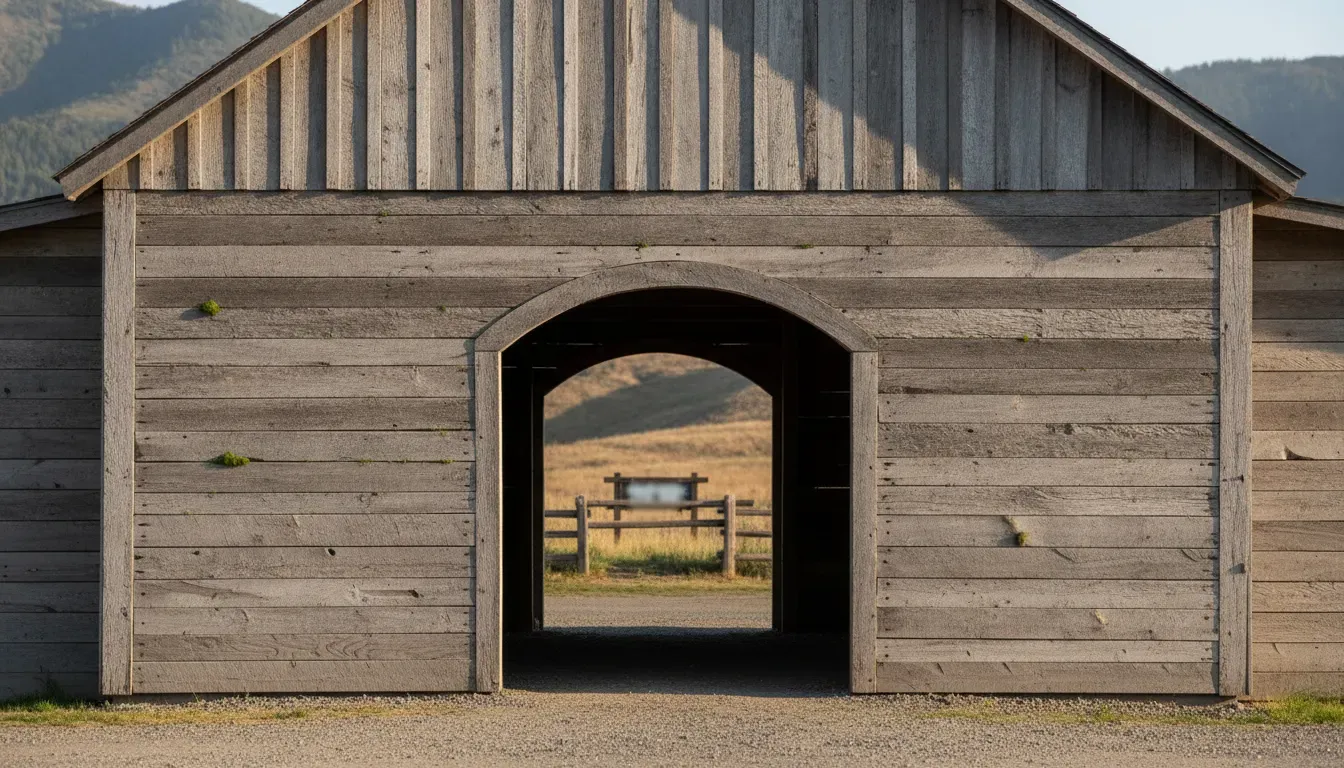
Reclaimed corral board siding exterior gives a building the weathered, agricultural character of working livestock fencing rather than the painted cladding of a barn. For architects, builders, developers, and homeowners planning a western or rural exterior, this material offers a specific history, surface texture, and degree of variation that new distressed lumber cannot reproduce.
Request a quote for reclaimed corral board siding
Reclaimed corral board siding exterior is salvaged from livestock fencing and corrals, then evaluated and processed for a new cladding application. Gray tones, strapping marks, fastener holes, checking, wane, and moss may remain visible. Exact species, dimensions, processing, and availability are project-specific, so a useful quote starts with plans, area, preferred character, and performance requirements.
Wood Crafting sources 100% reclaimed wood from old barns, horse corrals, and livestock fencing in the Northeast and Midwest. Its reclaimed wood, green building, and material knowledge resource provides broader context on reuse and material selection. The company's reclaimed barn board siding specification guide covers the broader barn-board family. This guide narrows the focus to corral board as an exterior design and procurement choice, so the material's source and visual evidence remain central to the specification.
What Is Reclaimed Corral Board Siding Exterior?
Reclaimed corral board siding exterior is cladding made from boards salvaged from horse, cattle, and livestock fencing. Its outdoor service history can leave gray weathering, hardware marks, checking, wane, and varied texture. Wood Crafting evaluates this mixed-species material for project-specific dimensions, processing, and exterior applications.
The Gray Corral Board listed by Wood Crafting is a mixed-species material sourced from the Midwest and Northeast. Documentation describes boards split from 2-inch stock to an approximate 3/4-inch thickness, with consistent lengths and widths within a material batch but without a single guaranteed dimension for every order. The product is supplied as reclaimed material, not as newly milled wood made to look old.
- Source: decommissioned livestock fencing and corrals.
- Appearance: standard gray tones with variation in texture and weathering.
- Surface evidence: fastener marks, checking, wane, knots, and sawn textures may be present.
- Processing: material may be requested as-is, de-nailed, or power washed.
- Procurement: project requirements should be reviewed before a quote is prepared.
Key takeaway: Corral board is defined by its livestock-fence provenance as much as by its gray color. The source explains why the boards carry hardware marks, uneven weathering, and a more rugged agricultural story.
How Does Reclaimed Corral Board Siding Exterior Differ From Barn Board?
Corral board and barn board are both reclaimed agricultural materials, but they answer different design briefs. Barn board usually refers to cladding or boards recovered from agricultural buildings. Corral board comes from outdoor livestock fencing. That distinction affects the pattern of weathering, the concentration of fastener marks, the likely surface texture, and the visual message of the finished wall.
Choose reclaimed corral board when the exterior should communicate working-farm provenance, western landscape character, and visible material history. Choose a barn-board variety when the design calls for a painted barn surface, more controlled color family, or a profile selected from the broader siding collection. Both require project-level review because reclaimed boards vary by source, species, exposure, and processing.
| Specification question | Corral board | Barn board |
|---|---|---|
| Original use | Livestock fence or corral | Agricultural building cladding or related barn material |
| Visual emphasis | Gray weathering, fence-hardware marks, rugged variation | Paint history, barn patina, and a wider range of color families |
| Best design fit | Western, ranch, agricultural, and landscape-connected exteriors | Traditional barn, farmhouse, and varied reclaimed siding concepts |
| Ordering concern | Confirm character, thickness, width, and processing for the wall assembly | Confirm variety, color, profile, species, and processing |
The difference is not a claim that one product is universally better. It is a matter of matching source history and material behavior to the project concept. The broader reclaimed siding and paneling collection can help a project team compare the available material families without treating corral board and barn board as interchangeable.
What Visual Character Should You Expect From Gray Corral Board?
Gray Corral Board is valued for evidence of use rather than uniformity. The surface may show long weather bands, silver-gray tones, knots, circle-sawn or band-sawn textures, and changes in color from one board to the next. A design team should expect a material composition, not a factory-controlled finish.
The characteristic look of gray corral board comes from decades of outdoor exposure and the physical hardware of livestock fencing. Strapping marks, nail and bolt holes, checking, wane, sapwood, knots, moss, lichen, and original sawn textures can all contribute to the finished wall. A sample review is essential when a project depends on a specific balance of gray, brown, texture, and hardware evidence.
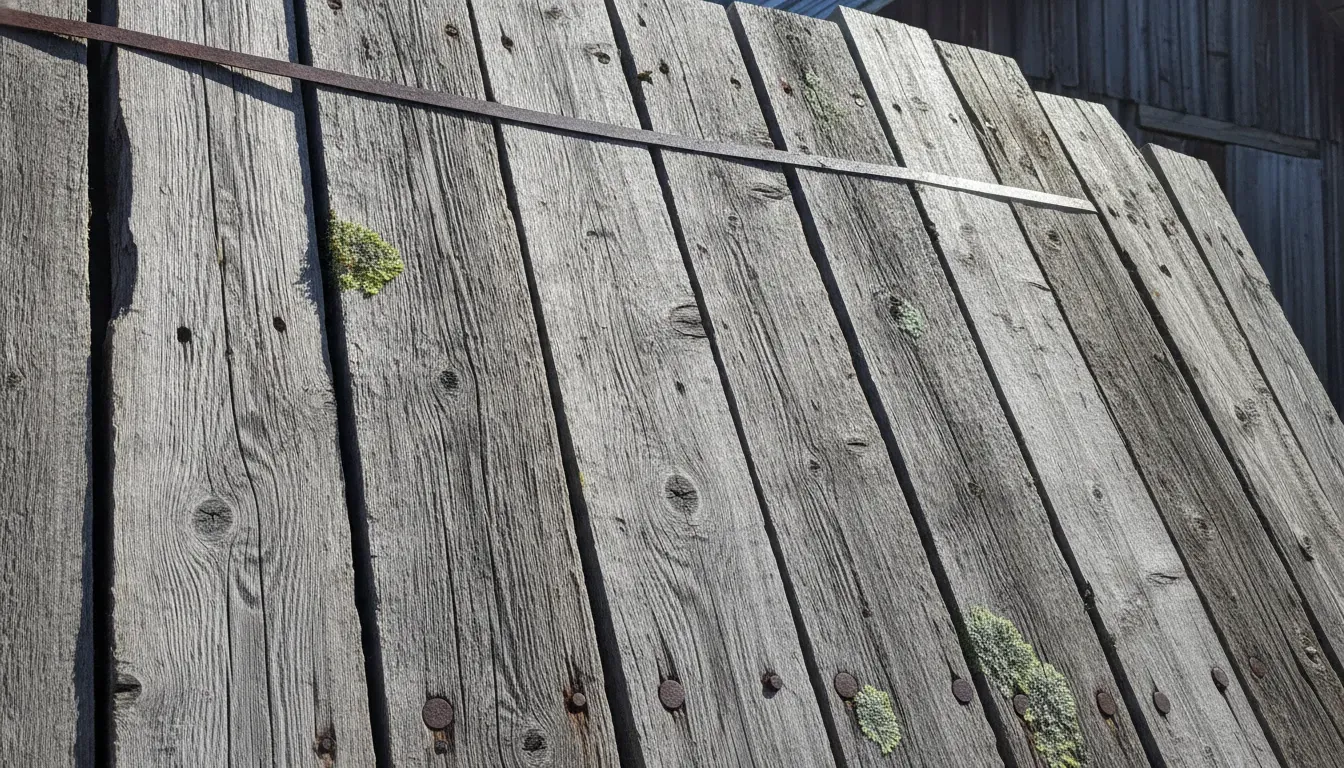
These features should be described accurately. Checking refers to small splits that follow the grain. Wane is the remaining rounded or irregular edge of the log. Sapwood can appear as a lighter band. Strapping marks and fastener holes record how the boards were held in the original fence. Moss or lichen may appear as localized organic traces from outdoor exposure.
For a close match, request representative samples or photographs before approving a large material sort. The objective is not to remove every mark. It is to decide which marks support the design and which conditions require further processing or exclusion from a particular elevation.
Discuss your exterior material goals with Wood Crafting
Which Exterior Applications Fit Reclaimed Corral Board?
Corral board can support exterior concepts where authentic agricultural character is part of the architecture. The material may be considered for siding, gable accents, porch or covered-ceiling applications, fence panels, barn-style doors, landscape structures, and selected accent walls. The appropriate use depends on exposure, substrate, assembly design, and the condition of the boards selected.
Reclaimed corral board suits ranch-inspired homes, agricultural hospitality buildings, outbuildings, gable ends, entry volumes, and landscape-connected structures. For exposed wall cladding, the project team must confirm the assembly, drainage, ventilation, fasteners, clearances, and finish requirements. The material supplies character, while the design team determines the complete exterior system.
- Full exterior elevations: use when a consistent agricultural story is desired across a larger facade.
- Gable or entry accents: use as a concentrated material moment against stone, metal, or new siding.
- Covered porches and ceilings: use where the design benefits from visible texture and protected exposure.
- Fence panels and gates: use to extend the corral narrative into the site and landscape.
- Barn-style doors: use when hardware marks and gray patina support a focal element.
- Landscape structures: consider for sheltered walls, screens, and agricultural outbuildings after site conditions are reviewed.
Exterior installation should not be treated as a simple cosmetic overlay. Reclaimed boards can vary in thickness, edge condition, moisture history, and fastener marks. The contractor and design professional should coordinate the substrate, flashing, ventilation, fastening, end treatment, and finish strategy for the actual building. Wood Crafting can discuss material requirements, but it does not replace project-specific architectural or building-code decisions.
Which Species and Dimensions Are Typical?
Wood Crafting documents Gray Corral Board as a mixed-species material that may include Douglas Fir, Pine, and Hemlock. The species mix is part of the reclaimed story, not a promise that every order will contain a fixed ratio. Grain, density, color, and surface response can vary by source structure and by the portion of the original fence that was recovered.
Typical Gray Corral Board is approximately 3/4 inch thick after boards are split from 2-inch stock, with consistent lengths and widths within a batch rather than one universal size. Douglas Fir, Pine, and Hemlock may be present. Confirm usable dimensions, species mix, edge condition, and processing with Wood Crafting before finalizing takeoffs or a detailed exterior schedule.
Use the approximate thickness as an early planning reference, not as a substitute for a sample or project quote. A material schedule should distinguish nominal size from usable face dimension and should allow the supplier to identify what is available for the requested quantity. If the design depends on a narrow width, a long uninterrupted run, or a closely controlled color sort, state that requirement at the beginning.
The Gray Corral Board product page is the most direct starting point for the product itself. It should be read alongside the category page because reclaimed inventory and product presentation can change as material is sourced, processed, and allocated to projects.
How Should You Specify Processing and Installation?
Processing should be selected according to the project's visual brief, handling requirements, and installation plan. Wood Crafting lists three useful preparation options for reclaimed materials: as-is, de-nailed, and power washed. These are not interchangeable labels. Each option changes what the installer receives and how the team evaluates surface character, cleanliness, and remaining evidence of prior use.
- As-is: preserves the most original surface evidence and requires the project team to define acceptable marks and handling conditions.
- De-nailed: reduces visible or embedded nail hazards, but old holes and other marks may remain part of the appearance.
- Power washed: provides a more thoroughly cleaned surface while retaining the underlying weathered character to the degree supported by the material.
Request the intended processing level in the quote conversation. Confirm whether the project needs a more rustic face, a cleaned surface, consistent board orientation, or a specific approach to sorting. Coordinate these choices with the installer before material is delivered so the selected boards suit the planned assembly.
For general profile and exterior-cladding context, the reclaimed wood siding profiles and installation guide is a useful neighboring resource. This corral-specific guide intentionally does not repeat that article's general profile discussion. Instead, it highlights the source-specific questions that should be settled before a corral board order becomes a wall assembly. For the broader sustainability context behind material reuse, consult Wood Crafting's green-building and material knowledge resource.
How Do You Order Reclaimed Corral Board for a Project?
The most efficient quote request gives Wood Crafting enough information to evaluate fit, availability, and preparation. A product name alone is rarely enough for a reclaimed exterior because the project may need a specific quantity, visual sort, dimension, or processing level.
To request reclaimed corral board siding, provide the application, approximate square footage, elevations or a takeoff when available, desired color and weathering, preferred board dimensions, processing level, delivery region, and schedule. Ask which requirements can be met from current material and which may need flexibility. Final availability and lead time are project-specific and should be confirmed in the quote.
- Define the application: identify full siding, an accent elevation, a gable, a covered area, a fence, or a landscape structure.
- Estimate quantity: share wall area, waste assumptions, board coverage, and any separate trim or accent needs.
- Describe the appearance: explain whether the design wants silver gray, darker weathering, visible moss, strong hardware marks, or a more restrained sort.
- State dimensional needs: include approximate thickness, widths, lengths, profile, and any alignment requirements.
- Select processing: identify whether material should be as-is, de-nailed, or power washed.
- Coordinate logistics: provide the project location, delivery constraints, and desired schedule for a realistic discussion of timing.
Wood Crafting's reclaimed corral fencing category provides the product-family context, while the company's sourcing story explains the broader connection to old barns, corrals, and agricultural structures. Use both resources to prepare the project conversation, then rely on the quote and material review for order-specific decisions.
Frequently Asked Questions About Corral Board Siding
Is reclaimed corral board the same as barn board?
No. Both are reclaimed agricultural materials, but corral board is recovered from livestock fencing and corrals. Barn board generally describes boards recovered from agricultural buildings or barn cladding. Their source histories create different patterns of weathering, hardware marks, color, and surface character.
What color is reclaimed corral board?
Wood Crafting describes Gray Corral Board as a material with a standard range of gray tones and textures. Individual boards may vary because of exposure, species, and source structure. Review representative material before specifying a tightly controlled color outcome.
How thick is Gray Corral Board?
Available documentation describes an approximate 3/4-inch thickness after boards are split from 2-inch stock. Usable dimensions can vary by batch, so confirm current thickness, width, length, and edge condition with Wood Crafting for the project.
Can reclaimed corral board be used outside?
It can be considered for exterior siding, gable accents, covered areas, fencing, doors, and landscape structures. The complete exterior assembly must be designed for the exposure, drainage, ventilation, fastening, substrate, and finish conditions of the building.
Can the boards be cleaned or de-nailed?
Wood Crafting lists as-is, de-nailed, and power-washed processing options. The selected option should reflect the project's handling, appearance, and installation requirements. De-nailing or washing does not make reclaimed boards dimensionally identical to new lumber.
How do I get a quote?
Share the application, approximate quantity, dimensions, desired character, processing preference, project location, and schedule through the quote request page. Wood Crafting can then review the requirements and respond with project-specific information.
Request a quote for your reclaimed corral board exterior
For teams seeking a western or agricultural exterior with genuine source history, reclaimed corral board offers a more specific design language than generic rustic siding. Start with the intended application, establish the acceptable range of variation, and let the material review guide the final selection.