
Reclaimed Wood Salvage Consultation Agricultural Structures
An old barn, corral, or agricultural outbuilding can hold more than sentimental value. Its siding, framing, and fencing may offer distinctive grain, weathering, and patina, but useful recovery depends on condition, access, contaminants, and the material's intended second use.
Request a salvage or reclaimed wood consultation to discuss the structure, your goals, and the information needed for a quote.
A reclaimed wood salvage consultation agricultural structures assessment helps determine what may be safely and practically recovered, how it could be cleaned or processed, and whether the material fits a future project. It is an informed evaluation, not a promise that every board or beam can be salvaged.
Wood Crafting sources salvaged lumber across the Northeast and Midwest, including materials from old barns, horse corrals, and livestock fencing. The assessment begins with the structure itself, then connects its material character and limitations to a realistic reuse path. For broader context on reclaimed materials, see Reclaimed Wood, Green Building, and Material Knowledge: The Expert Resource.
What Is a Reclaimed Wood Salvage Consultation for Agricultural Structures?
A salvage consultation is an assessment and planning conversation. It considers whether material from an old barn, corral, livestock fence, or related agricultural structure may be suitable for recovery and reuse. Reclaimed wood is generally wood recycled from its original function and repurposed for a new use. Reclaimed lumber is salvaged from an existing structure, processed, and prepared for another construction or design application. These definitions help distinguish genuine reclaimed material from newly distressed wood.
For a property owner, the consultation creates a practical starting point before renovation, dismantling, or demolition decisions are finalized. Wood Crafting works with owners of agricultural properties, as well as builders, contractors, architects, designers, and developers who need to understand what a structure may offer. The conversation can cover the building type, visible condition, access, the intended project, and whether the material could fit a future reclaimed wood application.
Key takeaway: A salvage consultation identifies possibilities and constraints; it does not guarantee that a structure, board, or beam can be recovered.
Who benefits from a salvage consultation?
Owners may benefit when they want to preserve usable material before an old structure is altered or removed. A consultation can also help project teams decide whether salvaged boards, timbers, or fencing components are worth evaluating for a new build, renovation, interior finish, or landscape application. The useful question is not simply whether a structure contains old wood. It is whether the accessible material, condition, character, and handling requirements align with a realistic end use.
A barn may contain weathered exterior siding and heavy timber framing, both recognized sources of reclaimed lumber with distinctive visual character and potential structural capability. Agricultural structures are one established source of reclaimed wood, but each building has its own combination of species, weathering, repairs, fasteners, exposure, and damage. Corrals and livestock fencing may present a different material profile from a framed barn, and the final use depends on what assessment reveals.
What the consultation can and cannot establish
The assessment helps clarify possible next steps, such as further inspection, careful dismantling, material sorting, processing, or a quote for a specific reclaimed wood project. Reclamation generally involves careful removal, cleaning, processing, and preparation for current specifications. It is not the same as promising a fixed quantity of finished lumber. Some portions may be inaccessible, too deteriorated, contaminated, or unsuitable for the intended application. Recovery can also depend on labor, site conditions, handling logistics, and the market for the resulting material.
That distinction protects both the property owner and the project team. It keeps the conversation grounded in observable material and a defined use rather than an assumed yield. Wood Crafting's reclaimed wood sourcing and material story reflects this assessment-led approach, connecting old agricultural materials with new applications while respecting the limits of what each structure can provide.
How Does Wood Crafting Evaluate an Old Barn or Agricultural Structure?
An old barn can hold valuable material, but its appearance alone does not determine whether the lumber fits a new project. Wood Crafting evaluates the structure as a source of usable reclaimed wood. The review considers the building's condition, the material that can be accessed responsibly, and the requirements of the intended application. The goal is not to promise a fixed recovery. It is to understand what the structure may offer and whether the material, processing, and project scope align.
Condition and accessible material
The first consideration is the condition of the structure and the location of potentially usable boards, timbers, or fencing components. Weather exposure, water damage, rot, insect activity, prior repairs, and long-term neglect can vary significantly from one elevation or framing area to another. Material that looks sound from a distance still needs a closer review before reuse.
Accessibility matters as much as the amount of wood present. A structure may contain attractive siding or heavy timber framing, yet portions can be difficult to reach, carefully remove, transport, or process. Wood Crafting's consultation helps separate the material that is visible from the material that may be practical to recover. Any decision also needs to account for the building's condition and the safety of people working around it. General salvage work should not be treated as a substitute for a structural evaluation or a site-specific safety plan.
Species, character, and condition of the wood
Assessment also considers what the lumber is made of and how its history appears in the material. Species, dimensions, grain, color, weathering, patina, checking, wane, and sapwood can all affect how boards or timbers may be used. These characteristics are not automatically defects. They can be central to the visual appeal of reclaimed wood, while still influencing milling, grading, detailing, and installation requirements.
Aged wood can offer distinctive grain patterns, historical patina, and other characteristics associated with long seasoning, but suitability depends on the specific project. A board selected for wall cladding has different demands from a timber being considered for a design feature. Wood Crafting uses project-specific consultation and material selection based on species, color, and specifications rather than assuming that every recovered piece will fit every application.
Metal contaminants and processing needs
Old agricultural structures can contain nails, staples, wire, fasteners, and other metal left behind from years of repairs and use. As a general salvage-processing principle, nails and other metal contaminants need to be removed before salvaged lumber is milled. Undetected metal can damage mill equipment and create downtime. The degree of de-nailing, cleaning, and preparation therefore becomes part of the material discussion, not an afterthought.
Wood Crafting documents processing options that can include as-is, de-nailed, and power-washed material, depending on project requirements. For a closer look at those documented choices, review the reclaimed wood processing options. The final recommendation depends on the material found and the finish, handling, and installation expectations of the project.
Fit, scope, and next steps
Finally, Wood Crafting considers whether the recovered material matches the project's intended use, appearance, dimensions, and practical scope. Agricultural structures can provide weathered siding and substantial framing. An assessment does not guarantee a particular quantity, grade, or outcome. A clear conversation about the desired application helps determine whether the next step is further material review, a processing discussion, or a quote based on the available information.
What Happens During the Salvage and Material Assessment Process?
A useful assessment begins with understanding both the agricultural structure and the intended next use for its material. Wood Crafting sources salvaged lumber directly from property owners and then evaluates how it may be processed and managed as reclaimed inventory. The result is not a guaranteed removal plan or a promise that every board can be recovered. It is a practical conversation about fit, condition, labor, and project requirements.
Start with an initial discovery conversation
The first step is to describe the structure and the opportunity. That may include an old barn, horse corral, livestock fence, or another agricultural building in the Northeast or Midwest. Helpful context includes the structure's general location, the material that appears most substantial, its current condition, and why the property owner is considering renovation, dismantling, or removal. Photos and basic dimensions can help establish whether a deeper conversation is appropriate, but they do not replace a material assessment.
Define the scope and the desired outcome
Next, the parties clarify what the owner hopes to accomplish and what Wood Crafting may be able to support. The conversation can distinguish between preserving weathered siding, identifying heavy timber, understanding fencing material, or exploring a broader salvage opportunity. It should also address access, timing, ownership, and any known hazards. This scope discussion matters because deconstruction is different from conventional demolition. The Environmental Protection Agency describes deconstruction as carefully dismantling a building to salvage components for reuse and recycling, a labor-intensive process rather than a speed-first removal method. EPA deconstruction guidance provides general context.
Assess accessible material and its character
The assessment considers what material is actually present and reachable. Boards and timbers may show different levels of weathering, checking, wane, patina, or damage. Species, dimensions, thickness, and the condition of individual pieces all affect possible reuse. Agricultural structures can provide weathered exterior siding and heavy timber framing, but the useful portion varies from one structure to another. The assessment should therefore separate visible potential from confirmed recoverable material.
Plan a responsible removal approach
If the opportunity appears suitable, removal planning accounts for the structure's condition, safe access, sequence, labor, and protection of the material. A salvage route may not be appropriate for every property. The economics of deconstruction depend in part on whether revenue from salvaged material can offset the additional labor involved, as the EPA notes. Wood Crafting does not promise removal or resale for every structure, and the final scope depends on the facts established during consultation.
Build a material inventory
Material is then considered by type and intended use, rather than treated as one uniform pile. The inventory may organize siding boards, beams, fencing, or other components by appearance, dimensions, condition, and processing needs. Nails and other metal contaminants require careful attention before salvaged lumber is milled. Undetected metal can damage equipment, so de-nailing is a fundamental part of responsible preparation.
Choose the processing direction
Depending on the material and the project, Wood Crafting may consider an as-is, de-nailed, or power-washed finish. The choice depends on the desired appearance, the condition of the wood, and the specifications of its future application. For a closer look at these options, see the guide to reclaimed wood processing options.
Move to a quote or project handoff
Once the scope, material characteristics, processing direction, and project requirements are clearer, the information can support a quote or a next-stage project discussion. Pricing is quote-based, and any proposed path should reflect the actual material and work involved. Owners, builders, architects, and designers can request a salvage or reclaimed wood consultation to begin that conversation.
How Can Salvaged Material Be Repurposed?
An old agricultural structure does not produce one uniform material stream. Boards, framing members, and fence components may each follow a different path after assessment. Barns and similar structures can contain weathered exterior siding as well as heavy timber framing, creating options that range from surface-driven design features to substantial architectural elements. The right outcome depends on the material's condition, dimensions, species, processing needs, and the specifications of the project, not simply on its age.
Boards for siding and paneling
Weathered boards with useful face character can often be considered for interior paneling, accent walls, ceilings, or exterior siding when their dimensions and condition fit the application. A consultation helps separate boards valued for their patina and grain from pieces that need more processing or are unsuitable for the intended use. Surface appearance matters, but so do thickness, width, straightness, checking, wane, fastener marks, and the amount of usable material after preparation.
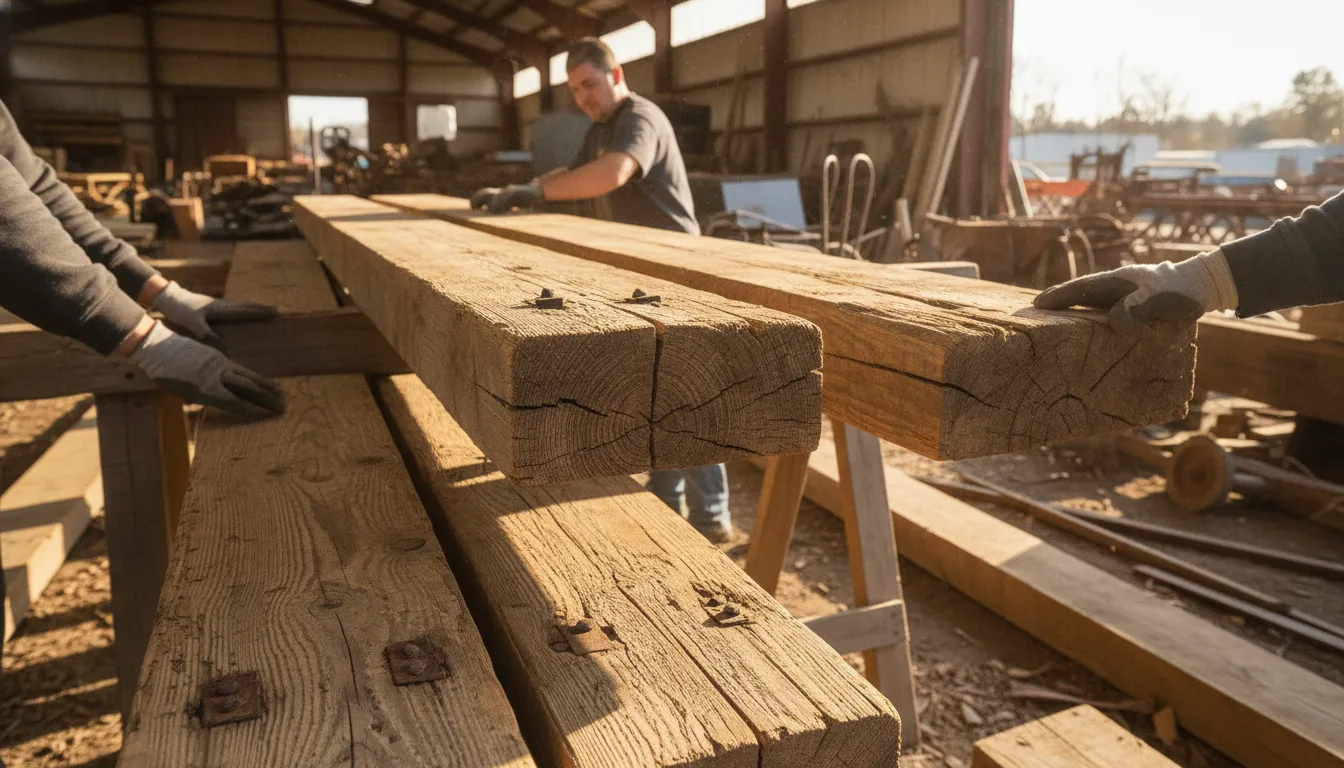
For projects where the visual character of the boards is central, explore reclaimed siding and paneling as a related application. Processing may be discussed as-is, de-nailed, or power-washed material, depending on the project's requirements. Those choices affect the final appearance and the preparation needed before installation.
Heavy members for beams and commercial interiors
Sound framing members may be evaluated for exposed beams, mantels, posts, or other design elements. Their size and profile can make them useful when a project needs visible structure or a strong sense of material history. A beam that looks compelling in place may still require careful review for checking, insect damage, end condition, old fasteners, and the dimensions required by the design.
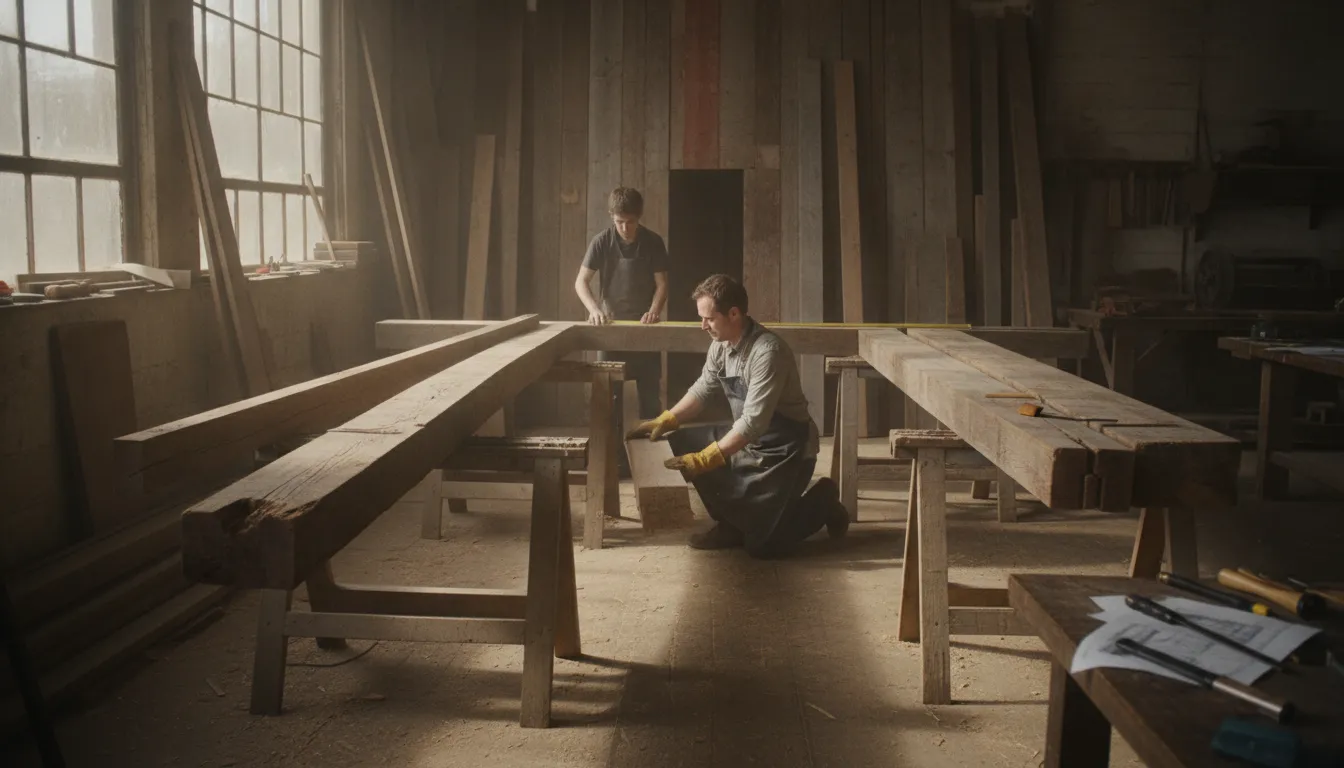
Wood Crafting's salvaged reclaimed beam material provides a relevant reference for custom applications. Designers and project teams planning hospitality, restaurant, retail, or other commercial spaces can also see how reclaimed beams for commercial interiors can function as a visual architectural feature. These examples do not establish that every salvaged structure will yield beam material suitable for a commercial installation.
Corral and fence material for agricultural character
Weathered members from horse corrals or livestock fencing may be considered for new fencing, gates, partitions, wall treatments, or other agricultural-inspired details. Existing wear can contribute authentic character, while the intended use determines whether the pieces need cleaning, trimming, de-nailing, or another form of preparation. See reclaimed corral fencing for a directly related outcome.
Across all of these possibilities, suitability is decided project by project. The consultation connects the source material to the desired application, then clarifies what can be preserved, what processing may be needed, and what should be excluded. Reclaimed lumber is valued for aged properties, distinctive grain, historical patina, and dimensional stability, but those characteristics do not replace a careful review of condition and specifications. Agricultural salvage can offer both distinctive character and structural potential when the material is appropriate for its new role.
What Should Property Owners Prepare Before a Consultation?
A useful consultation starts with a clear picture of the structure, the material you hope to recover, and what you want to happen next. You do not need a formal report or a complete inventory before reaching out. A few practical details can help Wood Crafting understand whether an agricultural salvage conversation is a good fit and what information may be needed for a quote.
Share the structure and its location
Note whether the project involves a barn, horse corral, livestock fence, shed, or another agricultural structure. Include the general location and whether the property is in the Northeast, Midwest, or nearby region. If you know the structure's former use, mention it, but do not worry if its history is incomplete. The type and condition of the structure often provide more useful starting context than an uncertain construction date.
Describe access and site conditions
Explain how the structure can be reached and whether there are practical access considerations. For example, note narrow drives, steep ground, locked gates, nearby buildings, overhead obstructions, or areas that may be difficult for equipment or a crew to reach. These details are not a pass-or-fail checklist. They help frame a realistic conversation about removal planning and the scope of work that may be possible.
Clarify the desired outcome and timeline
Think about what you hope to accomplish. You may want to preserve boards or beams for a future renovation. Understand whether materials could be reused, discuss a potential purchase arrangement, or simply explore options before renovation or demolition. Share the project timeline, including any planned teardown, weather concerns, closing date, or preferred decision window. A timeline helps distinguish early planning from a more immediate quote request.
Bring photos and identify known hazards
Photos are helpful when available, especially wide views of the structure and closer images of siding, framing, posts, fencing, fasteners, and visibly weathered areas. They do not need to be professional photographs. Also mention known hazards such as unstable walls, damaged roofs, exposed nails, buried wire, treated material, mold concerns, or limited interior access. Do not enter an unsafe structure just to collect additional information.
Prepare questions about processing and reuse
Consider asking how material might be handled as-is, de-nailed, or power-washed, and which characteristics could affect a future application. You can also ask whether boards, beams, or fencing components appear better suited to a particular type of reuse. Final suitability depends on condition, processing, dimensions, and the requirements of the intended project, so a consultation should inform decisions rather than promise a specific yield.
After the initial discussion, the next step may be a project-specific, quote-based review of scope, material, processing, and logistics. To share the details of your structure and intended use, request a salvage or reclaimed wood consultation.
Why Does a Reclaimed Wood Salvage Consultation for Agricultural Structures Matter?
Agricultural salvage connects a finished building project with the working structures that shaped a region. Barns, horse corrals, livestock fencing, and related buildings can contain weathered siding, heavy timber, and other lumber with visible grain, checking, wane, and patina. Those characteristics are not applied at the factory. They reflect the material's original use and long exposure, while the exact history of any individual board still needs to be verified through assessment. The Reclaimed Wood, Green Building, and Material Knowledge: The Expert Resource provides a related framework for evaluating reuse and material knowledge.
That material story is part of Wood Crafting's regional sourcing model. Based in Millerton, New York, the company sources salvaged lumber from agricultural structures across the Northeast and Midwest, with some materials from Eastern Canada. Wood Crafting's reclaimed wood sourcing and material story provides more context about that approach. Regional sourcing can also keep usable material connected to the communities and building traditions where it was found, rather than treating every old structure as disposable waste.
Reuse preserves more than appearance
When a viable structure is carefully dismantled, boards and timbers may be recovered for reuse instead of being lost with a conventional demolition load. The U.S. Environmental Protection Agency describes deconstruction as carefully dismantling a building to salvage components for reuse and recycling. Its guidance also identifies material recovery and landfill diversion as potential benefits, while noting that deconstruction is labor intensive. These are general principles, not a measurement of Wood Crafting's results or a guarantee that every agricultural structure will yield usable lumber.
The circular value is practical as well as environmental. Reusing existing material can extend the service life of wood already in circulation. It can also reduce the need to process replacement material and give builders and designers access to visual qualities that new wood may not reproduce. A USDA Forest Service study examined the energy impact of reusing reclaimed lumber using a deconstruction industry survey. It estimated lower cumulative energy use for reclaimed framing lumber than virgin framing lumber in its model. That research is useful general context, but its benchmark should not be assigned to a specific Wood Crafting project.
Why the assessment matters to the finished project
Agricultural salvage is valuable only when the recovered material fits a real use. Boards may be considered for reclaimed siding and paneling, while heavier timbers may suit beams or other design features. Final suitability depends on condition, dimensions, contaminants, processing needs, and the project's specifications.
| Material characteristic | Why it matters in planning |
|---|---|
| Condition and access | Determines whether material can be handled and recovered responsibly. |
| Species, dimensions, and character | Helps match boards or timbers to the intended application. |
| Fasteners and contaminants | Influences de-nailing, cleaning, and milling requirements. |
| Processing direction | Clarifies whether material is considered as-is, de-nailed, or power-washed. |
Careful removal, de-nailing, cleaning, and preparation are essential before material is selected or milled.
That is why a reclaimed wood salvage consultation for agricultural structures should be treated as a practical planning conversation, not a promise of a fixed recovery rate. It helps connect the source material's character and limitations with an appropriate application, quote, and responsible next step.
Request a salvage consultation for your agricultural structure before removal or renovation decisions are finalized.
Frequently Asked Questions
What should I share before a salvage consultation?
Share the structure type, general location, access conditions, current condition, and your intended outcome. Photos can help provide early context, especially when they show siding, framing, interior exposure, and areas with visible deterioration. If you know about hazards, difficult access, or a planned renovation timeline, include those details as well.
Can every old barn or agricultural structure be salvaged?
No. Reuse depends on the material's condition, accessibility, species, contamination, removal requirements, and fit for a current project. A consultation helps distinguish potentially usable boards or timbers from material that may not be practical to recover. It should be treated as an assessment and planning conversation, not a guaranteed yield or removal commitment.
What happens to wood after it is assessed?
If the material is a workable fit, the next steps may include careful removal, inventory, and processing based on the intended application. Wood Crafting's documented processing options include as-is, de-nailed, and power-washed material. Nails and other metal contaminants must be removed before milling because undetected metal can damage equipment and cause downtime, according to the U.S. Environmental Protection Agency.
What can salvaged agricultural wood become?
Depending on its dimensions, condition, and appearance, material may be considered for reclaimed siding, paneling, beams, fencing, or other custom applications. Weathering, patina, grain, checking, and wane can be part of its value, but final suitability depends on the project's specifications. Wood Crafting discusses the material and intended use before preparing a quote.
Get started with a salvage consultation
An assessment can clarify whether materials from an old agricultural structure fit your reclaimed wood project, what processing may be appropriate, and which details belong in a quote. Wood Crafting can review your structure and project goals as the next step without assuming every board or beam will be usable. Request a salvage or reclaimed wood consultation and quote for your agricultural structure or reclaimed wood project.