
What Builders Should Know About Reclaimed Barn Board Species Selection Practical Guide
Choosing the right reclaimed barn board species selection practical guide starts with a useful distinction: species is only one part of material fit. A project team also needs to assess the intended application, board appearance, available dimensions, processing, and the amount of natural variation it can accept. Reclaimed boards carry a history of use, so an informed selection depends on samples and clear communication rather than assumptions based on color alone.
Share your project requirements
What does “species selection” mean for reclaimed barn board?
Species selection means identifying the wood type that best fits the design, performance needs, and material expectations of a project. With reclaimed material, it also means confirming what can be documented about the boards being considered. A brown or gray surface does not establish species. Neither does a weathered face, saw mark, or old nail hole.
Wood Crafting offers reclaimed barn board in several product varieties, including Red Barn Board, Reclaimed Gray Barn, Mixed Brown Board, Faded Red, White Reclaimed, and Wire Brushed. Those names describe product appearance or treatment, not a verified species label. Keep the two questions separate when speaking with a supplier: “What species information is available?” and “Which visual character and processing option suit this project?”
For a broader overview of product characteristics, sorting, and project decisions, use the reclaimed barn wood siding guide as a companion resource, then confirm current product details directly for the scope at hand.
Which project decisions should come before choosing a species?
Start by defining what the boards need to do and where they will be seen. Species preferences are easier to evaluate when the project team has already set the use, visual intent, and constraints. Record the following before comparing material:
Application: Identify whether the board is intended for an interior wall, ceiling, exterior cladding, or another finish application. Confirm that the selected material and assembly are appropriate for that use.
Design intent: Describe the desired color range, grain visibility, surface character, and degree of consistency. Use reference images or physical samples rather than broad labels such as “rustic.”
Project scale: Note the approximate area or overall project quantity, plus any zones that require a different appearance. Larger projects benefit from early discussion of acceptable variation across lots and rooms.
Specification constraints: Check drawings, finish schedules, code requirements, and the project team’s own standards. Ask the appropriate design or technical professional to resolve requirements that depend on the assembly or end use.
Decision authority: Name who approves samples and who can accept substitutions. That prevents a sample from being treated as approved when it was only reviewed for color.
Wood species can affect grain appearance, density, and workability, but a species name alone cannot promise a particular result. Reclaimed boards may show age-related wear, previous fastener holes, surface variation, or differences among individual pieces. For visible surfaces, the approved sample and written acceptance criteria often matter as much as the species label.
How should a team confirm species information?
Ask what species information is available for the specific product or stock under consideration, and how the supplier established it. If a species identification is important to the design or specification, request a clear written answer rather than inferring it from a product color or a photograph. Ask whether the information applies to all boards in the proposed material or only to a portion of the available stock.
Reclaimed lumber can be challenging to identify from appearance alone. A board may have weathering, coatings, dirt, machining, or wear that obscures features. A photograph can help compare visible character, but it is not a substitute for a confirmed identification. When the answer affects a formal specification, ask the design professional whether additional documentation or review is needed.
State the decision you need to make. For example, clarify whether species is a required specification, a design preference, or simply useful background.
Ask for the evidence and scope. Find out whether identification is documented, how broadly it applies, and what uncertainty remains.
Review a representative sample. Look at more than one board if the project depends on a consistent visual range. A single piece cannot represent every natural variation in a reclaimed lot.
Record the accepted description. Put the verified species information, if available, and the approved appearance criteria into the project record or submittal notes.
Where a project can accept a visual selection without a species requirement, say so. That gives the supplier a practical basis for discussing available material while avoiding an unsupported promise about species composition.
How can samples help compare species and appearance?
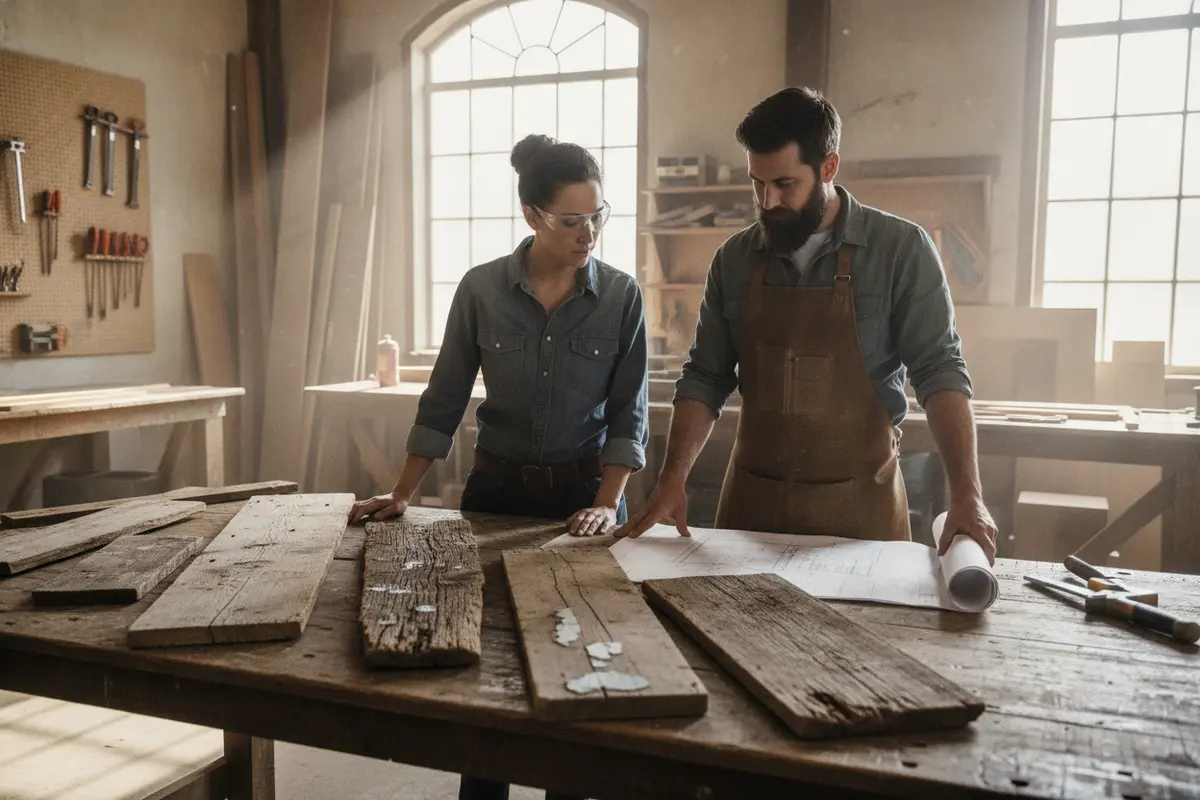
Request samples early enough for the full project team to review them under realistic conditions. Examine the face, edges, grain, texture, color, and visible signs of prior use. If the boards will be installed in a large uninterrupted area, compare several pieces together rather than judging one sample in isolation.
Review samples in the lighting and setting where the material will be used. Daylight, warm interior lighting, and adjacent finishes can shift the impression of a board’s color. Compare the sample with flooring, paint, stone, metal, and other nearby materials. For exterior work, consider how the board reads next to the surrounding cladding and trim.
Make the comparison repeatable. Lay several boards side by side, view both the face and edge, and note what the team sees rather than relying on memory. Record which pieces appear lighter or darker, where grain or surface marks stand out, and whether the sample shows the amount of wear expected for the design. If species identification matters, keep that question separate from the appearance notes and record the supplier’s response independently. A photo can help circulate a sample review, but capture it in context and retain the physical reference when practical; camera settings and lighting can alter color. Ask the approving team to mark each sample as accepted, rejected, or pending clarification, then write down why. These small steps make it easier to compare another sample later without shifting the visual standard or treating an attractive piece as representative of the entire project quantity.
Agree what the sample is meant to approve. It may set a color range, texture, processing preference, or overall character. It should not silently become a guarantee that every board will be identical. Reclaimed material naturally varies; the project team should decide in advance which differences are acceptable and which would prompt a review.
Wood Crafting’s reclaimed barn board product page can help a buyer see available board varieties. A project-specific sample review should still establish the actual visual expectations for the planned use.

Hello, World!
What should the team compare when selecting material?
Use a comparison sheet to distinguish the material facts from the design preferences. The table below is a planning aid, not a substitute for a project specification or confirmation from the supplier.
Selection factorWhat to checkWhat to recordSpecies informationWhether the wood type is known and what evidence supports the identificationVerified description, scope, and any uncertaintyVisual characterColor range, grain, texture, weathering, and variation among boardsApproved sample or reference and acceptable rangeIntended applicationInterior or exterior use, location, and relevant assembly requirementsProject area and technical questions assigned to the responsible professionalProcessingWhether material is requested as-is, de-nailed, or power-washedPreferred processing and confirmation of availability for the projectDimensions and layoutRequired board dimensions, coverage, joints, and transitionsDrawing references, measured scope, and any layout assumptionsVariation and acceptanceHow much piece-to-piece difference the team can acceptApproval owner, sample intent, and review process for exceptionsProject coordinationDelivery location, timing needs, sequencing, and decision deadlinesSite details and milestone dates to discuss with the supplier
How do species, processing, and application interact?
Species, processing, and intended application should be considered together, not as independent checkboxes. The same visual preference may look different after cleaning or other processing. A board’s existing surface and wear may also affect how it reads in a finished space. Ask which processing options are available for the material under consideration and clarify whether the comparison sample reflects the requested treatment.
Wood Crafting lists material as available as-is, de-nailed, or power-washed based on project requirements. These choices should be included in the inquiry because they affect the condition in which the buyer expects to receive the material. Do not assume that a sample shown in one condition represents stock prepared another way.
Hello, World!
Application is a separate technical question. A board selected for a decorative finish should not automatically be treated as suitable for a structural role. Where boards are part of a building assembly with structural, fire, moisture, or code requirements, the architect, engineer, or other responsible professional should define the applicable criteria and confirm the proposed approach. This guide does not establish structural capacity or code compliance.
For paneling projects, also review the siding and paneling information and include the installation context in the project discussion. Wood Crafting supplies reclaimed wood products; do not assume that material supply includes installation services.
How can teams resolve a mismatch between species and appearance?
Sometimes a project begins with a species preference, but the samples that best fit the visual brief do not come with the level of species confirmation the team expected. Treat this as a decision point rather than forcing one requirement to stand in for the other. Revisit the project brief and identify which condition is essential: a documented species, a visual range, or a combination of both.
For example, a designer may have selected a reference image because of its pale tone and open grain, while the written schedule names a particular wood type. Those are separate criteria. Ask whether the reference image illustrates color and character only, or whether the named species is mandatory. If it is mandatory, request the supplier’s documented response for the material under review and let the design authority decide whether an alternate is acceptable. If the visual effect is the priority, revise the specification with approval so it describes the sample range and does not imply an unverified species.
For a mixed project with multiple rooms or elevations, resolve the question by zone. The public-facing feature wall may require a tightly reviewed appearance, while a secondary area can accommodate broader variation. The project team can identify the required product character for each location, retain the approved sample reference, and note any allowable substitutions. This avoids letting a decision made for one wall or room become an unintended rule for the entire order.
Keep the decision trail simple: state the initial requirement, summarize what information or sample was reviewed, identify who approved the resolution, and update the drawing or finish schedule if needed. If the requirement cannot be met or verified, leave it open and ask the project’s responsible professional how to proceed. A clear unresolved item is safer than quietly changing a specification or assuming that the visual sample proves a technical fact.
What documentation belongs in a useful specification?
A practical specification makes the selection review repeatable. It gives the supplier and project team the same understanding of what is being considered, what is required, and what remains open. It can include:
Product category and preferred board variety, if known.
Species requirement or preference, with a note stating whether it must be verified or is optional.
Intended application and project areas.
Desired dimensions, coverage, and any layout conditions shown in the drawings.
Preferred processing condition: as-is, de-nailed, or power-washed.
Reference images or sample identifiers, plus an explanation of what each reference represents.
Acceptable visual variation and the person authorized to approve the material.
Project quantity or approximate scope, delivery location, and timing considerations.
Open technical questions that need review by the design team.
Keep the record factual. If species is not confirmed, write “species to be confirmed” or state that appearance is the primary selection criterion. Do not convert a preference into a requirement without approval, and do not describe a product as certified or code-approved unless documentation for that specific claim has been verified.
For more context on color and character choices, compare the Reclaimed Gray Barn Board, Rustic Red, and Mixed Medley product information. These options can inform the visual discussion, but product names should not be read as species documentation.
How can a buyer prepare a project-specific inquiry?
A useful inquiry gives the supplier enough context to discuss product fit without asking them to guess at the project. Gather the main decisions into one brief:
Who is buying? Identify whether the inquiry is for a builder, architect, designer, developer, contractor, or homeowner, and name the project contact.
What is the project? Describe the building or space, the material application, and whether the request concerns a single area or multiple zones.
What quantity is in scope? Provide the approximate square footage or other scope information available. For larger projects, note whether quantities are preliminary or tied to current drawings.
Where is delivery needed? Include the project location so logistics can be considered with the material conversation.
What matters most? Rank species confirmation, visual match, processing, dimensions, and schedule needs. Indicate which are mandatory and which are preferences.
What is attached? Include finish schedules, relevant drawings, sample photos, or reference images, and identify the version or date.
Buyers considering exterior applications can also consult the exterior barn wood siding guide and reclaimed wood siding information. For interior surface planning, the reclaimed wood wall paneling specification guide offers related coordination context.
Research on reclaimed barn building materials also examines their transformation into new timber construction, as described in this academic study of reclaimed barn materials. That work provides broader reuse context; it does not identify the species or suitability of any specific board lot.
What mistakes can a selection process prevent?
Choosing by color alone. Color names and photographs do not confirm species or establish that boards will match across a full project.
Assuming a product name is a species. Names such as gray, red, or mixed describe a visual direction, not necessarily a wood type.
Approving one sample as a promise of uniformity. A sample can establish a reference, but the team should separately define the acceptable range of natural variation.
Leaving processing until after approval. Confirm the requested processing condition and review a comparable sample where possible.
Blending decorative preference with technical approval. A pleasing sample does not establish performance for a regulated or structural use.
Sending a vague quote request. Without scope, application, location, and decision criteria, the material conversation may require avoidable follow-up.
Failing to document who approved what. Record whether the sample was accepted for color, texture, species, processing, or another criterion.
Frequently Asked Questions
Can reclaimed barn board species be identified by color?
No. Weathering, prior use, surface treatment, and lighting can change how a board looks. Ask the supplier what species information is available and what supports it; use samples to review appearance rather than treating color as proof of species.
Does a reclaimed barn board product name tell me its species?
Not necessarily. Product names may describe color or finish character. Confirm the species separately if it is important to the specification.
Should I select species before requesting samples?
Set the project’s application and visual priorities first, then ask what species information and samples are available. If a particular species is mandatory, state that clearly so the supplier can respond to the actual requirement.
Can a sample guarantee that all boards will look the same?
A sample is a reference for review, not a promise that reclaimed boards will be identical. Agree on acceptable variation, identify who approves the material, and ask how the supplier handles selection for a larger project.
What should I send with a quote request?
Include your role, project application, approximate quantity, delivery location, timing considerations, species requirements, preferred product character, processing preference, and any relevant drawings or reference images. This gives the supplier a clearer basis for a project-specific conversation.
Request a project-specific quote
Ready to define your reclaimed barn board selection?
Start with the application, confirm whether species is a requirement or preference, and review representative samples against written acceptance criteria. A clear project brief helps the supplier discuss available reclaimed barn board options with the right context.
