
Commercial Reclaimed Wood Siding Specification Practical Guide
Commercial reclaimed siding is easier to approve and release. This commercial reclaimed wood siding specification practical guide treats it as a coordinated procurement package, not a finish selected at the end of design. Align the material request with drawings, samples, quantities, approvers, and delivery constraints before a quote becomes a commitment.
Request a project quote with your current scope, material needs, timeline, and delivery location.
A commercial reclaimed wood siding specification practical guide should connect the design intent to the procurement record: identify the material zone. Coverage, processing expectations, sample approval, current takeoff, responsible decision-makers, and required delivery phases. That shared record gives the supplier and project team a clear basis for confirming what is known, what remains open, and what the quote must address.
Start by defining the coordination brief that will travel with the project. A useful brief makes the first review more productive and gives every later revision a visible place to land.
What Does a Commercial Siding Coordination Brief Need to Cover?
A commercial siding coordination brief turns design intent into a controlled material conversation. It should identify the project type, building or buildings, exterior elevations or material zones, approximate coverage, and the people authorized to approve changes. The goal is not to create another product catalog. It is to give the architect, owner, builder, contractor, and supplier a shared record of what is known, what is requested, and what still needs a decision.
Name the decision owners
Assign responsibility for the visual selection, drawing revisions, takeoff quantities, processing requests, delivery planning, and receiving. An architect or designer may establish the appearance and location of the siding. The builder or construction manager may coordinate field conditions and schedule. The owner or developer may control final selections and budget. The supplier can review the requested material and processing scope, but the project professionals retain responsibility for design, code, envelope, structural, and installation decisions.
That boundary matters when a material question becomes a project requirement. Supplier review can identify a mismatch between the requested profile, quantity, processing expectation, or available information. It does not replace the architect's envelope design, the engineer's analysis, or the contractor's field verification.
Control status and revisions
Give every significant item a status such as preliminary, open for review, confirmed, or released for procurement. Pair it with a revision date and the drawing, schedule, or document reference behind it. Label quantities as design estimates until the current takeoff is checked. Record open questions rather than allowing an assumption to become a purchase instruction. The brief should also identify who approves substitutions or changes to an elevation zone.
Use the reclaimed siding and paneling category for product-level context, then cross-reference the reclaimed barn board siding specification guide when the team needs broader material documentation. Keep those references separate from the coordination record. The brief should show which information has been reviewed for this project, by whom, and when.
How Should Teams Build a Commercial Siding Submittal Package?
A useful submittal package gives every reviewer the same material reference, decision points, and open questions. Build it as a controlled handoff rather than a general description of reclaimed wood.
Define the sample request. Identify the project area, elevation or finish zone, intended profile, approximate material requirements, processing expectations, and delivery geography. Record who requested the sample and which design question it is meant to answer. For a deeper review of commercial sample selection, see how to choose reclaimed wood samples for commercial work.
Set approval criteria before review. State what the team is evaluating: color range, patina, surface character, checking, wane, visible fastener treatment, profile, dimensions, or consistency between adjacent zones. Treat variation as an item to approve and document, not as an implied defect or a promise that every board will match.
Reference the current drawings. Tie the submittal to the drawing set and revision under review. Identify the relevant elevations, wall zones, details, schedules, and finish references. If the siding is shown differently across documents, list the conflict as an open question instead of resolving it silently.
Verify the product page. Confirm the selected product's current variety, profile, dimensions, and other stated specifications against its product page. Wood Crafting notes that exact specifications should not be generalized across all offerings. Keep the product-page URL and verification date in the review record.
Maintain a review log. Track submittal date, reviewer, comments, response, drawing revision, sample status, and unresolved decisions. A simple log prevents an informal sample conversation from becoming an undocumented procurement assumption.
Collect stakeholder signoff. Obtain the approvals required by the project team, such as architect, designer, owner, contractor, or purchasing lead. Separate approval of appearance from confirmation of scope and procurement release. Send the final approved package with the quote request so the material selection, project requirements, timeline, and delivery geography remain connected.

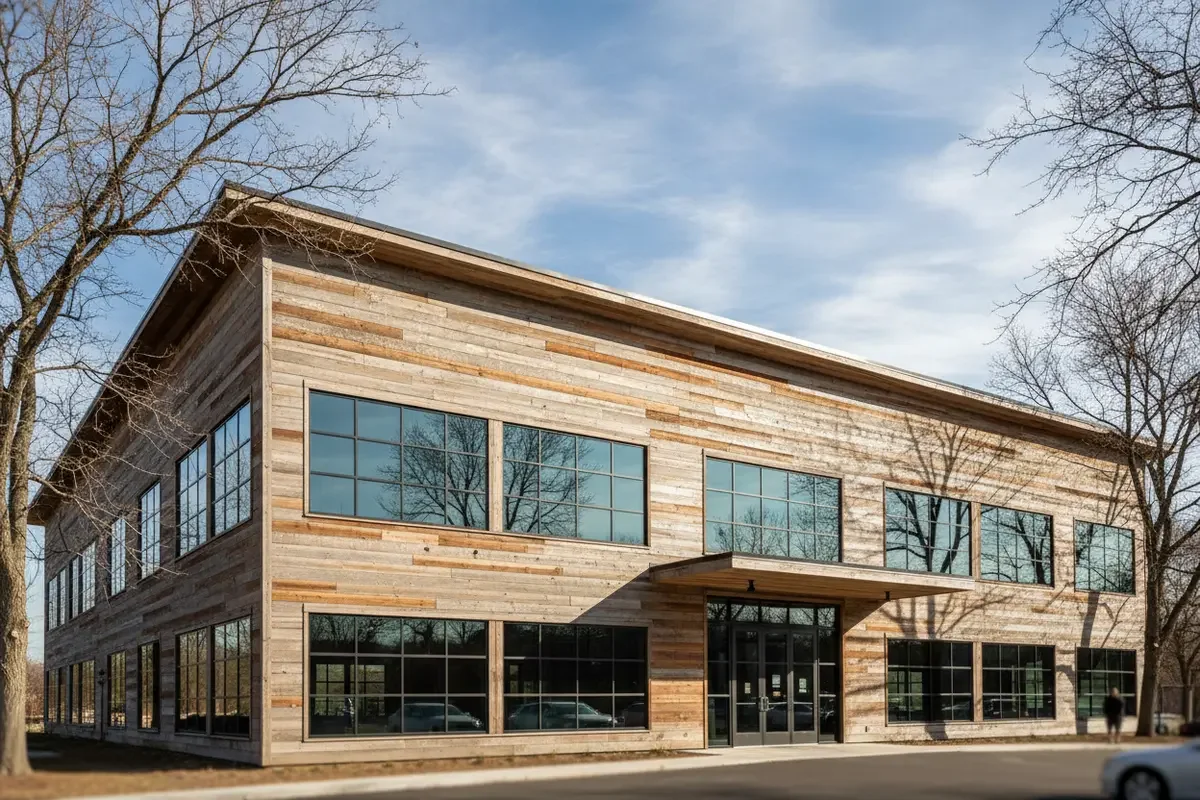
How Do Drawing Revisions and Material Zones Affect Procurement?
Commercial siding procurement becomes more reliable when the drawing set, elevation zones, and material takeoff are treated as one controlled record. A revised elevation can change the quantity, board direction, finish expectation, or delivery sequence even when the overall facade concept remains the same. The goal is not to eliminate reclaimed variation. It is to make each decision visible before material is released.
Start with a material-zone matrix tied to the current drawing revision. List each elevation or named zone, the intended reclaimed material, the applicable specification, the estimated takeoff, and the status of that information. Use clear labels such as open, preliminary, and confirmed. Do not treat a preliminary quantity as a purchase commitment, and do not let a superseded drawing continue to drive a quote.
Drawing and procurement handoff controls
Elevation set and revision cloud — Status: Confirmed. Owner: Architect or design lead. Next action: Issue the current revision and identify changed zones.
Material-zone matrix — Status: Preliminary. Owner: Design and estimating team. Next action: Resolve open material, quantity, and location fields.
Takeoff by elevation or zone — Status: Open. Owner: Estimator or contractor. Next action: Confirm quantities against the current drawings.
Procurement release — Status: Confirmed. Owner: Project buyer. Next action: Send scope, specifications, timeline, and delivery geography for quote review.
Assign responsibility for every handoff. The design team should identify the current revision and intended zones. Estimating should reconcile the takeoff with those zones. The buyer should transmit the approved scope rather than an isolated product name. Wood Crafting recommends confirming exact product specifications against the current product pages, since product offerings and profiles should not be generalized across every application.
For a broader coordination reference, see the reclaimed wood construction specification. When requesting a quote, include the project type, material and specifications, timeline, and delivery geography so unresolved fields can be identified before procurement moves forward.
Request a project quote when the sample, drawing, and takeoff status are ready for project-specific review.
How Should a Project Handle Processing, Moisture, and Assembly Coordination?
Processing decisions and wall-assembly questions should travel together in the project submittal, not sit in separate material notes. Reclaimed wood can be supplied as-is, de-nailed, or power-washed depending on the project requirements. Those choices affect what the design team, envelope consultant, contractor, and supplier each need to review. They do not, by themselves, establish a suitable exterior assembly or confirm code compliance.
Moisture is a coordination issue because accumulation and extreme fluctuations can reduce the service life of wood siding and windows. The USDA Forest Products Laboratory notes that adverse moisture conditions may contribute to checking, warping, finish failure, and, in severe cases, rot. Its guidance also connects moisture control to overall building design and construction, including drainage, clearances, overhangs, flashings, and climate-appropriate vapor control. Read the USDA Forest Products Laboratory moisture guidance as background for the project team, not as a substitute for project-specific design review.
The wall assembly should be reviewed by the professionals responsible for it. Rain can reach the space between horizontal wood siding and sheathing, which is one reason the cladding cannot be evaluated in isolation. Penn State's Housing Research Center guidance describes a rainscreen as a designed gap behind exterior cladding. That gap may provide a capillary break, support a drainage plane, and help redistribute stored moisture through evaporation and diffusion. Where ventilation openings are part of the design, convection may also support drying. The water-resistive barrier remains the primary drainage plane for bulk water that penetrates the cladding. These concepts help identify coordination questions, but they do not prescribe an installation method for a particular building.
Include the following in the submittal review:
Processing status and any requested treatment, with the responsible reviewer identified.
Intended wall location, elevation or material zone, and the current drawing revision.
Interface questions for the architect, envelope professional, and installing contractor.
Open decisions about moisture management, drainage, flashings, and transitions.
Written confirmation of which party approves the assembly and which party confirms material processing.
For adjacent material context, review this reclaimed wood siding context, then keep the project submittal focused on documented handoffs and professional responsibility.
How Does a Commercial Reclaimed Wood Siding Specification Practical Guide Support Release and Delivery?
A commercial release should turn an approved material direction into information that procurement, fabrication, logistics, and the receiving team can use. That means documenting what is known, identifying what still needs confirmation, and keeping project assumptions separate from supplier commitments.
Confirm the release scope. State the project type, areas or elevation zones covered, material requirements, relevant specifications, estimated quantity, delivery geography, and the current drawing or submittal revision. A quote request is more useful when it communicates project scope, material and specifications, timeline, and delivery geography rather than asking for a general product recommendation.
Record the processing request. Identify whether the material is requested as-is, de-nailed, or power-washed. These are different project requirements, not interchangeable descriptions. If the processing direction is still under review, mark it as open and assign a decision owner before release. For context on the source material and its reclaimed character, review how Wood Crafting sources reclaimed wood.
Coordinate approval and procurement. Keep the approved sample or visual direction tied to the applicable drawings, finish expectations, and takeoff status. Note whether the release is for the full project or a defined phase. Any change to the design, quantity, processing request, or delivery sequence should trigger a review rather than silently carrying forward an earlier assumption.
Plan the delivery handoff. Confirm the delivery address, site contact, receiving constraints, access conditions, requested phase, and documentation needed by the receiving team. Phased delivery can be discussed as a coordination option, but the actual sequence depends on the project scope, material review, and confirmed logistics.
Verify availability and timing before commitment. Wood Crafting does not publish company-wide inventory indicators, standard lead times, or minimum order quantities. Availability, processing capacity, and lead time therefore need to be confirmed for the specific request. Do not treat an estimated timeline in a drawing, meeting note, or procurement schedule as a guaranteed supplier date. Release the material only after the open questions have been reviewed and the applicable availability and delivery details are confirmed.
What Should a Quote Handoff Include When the Scope Is Still Changing?
A changing scope does not make a quote request premature. It means the handoff should distinguish what the team has confirmed from what still needs a decision. Start with the project identity, building or phase, intended application, and the person responsible for consolidating revisions. Then state the current material scope in plain terms, including where reclaimed siding or paneling is being considered and which areas remain under review.
Separate the working assumptions from the confirmed scope
A useful handoff records the approximate quantity basis and how it was developed. Note whether the figure comes from a preliminary takeoff, selected elevations, an allowance, or a broader square-foot estimate. List the drawings used, their revision dates or numbers, and the elevations or material zones included. If several buildings or phases are involved, identify them separately rather than combining an early estimate into one unexplained total.
Mark each item as confirmed, open, or preliminary. Open items might include an unresolved elevation, a pending sample review, a change to the application, or a processing request. This gives the supplier a clear set of questions to address instead of treating every line in the handoff as final. Exact product specifications should be checked against current product pages and then confirmed for the project, rather than generalized across different offerings. Wood Crafting's new-construction specification guide can provide additional context for teams developing that documentation.
Include the commercial logistics that shape the review
Add the desired processing request, sample status, target decision date, anticipated procurement or release date, delivery geography, and any known receiving constraints. A timeline is useful even when it is provisional. It helps separate a design review from a purchase release without implying a standard lead time. For phased work, show which buildings or elevations may release first and which remain dependent on design approval.
Quote requests should communicate project scope or type, material and specifications, timeline, and delivery geography. Wood Crafting uses quote-based pricing, so a project-specific review is more useful than a generic price assumption. Send the current handoff with a short list of decisions still owned by the architect, builder, contractor, or supplier, then update it when drawings, quantities, or approvals change. When the brief is ready for review, request a project quote with the latest documents attached or clearly identified.
Request a project-specific quote
Frequently Asked Questions
What moisture information should be included in a commercial siding specification?
State the moisture condition expected at installation and identify how it will be reviewed across the order. The specification should also assign responsibility for confirming material condition before installation. Moisture accumulation and sharp moisture changes can contribute to checking, warping, finish failure, and rot. So this information belongs in the project coordination record, not only in a product conversation. USDA Forest Products Laboratory guidance supports coordinating dry materials and moisture management with building design.
Should the wall assembly be reviewed before reclaimed siding is released?
Yes. The architect and envelope team should confirm the cladding interface, water-resistive barrier, drainage, flashings, and any rainscreen requirements before procurement is released. A rainscreen gap can provide a capillary break and drainage plane behind cladding. While the water-resistive barrier remains the primary layer for shedding bulk water that penetrates the exterior cladding. Penn State Housing Research Center guidance describes these coordination functions.
How should moisture checks be handled across a large order?
Use a documented sampling plan that identifies material groups, inspection timing, and who records the results. A representative check is more useful than treating one board or one delivery as proof of the entire order. Keep the results with the submittal and receiving records so the project team can resolve questions by lot, elevation, or delivery phase.
What should be confirmed before requesting a project quote?
Provide the elevations or areas, takeoff status, drawings and revision, desired appearance, processing requests, delivery geography, required delivery phases, and the project schedule. Also identify open design decisions and the person authorized to approve samples or substitutions. Wood Crafting reviews reclaimed material and processing needs on a project-specific, quote-based basis, so availability and timing should be confirmed rather than assumed.
Ready to Coordinate Your Commercial Siding Project?
A clear project brief helps align material scope, approval requirements, delivery geography, and the questions that still need confirmation before release. When your team is ready to turn those details into a project-specific review, request a project-specific quote for commercial reclaimed wood siding. Include the building areas, drawings or elevations, desired appearance, quantities if available, project timeline, and delivery location so the conversation can begin with useful context.